One significant factor that is noteworthy in the context of
Indian independence movements is that, these crusades had intensified much more
in the late 1930s and its succeeding period culminating in the year 1947.
Instances prior to this time period are also frequent, with every decade
producing and emoting a naturalistic note of their own.
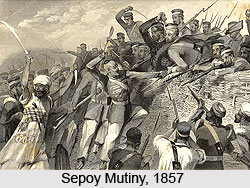
Sepoy Mutiny, 1857
Also known as the `Sepoy Rebellion` or the `Uprising of 1857` and the ‘Great
Rebellion’. Sepoy Mutiny commenced on 10th May,
1857, spearheaded by protests from sepoys or soldiers of the East India Company in Meerut which
extended to the upper Gangetic Plain and the central
portion of India and the most major hostilities were concentrated in Delhi, Madhya
Pradesh, Uttar Pradesh and Bihar. The
East India Company was threatened greatly and it was suppressed by the downfall
of Gwalior on 20th June, 1858.
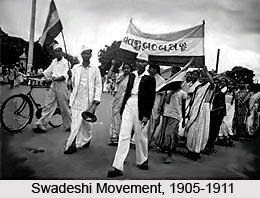
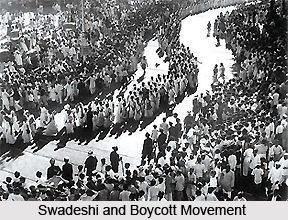
Swadeshi Movement, 1905 to 1911
Indian society, as compared to contemporary times, was much simpler and less
complicated. The conscious class division was unheard of, with almost no
technological tool witnessed in any household. Freedom fighters as such
arrived onto such a hot-bed Indian state of affairs, just to help
people not to be influenced and charmed by British petty alluring of fineries
and everything ‘Vilayati’ (referring to British goods and Britain as a whole).
This surging mass of protest marches led to the culmination of the Swadeshi Movement in early 1900s,
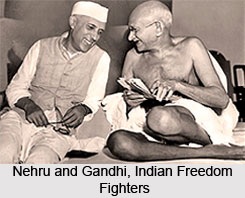
under able leadership of Mahatma
Gandhi. Swadeshi Movement was largely a successful ensuing of the
Partition of Bengal in 1905 and the amount of loss of lives under the sadistic
Britishers.
Wahabi Movement, 19th Century
Wahabi Movement was a part of the Indian freedom
struggle as it offered a serious threat to British supremacy in India in
the 19th century. The movement was led by Syed Ahmed Barelvi, who was greatly
influenced by the teaching of Abdul Wahab of Arabia and the preaching of Delhi saint
Shah Walliullah. The Wahabi Movement essentially condemned all changes and
innovations to Islam.
It was a revivalist movement which held that the return to the true spirit of
Islam was the only way to get rid of the socio- political oppression. The Wahabi Movement, that saw an extensive
period during the late 1800’s, was a slow mass accumulation of men from various
Indian states, leading only to deportation in the Andamans, more effectively to ‘Kala Pani’.
Satyagraha Movement during 1900s
Satyagraha which
can be loosely translated as "insistence on truth"- Satya (truth);
Agraha (insistence) "soul force" or "truth force" is a
particular philosophy and practice within the broader overall category
generally known as non-violent resistance or civil resistance. The very term
"Satyagraha" was developed and coined by Mahatma Gandhi. He deployed
Satyagraha in the Indian independence movement and also during his earlier
struggles in South Africa.
Ghadar Movement, 1914-1917
The ‘Ghadar Movement’ during the initial years of
1900’s was also akin to ‘Wahabi’, with rebels gathering from outside the
country like Canada or United States. These independence movements were planned
in erstwhile Indian context, stroke a distressing chord in the heart. Men
fighting during those times were perhaps not even aware that these would take
such historic proportions as to reach every Indian household; times during
those did not call for publicised affairs, but just the realisation of India’s
Independence.
After the British government decided in April 1914 to stop
the deportation of political prisoners to
the Andamans (and subsequently a majority of them already sent were repatriated
to the Indian jails by September 1914), the revolutionary activities again
flared up in 1915 onwards which were more authoritative in intensity, serious
in nature and larger in dimension. The prevailing laws, the existing judicial
system, the procedure of trial and the Indian jails, all weapons of the
administrative set up, were found highly inadequate to contain the ‘terrorist’
activities and penalize the revolutionaries. As a result, the British not only
ordained new legislations, but also changed the judicial procedure of trial so
as to reduce it only to a semblance of trial.
The gates of the Cellular Jail in the Andamans were
reopened to imprison and punish the political prisoners. This time, among other
revolutionaries convicted in other cases, Punjabis in general and Sikhs in
particular, primarily convicted in fake trials known as Lahore
Conspiracy Case and other related cases, were deported to the Andamans.
These revolutionaries, well settled in various countries like Canada, America,
Philippines, Burma, Hong Kong, China and Japan, had come to the country with a
missionary zeal to wage war against the British Empire in India. They were
either leaders or members of the Ghadr Party, or they were influenced by its
ideology and patriotic fervency. However, with men like Mohandas Karamchand
Gandhi or Subash Chandra Bose, Rabindranath Tagore or Ishwar Chandra Vidyasagar, India
was never in dearth of legendary crusaders, rebelling valiantly against English
oppression.
Khilafat Movement, 1919-1924
With the British cruel arm crushing down on natives in a more intensifying degree with the aid of acts or laws, these Indian independence movements went on streets even more and more. For instance, the Khilafat Movement was awakened largely after the stringency of Rowlatt Act of 1919, absolutely mirroring Muslim sentiments as opposed to British way of life. Indeed, it came to be a mere order of day and a topic of snigger that after every new law was passed, an independence movement was sure to come up and gain accomplishment. Lord Curzon and Lord Dalhousie, in later years, were almost wholly to blame for foolish administration and inviting the wrath directly from England Crown.
Akali Movement, 1920’s
The Akali Movement around 1919 had tremendously ushered in the Sikh community into Indian freedom struggle, with stray communal incidents happening here and there. Sikhs became such a headache to British rule, that hanging and deportation was the last feasible way out for these ruthless overseas men. By such horrible mixing of British acts and anti-British Indian independence movements, the time was sneaking towards the 1930s, which was the most personified time for protests, rallies and demonstration of both violence and non-violence.
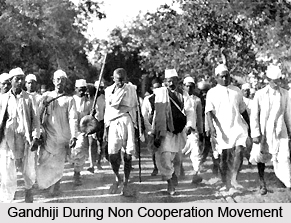
Non Cooperation Movement, 1920-1922
Indian independence movements under the towering Gandhian Era was ushered in by Non Co-operation Movement within 1920-22, signifying every degree of total denying of every British rule of law that was passed under the Rowlatt Act revisions. These one-at-a-time non-violent acts turned into a volley of protests, encompassing fasting for several days by Gandhiji, leading British administration to review and bend their direction of governance. The rebels refused to purchase British goods and embrace indigenous products and services like regional handicrafts, ransack liquor shops, thereby highlighting the Indian moral virtues.
Khaksar Movement, 1931
Khaksar Movement, also known as the Khaksar Tehrik movement, was a social movement that was established in the year 1931 by Allama Mashriqi. It was based in Lahore during the dominion of the British supremacy in undivided India. The objective of the Khaksar movement was to attain independence for the nation from the rule of the British Empire in India. The movement also aimed to establish a Hindu Muslim government in the country. Inayatullah Khan Mashriqi, also known as Allama Mashriqi, a Muslim intellectual revisited the principles for self-conduct and self-reform which he had laid out in his treatise titled ‘Tazkira’ in 1924. He included these into a second treatise entitled ‘Isharat.’ This served as the foundation for the Khaksar movement.
Civil Disobedience Movement, 1930-1931
Courts and other administrative buildings, like police outposts, including railways carriages or public transports began to be looted and bombed, only to exhibit the gallantry of fighting nationalists. These nationalists believed only in one policy of taking back an eye for an eye. However, these radical ways were condemned by the non-violent protestors, who were of the faith that Swaraj could also be attained by not shedding any drop of English blood. Gandhiji was considered the leader of all non-violence that ever came up during those times. He was known to pacify British rank-holders by his gifted vocabulary and gift of gab. As such, the Civil Disobedience Movement or admired as Salt Satyagraha March to Dandi, was deemed as a serious threat to establishing British supremacy in India.
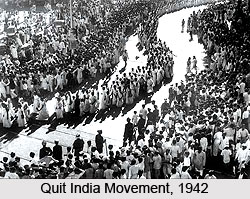
Quit India Movement, 1942
Mahatma in fact, along with violence of the young guns of India, continued his passive protests by topping his rebellion with the Quit India Movement in 1942. It was also known as ‘August Kranti’ or ‘August Movement’, and was launched as a reaction against Gandhiji’s call for Satyagraha. It reflects Gandhiji’s determined resistance against the British Raj, in the form of his ‘Do or Die’ which was issued on 8th August, 1942 at Gowalia Tank Maidan, Mumbai. Eventually, British Raj learnt that India was unmanageable in the long run.
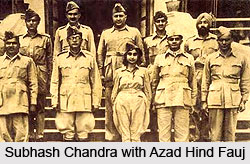
Freedom Struggle by Indian National Army, 1940s
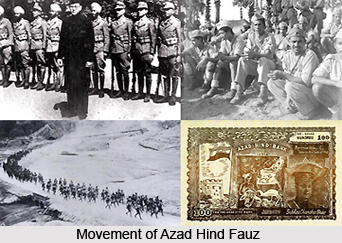
The Indian National Army (INA) or the ‘Azad
Hind Fauj’ was a forceful army established in 1942 during the World War II, by
Indian nationalists. The army’s main goal was to forcefully acquire Indian
independence with the aide of Japan and restored by Netaji Subhas Chandra Bose
in 1943 after the disintegration of the first INA in December. INA played a
crucial military role despite the fact that it was represented by a tiny
military strength and absence of adequate military equipment. The soldiers of
INA put up a stiff resistance and kept fighting along with Japanese troops to
secure India’s independence from the British Raj.
Arzi Hukumat E Azad Hind, 1943
Arzi Hukumat
E Azad Hind, meaning the Provisional Government of Free India, was also
known as Azad Hind (Free India). It was a provisional government of India that
was founded in the year 1943 in Singapore. Arzi Hukumat E Azad Hind was among
the political movement that originated during the 1940s away from India. Its
objective was to gain support of the Axis powers to attain freedom for India
from rule of the British Empire. Azad Hind was established by Indian
nationalists who were exiled from the country during World War II.
They developed the provisional government in Singapore with the political,
military and monetary support from Imperial Japan in order to fight against
British. Netaji Subash Chandra Bose aimed to form
the Provisional Government of Azad Hind in Germany after the carrying out the
task of restructuring the Indian Independence League, initiating preparations
for modernizing the army and after organizing a triumphant campaign to assemble
the support of the various Indian communities present in Southeast Asia.
Royal Indian Navy Mutiny, 1946
The Royal Indian Navy Mutiny was
also known as ‘Royal Indian Revolt’ or ‘Bombay Mutiny’
was the revolt of the Indian sailors. The sailors who belonged to the Royal
Indian Navy on board ship and shore establishments at Bombay harbour, went for
a strike and organised a mutiny on 18th February 1946. The revolt was violent
and spread throughout the country, covering Karachi to Kolkata and
involved 20,000 sailors, 78 ships and 20 shore establishments. This revolt
subsequently came to be known as the RIN revolt. It started as a protest
against their general conditions.
Mahatma Gandhi’s hope to bring in immediate independence to India by just
holding talks was somewhat crushed, with the disillusioned men being put under
house arrest for the rest of the freedom struggle. In a nutshell, Indian
independence movements were incredulously successful to awake the unaware men
at large, with every household housing a revolutionist secretly. British men,
at last, could only look towards the future helplessly, with all of their
endeavours grovelling in the dust.