
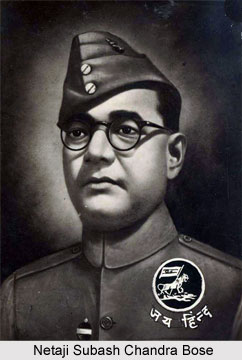
 Indian National Army, also known as the Azad Hind Fauj, was formed for the liberation of India from the British rule. It was formed in South-East Asia in the year 1942 by pioneering Indian Nationalists and prisoners who wanted to throw off the yoke of foreign domination and liberate the country. The INA was initially formed under Mohan Singh, after the fall of Singapore, the captain in the 1/14th Punjab Regiment in the British Army. However, the first INA under Mohan Singh collapsed and finally it was revived under the leadership of Subash Chandra Bose in 1943. Bose`s army was declared as the Azri Hukumat e Azad Hind. Indian National Army emerged along with Mahatma Gandhi`s peaceful resistance movement within India. In contrast to Mahatma Gandhi, Bose advocated a more aggressive confrontation with the British authorities.
Indian National Army
Indian National Army was formed by Indian Nationalists in the year 1942. Its aim was to overthrow the British Raj in colonial India.
Introduction
Indian National Army, also known as the Azad Hind Fauj, was formed for the liberation of India from the British rule. It was formed in South-East Asia in the year 1942 by pioneering Indian Nationalists and prisoners who wanted to throw off the yoke of foreign domination and liberate the country. The INA was initially formed under Mohan Singh, after the fall of Singapore, the captain in the 1/14th Punjab Regiment in the British Army. However, the first INA under Mohan Singh collapsed and finally it was revived under the leadership of Subash Chandra Bose in 1943. Bose`s army was declared as the Azri Hukumat e Azad Hind. Indian National Army emerged along with Mahatma Gandhi`s peaceful resistance movement within India. In contrast to Mahatma Gandhi, Bose advocated a more aggressive confrontation with the British authorities.Origin of Indian National Army
The Indian National Army was a supplementary force to the Imperial Japanese Army in its southern mainland campaign. It was created by the recruitment of Indian prisoners of war who, in the course of service in the armed forces of the British Indian Empire, had been captured by Japanese forces. The idea of Origin of Indian National Army evolved within the Indian independence movement; it was formed with a view to overthrow the British Raj. The Ghadar Party in February 1915 planned to initiate rebellion in the British Indian Army from the Punjab through Bengal to Hong Kong with German assistance. This plan failed after the information was leaked to British Intelligence. The Second World War again revived the plan and thus in the South-east Asian region the concept of the Indian National Army was initiated by the Indian Independence League. INA was started in two phases: firstly formation and subsequent demobilization of Indian National Army under Capt. Mohan Singh Deb and secondly formation of Arzi Hukumat-e-Azad Hind under Subhash Chandra Bose and reformation of the INA as its army. Both these phases received extensive support from the Japanese Government, militarily and politically.
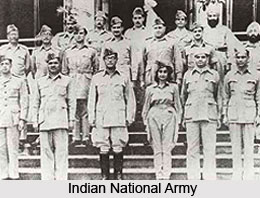 The first phase regarding the Origin of Indian National Army, started with the leadership of Captain Mohan Singh. The first stage consisted of officers and men of the British Indian Army, who surrendered to the Japanese army during the war in Malay, after the surrender of Singapore on the 15th of February, 1942. In this aspect, the Indian Independence League and which was founded by Rash Behari Bose first in Japan, also supported INA. INA was subjected to the concentrated propaganda of the IIL. Major (Later Lt. Gen.) Fujiwama acted as the chief liaison officer between the I.N.A. and the Japanese army.
Two days after the Fall of Singapore, in 17 February 1942, Indian Prisoners-Of-War (POWs), were gathered at Farrer Park and Mohan Singh, a captain in the 1/14th Punjab Regiment in the British Army, announced the formation of an army to free India. The Japanese always supported the creation of such movement which was anti British. Thus, in early March 1942, the Japanese proposed that the INA become the military arm of the IIL, and that Rash Behari Bose lead the movement. This news was formally announced in June 1942 in Bangkok. However, by the later half of 1942, the Indians increasingly felt that the Rash Behari Bose and Japanese betrayed their trust. In December, Mohan Singh and other INA leaders ordered the INA to disband after severe disagreements with the Japanese. Unfortunately, Mohan Singh was consequently arrested by the Japanese and exiled to Pulau Ubin. However, only a few officers were with Mohan Singh. The other armies remained in the I.N.A. and did not want to break the oath of allegiance a second time also felt that the Japanese may vent the fury on the Indian civilians. A Council of Action was formed with Rash Behari Bose as president, Major Gen. Bhonsele as director and other senior officers assisting him.
On the other hand, in 1940, Bose was imprisoned by the British for his anti-colonial activities. During the outbreak of war in Europe, Subhash Chandra Bose saw an opportunity to authorize on Britain`s weakness. In January 1941, Bose went to Russia from Calcutta via Afghanistan and also fled to Germany through Afghanistan by pretending to be a deaf-mute Pathan. On 2 April 1941, Bose reached Berlin, and began advocating India`s Independence through radio broadcasts. He tried to secure support for an armed insurrection in India. For the next six months, Bose and his assistants led an intensive recruiting campaign amongst Indian POWs (prisoners of war).
Subhash Bose entered Southeast Asia in the early days of 1943. In South East Asia with a large population Bose established an anti-colonial force to fight the British. In January 1943, he led the Indian nationalist movement in East Asia as a response of the Japanese. He reached Tokyo on 11 May 1943 and encouraged the Indian communities to join in the fight for India`s Independence. On 2 July 1943, Subhas Chandra Bose reached Singapore. He assumed leadership of Indian National Army in a ceremony held at Cathay Building. He had a vital contribution on the Origin of Indian National Army. Under the able leadership of Bose, the demoralized attitude of the INA changed. INA became doubled in strength as local civilians joined. Many Indians joined and they were from the barristers to plantation workers background. Further, Netaji ensured a well trained army and thus established an Officers` Training School for INA officers. Even, 45 youths were also sent to Japan`s Imperial Military Academy for advanced training. The clarion call of the INA was "Jai Hind" (Victory to India) and "Give me blood and I will give you freedom".
After the Origin of Indian National Army, it received recognition among the Japanese and Indian civilian also supported it. At the end of July 1942, three hundred volunteers were issued with German Army Uniforms bearing a badge on right arm showing a leaping tiger superimposed on Indian tricolour, surrounded by the legend "Freies Indien". The men were then officially designated the "Free Indian Legion". In May 1943, the Indian Legion was moved to garrison duties on the Dutch North Sea coast where they were mainly used for the construction of coastal defenses. After this, they started moving to France. Following the Allied Landings at Normandy, and the rapid advance, the Indian Legion was moved back to Germany in August 1944. Japanese Army assigned in advising the Indian Army, were officers Hideo Iwakuro and Major-General Isoda.
With the origin of the Indian National Army, Bose took the charge of it. He promised the people that he would open second war of independence and set up a Provisional Government of Free India. The Indians of South-East Asia would fight the enemy under this banner. On 8 August 1943, Netaji Subhash Chandra Bose assumed office as the Supreme Commander of Azad Hind Fauj. A Provisional government of Azad Hind Fauj was set up on October 21, 1943. The government of Azad Hind had its own currency, court and civil code, and its existence gave a greater legitimacy to the independence struggle against the British. However, while it possessed all the nominal requisites of a legitimate government, it lacked large and definite areas of sovereign territory. Nevertheless, the government assumed control of the Andaman and Nicobar Islands from Japan in 1943 and the occupation of parts of Manipur and Nagaland. Throughout its existence, it remained heavily dependent on Japanese support. Women Regiment also formed an important part of the Indian National Army.
The main aim of the Indian National Army was freedom of India and the emancipation of its citizens from obscurantist and feudal ideas. "Delhi Chalo" was the slogan Netaji gave his men and began to raise funds and enlarge his army even putting together the women unit. In May 1942, Burma fell to Japanese army. British were afraid that Japanese aided by Indian National Army would invade India from the east. Bose`s slogan - Dilli Chalo (Let us go to Delhi) - had struck fear in the hearts of British. However, regrettably the INA came to an end within a short period but its contribution to the independence of India is unforgettable.
Composition of the Indian National Army
Indian National Army had many valued freedom fighters that helped in the battles. They all had a brilliant background and fought for a similar cause, freedom of India. The INA freedom fighters were from every sphere ranging from barristers to plantation workers. The revival of the Indian National Army was done by Subhash Chandra Bose.
Training in the Indian National Army
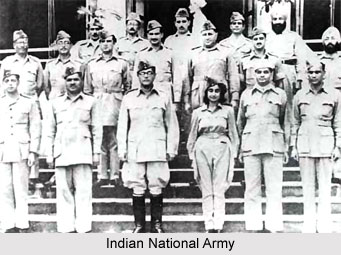 Most of the people who joined the army had no prior military experience and thus to ensure a well-trained army, Bose established an Officers Training School for INA officers and the Azad School for the civilian volunteers Many youth were also sent to the Imperial Military Academy in Japan for advanced training. Every soldier was required to spend about six to eight hours of training daily. The training included physical training, army drill and handling arms such as rifles, pistols, hand grenades and bayonets. The soldiers also attended lectures of Indian and world history and military subjects like map reading as well as signalling.
Battles of Indian National Army
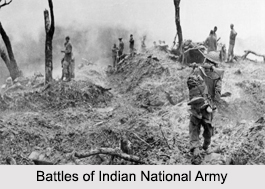 Battles of Indian National Army were targeted against the British at large. Indian National Army was involved in many battles and operations under the leadership of Subhash Chandra Bose. INA had two phases; the first phase of INA led by Capt. Mohan Singh suffered a lot. Indian National Army in its first phase was not considered a significant military threat by the British, yet, it was deemed a significant strategic threat especially to the Indian Army. It was not considered to be a substantial force or have any purpose more than propaganda and espionage purposes. The strategy of INA was to avoid battles because it lacked arms, armament as well as man-power. The whole scenario changed in the second phase of INA, after its revival by Subhas Chandra Bose. Indian National Army had planned that once the Japanese forces were able to break the British defences at Imphal, it would cross the hills of North-East India into the Gangetic plain. Moreover, INA aimed to ensure that Britain would not be in a position to re-assert its colonial authority again.
The Indian National Army under the leadership of Netaji, along with its allies, the Japanese advanced against the armies of Great Britain. The main aim and slogan of INA was "Chalo Delhi". Thus, on 23 October the Azad Hind Government declared war against Britain and the United States. In order to achieve its aim, INA fought some of the violent battles on the battlefields of Manipur, Imphal, Nagaland, Kohima and Red Hill. The strategy of the Battles of Indian National Army was so designed that the troops eventually reached India and hoisted the Tricolour for the first time. The Tricolour was hoisted in the Indian soil in Moirang, Manipur. The Provisional Government of Azad Hind was established at Andaman and Nicobar Islands and Kohima.
Subhas Chandra Bose with INA started his journey to free India after the intensive military training of armies. He planned to enter north-east India through Burma. The INA, together with the Japanese, successfully staged two military campaigns in March and captured Imphal and Arakan. The Japanese forces began its attacks on India`s eastern frontier in March 1944. Three divisions were created from Kawabe`s Burma Area Army to initiate a diversionary attack at Arakan and cover the southern coast. On the other hand another two divisions watched Stillwell and Chiang Kai Shek`s forces in the north. Furthermore, three divisions were pushed into Manipur to capture Imphal. This action scattered British forces and prevented any offensive movements against Burma. The Special Services Group of INA called "Bahadur Group" worked with the advanced Japanese units in the upper Burma region and into Manipur. A unit of the Bahadur Group, led by Col. Shaukat Malik, busted through the British defences on 18 April 1944 to capture Moirang in Manipur. Consequently, the Azad Hind administration took control of this independent Indian Territory.
The battles of Indian National Army continued with the 1st battalion of the INA, first Guerrilla regiment. They were directed towards the south to participate in the diversionary attack. The unit journeyed from Rangoon to Prome and marched across the Chin Hills to reach the Taungup and then to Akyab. In this operation, though the attak from diversion was successful, yet INA failed to capture and destroy Messervy`s 17th Indian Division. The 1st battalion marched up the Kaladan River and approached Kyauktaw, east of Mayu peninsula. As the battle progressed, it engaged the commonwealth forces at Kohima. The main force detailed to engage Imphal was to approach from the south-east via the Tamu Road. The INA`s four guerrilla regiments were directed to Tamu road and detailed to push into India as Imphal falls.
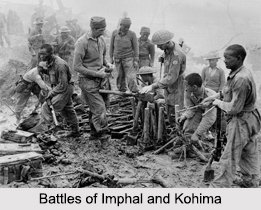 The 2nd and 3rd battalions which were led by Col. Shah Nawaz Khan crossed the Chindwin at Kalewa. However, the offensive was subsequently stopped for the fierce resistance experienced from the commonwealth forces. The forces led by Khan were redirected to engage Kohima. The major event related to the Battles of Indian National Army was the Burma Campaign. The Burma Campaign was fought between British Commonwealth, Chinese and United States forces against the forces of the Empire of Japan, Thailand, the Burmese Independence Army and the Indian National Army. The campaign had certain distinguished features. The INA had to face major crisis that included acute shortages of supply of food, ammunition and medicine. To make situation worse, the crisis situation was intensified by the Monsoon rains. Added to that disease, compounded poor sanitation and inability to evacuate the worse-affected due to a lack of transport were the major factors that stroked INA as well as the Japanese troops.
INA however did not lose its morale after the crisis faced during Burma Campaign. Yet it continued preparing vigorously for its defence. The parallel Battle of Meiktila and Battle of Mandalay were decisive battles which brought the end of the Burma Campaign. Burma finally prepared to surrender; Bose`s government had withdrawn from Rangoon along with the Japanese forces and Ba Maw`s government. The Rani of Jhansi troops began a long march through Burma to reach Singapore. The other major Battles of Indian National Army included fights of the Irrawaddy at Nyaungu and Bagan, where INA had to face major challenges. Its ally, the Japanese army lost and withdrew from the banks of the Irrawaddy line. Delhi started going out of our reach. INA had practically lost the War. Despite the loss of an ally, Netaji did not hesitate. He immediately looked to the Soviet Union for support. He had hoped to carry out the military Campaign in early 1945. However, on 18 August 1945, Netaji`s plane crashed while en route to the Soviet Union via Taiwan. Furthermore, after the atomic attack on Hiroshima and Nagasaki, Japan surrendered in August 1945 and so did the INA.
The INA fought many heroic battles against the superior British forces. The civilian volunteers of the Indian National Army showed their mettle and were equal in bravery and courage. Though it was small in size and faced crises of lack of heavy weapons yet it tried fighting the British. Lack of independent planning and death of Netaji were considered the major causes for the failure of INA.
Women In Indian National Army
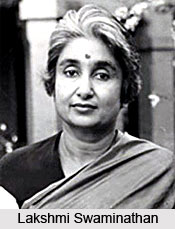 "… I want … a unit of brave Indian women to form a death-defying Regiment who will wield the sword which Rani of Jhansi wielded in India`s First War of Independence in 1857." - The great leader was the first to recognise the immense potentiality in Indian women hence the participation of women in Indian army became an event of sheer importance. He therefore, invited the participation of Women in Indian National Army, to put up an invincible resistance against the hostile colonizers, the British.
Subhas Bose voyaged for Berlin, from Calcutta in January 1941, to enter a secret alliance with Hitler against the common foe, the British. About a year and a half later he sailed by submarine to Tokyo. There he accepted responsibilities of Indian prisoners of war. These prisoners were escorted to Singapore to be trained into an army of emancipation. On January 1942, the Indian National Army (INA) came into existence, at Berlin. On July 9, 1943, Subhas Bose was elected as the Indian Independence League of Singapore. The League vowed to offer him the urgent finances and army personnel, as per as requirements. He demanded 300,000 soldiers, Rs 30,000,000, and "a unit of brave Indian women." for accomplishing in the mission. Hence, ushered in a new era, unfolding the gallantry of women, in Indian national army.
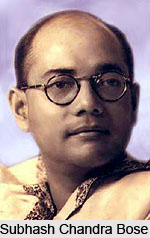 ubhas Bose very promptly, beckoned the women members of the League, to enroll themselves with the Rani of Jhansi brigade. Subhas Bose also designed a Department of Women`s Affairs within the League and recruited Dr. Lakshmi Swaminathan as head. The "utter, absolute sincerity" of Subhash Chandra Bose in recognising the talent of Indian women within no time paved the way to usher in a new concept of involving women in Indian national army. The first wish of the department was to appoint women for the INA, but its ultimate destination was the achievement of equality for women. Subhas Bose urged Dr. Lakshmi and the women of Singapore to embrace the female freedom fighters in India as their ideal. Women`s bravery and commitment had very well been focused in the Satyagraha protests of Gandhi as well as in radical nationalism. In fact, to imbue the regiment with the Indian heritage of boldness, it was named after the Rani of Jhansi, the heroine of the First Indian War of Independence, the Revolt of 1857.
The first Rani of Jhansi training camp was inaugurated under the direct guidance of Subhas Bose, near Singapore on October 22, 1943. Dr. Lakshmi Swaminathan, was conferred upon the military status of Captain Lakshmi. She became the in-charge of the regiment`s military and nursing sections. The seed sown back, thus gained a definite contour with this whilst making women in Indian national army an imperative part.
The stirring speech of Subhas Bose in Kuala Lumpur overwhelmed the women folk. Janaki Davar, a patriotic mind, donated her earrings for the war-fund of Subhas Bose. Her parents were annoyed with her act but she could manipulate them to invite Captain Lakshmi for tea. Lakshmi gave Janaki to fill up the application form for the regiment. When Janaki was seventeen, she rose to the prominence of a Rani (league-member). The Japanese and Indian press greeted this formation of INA. The three camps - at Singapore, Rangoon, and Bangkok - started consisting of 1,000 women recruits. Whereas a minority was furnished with nurse`s training, the maximum members the rest were molded into soldiers. The level of training was in keeping with the standards of male soldiers` rigorous training. The women in Indian national army, donned in caps, shirts, jodhpurs, breeches, and boots, resembled that of men.
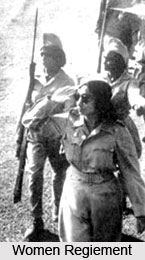 However, when it came to active participation in the war-front, the ranis , lagged a little behind. A contingent of women was channelised as a retreating army to Burma just as the Japanese were being pushed back from Imphal. By June of 1945 the ranis had retired to Singapore while Captain Lakshmi remained behind in the jungles of Burma to continue with her rescue operations. The ranis had a face-to-face meeting with their commander, Subhas Bose, for last time on August 14 , while they enacted a drama on the glorious life of the Rani of Jhansi.
The British who returned to Burma and Malaya, to investigate on the members of the INA, were taken aback to witness the competence of women in Indian National Army. They were probably expecting, the familiar image of the shy, introvert and fragile Indian womanhood. Women in proper military uniform, saluting smartly, and proclaiming themselves as members of the Rani of Jhansi regiment, left the British spellbound.
It is evident, that the activities of the women in Indian National Army were carried outside India. It was reality that only a few of these ranis came back India after the war, but they had left their legacy of mind-blowing courage and sacrifice to the posterity of Indian womanhood.
Women in Indian national army remained immortal in legends or stories of their dauntless dedication. The history of the inclusion of women in Indian National Army, highlights the aura of genius, related to the meritorious Indian woman, who has the capability to become caring and loving, to dear ones, and to take up arms against the malignant enemy.
Indian National Army Defence Committee
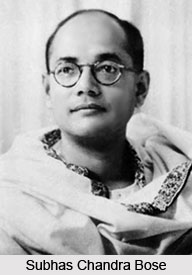 The Indian National Army Defence Committee, which later became the INA Defence and Relief Committee, was a committee that was formed by the Indian National Congress Party in the year 1945. The objective of the Committee was to defend the officers of the Azad Hind Fauj or Indian National Army (INA) who were to be charged wit treason against the British Empire during the INA trials. The INA trials, also known as the Red Fort Trials were held between November 1945 and May 1946 for the courts martial of several of officers of the Azad Hind Fauj. Around 10 courts martial were held conducted and the first trial became the most renowned one, which was the joint court-martial of Major General Shah Nawaz Khan, Colonel Prem Kumar Sahgal and Colonel Gurubaksh Singh Dhillon. The 3 officers initially served in the British Indian Army, but after becoming prisoners of war in Singapore or Malaya, the joined the Indian National Army (INA), under the leadership of Netaji Subhas Chandra Bose.
The Indian National Army Defence Committee or the INA Defence Committee was appointed to defend the officers in the trials. The committee also had additional responsibilities like the coordination of information on INA troops who were imprisoned and organizing for relief for troops after the war. The Indian National Army Defence Committee or the INA Defence and Relief Committee announced the establishment of the defence team of the Indian National Congress for the Azad Hind Fauj or Indian National Army (INA) and included well known and reputed lawyers of that period, such as including Jawaharlal Nehru, Bhulabhai Desai and Asaf Ali.
Recently updated articles in History of India
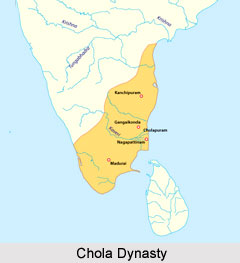
Chola Dynasty
Chola Dynasty is a Tamil dynasty and had longest duration of ruling in parts of South India. Chola dynasty had ruled South India successfully for a ex...
Suhungmung
Suhungmung was the fourteenth ruler of the Ahom dynasty who ruled from the period 1497 to 1539 AD. His reign was significant in terms of expansion of...
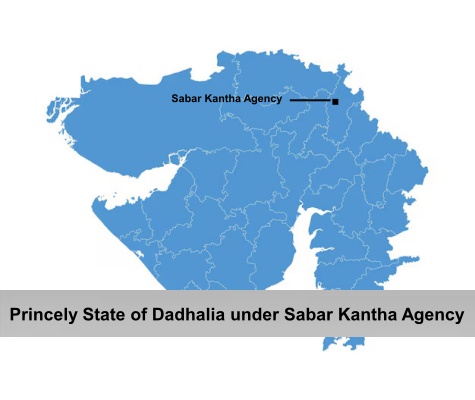
Princely State of Dadhalia
Princely State of Dadhalia was located in the present state of Gujarat. The state covered a total area of 28 sq miles and comprised of 15 villages. Th...
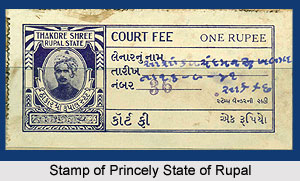
Princely State of Rupal
Princely State of Rupal was a part of the Baroda Agency, a sub division of Western India States Agency. It was under the administrative control of the...
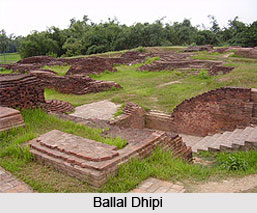
Archaeological Sites of West Bengal
Archaeological sites of West Bengal reveal several aspects of ancient India. Excavations by the Archaeological Survey of India have furnished artefact...
Related articles in History of India
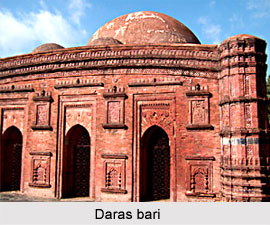
Mughal Architecture during Babur
Mughal architecture during Babur marked the foundation of a new architectural era in India, blending Timurid, Persian, and local influences. His reign...
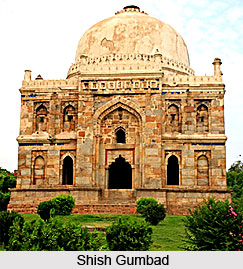
Architecture during Sayyid and Lodi Dynasty
Architectures during the Sayyid and Lodi dynasty were mainly the tombs and monuments for the dead rulers. It were carefully designed and meticulously...
Brahmanical Sources of Ancient History
Brahmanical Sources of ancient history are contained in the Vedas and they constitute one of the most important literary sources of information about...
Coins of Chola Empire
Coins of Chola Empire were issued in gold, silver and copper and carried the Chola emblem.
Coins of Khilji Dynasty
Coins of Khilji Dynasty had an influential feature that was followed by the other dynasties.