Introduction

Archaeological sites of West Bengal illuminate the bygone era of Indian history. The state has a rich history which is evident in several archeological sites. These sites, spread acordd the region of Bengal, stand as witnesses to several interesting incidents and facts of the ancient era. These sites are evidential support that several places of West Bengal were inhabited since prehistoric times. Excavation carried out at these places by the Archaeological Survey of India clearly sketches the social and cultural scenario of the state during ancient times. Relics of various dynasties have been found in many regions, who ruled over the state in different eras.
Ballal Dhipi

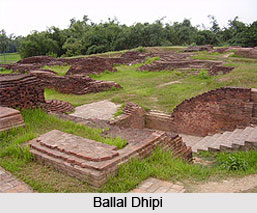
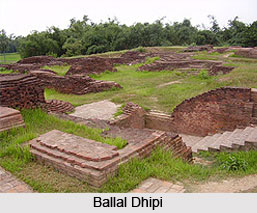
Ballal Dhipi, situated in Nadia district of West Bengal, is an archaeological site of national significance. The site, now in ruins, was discovered by the Archaeological Survey of India (ASI) in the year 1980. The name of the place has been derived from the name of a 12th century ruler of Bengal ‘Ballal Sen,’ from Sen Dynasty. A huge mound with several architectural remains has been found in Ballal Dhipi.


Adina Mosque

Adina Mosque stands as one of the most significant historical monuments in India’s medieval architectural heritage. Located in the ruined city of Pandua in the Malda district of West Bengal, the mosque was built during the reign of the Bengal Sultanate under Sultan Sikandar Shah, who was later buried within the structure itself. Commissioned in 1373 and completed in 1375, Adina Mosque was regarded as the largest mosque in the entire Indian subcontinent during the 14th century.


Dihar

Dihar, in the Bankura district, is an archaeological site of pre-historic era. Archaeological excavations have furnished evidences which signify that the place was inhabited since 1000 BC. Relics of Saileswar and Sareswar temples form the major attraction of the region, which were established by King Prithvimalla of the Malla dynasty.


Harinarayanpur

Harinarayanpur Archaeological Site is located in the Kulpi block of the Diamond Harbour subdivision in South 24 Parganas district, West Bengal. The site has drawn historical interest due to the discovery of artefacts dating back to the Sunga-Kushana period. Excavations uncovered a variety of significant objects, including terracotta plaques, semi-precious stone beads, and pottery associated with the Sunga and Kushana eras.


Deulpota

Deulpota Archaeological Site is situated along the banks of the Hooghly River in the Diamond Harbour subdivision of South 24 Parganas district, West Bengal. The site has attracted significant archaeological interest due to the discovery of artefacts dating back to the Gupta age and the early medieval period. Systematic excavations were carried out at Deulpota during 1963–64, 1964–65, and again in 1972–73. These excavations uncovered a rich collection of historical objects that reflected the artistic and commercial prosperity of the settlement.

Among the discoveries were finely crafted terracotta pottery, jewellery made from precious and semi-precious stones, silver and copper coins, and numerous ceramic artefacts. Archaeologists also recovered female figurines, including the renowned Yakshini idol, as well as a beautifully designed Gajalakshmi plaque. The site also yielded burnt, polished, and unpolished earthenware. A black stone was unearthed, embedded within a mound, which continues to be worshipped by locals as a Shiva Linga.


Tamluk

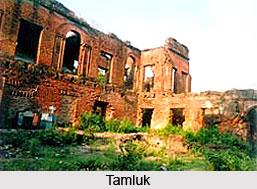
Tamluk is a town in Purba Medinipur district of West Bengal which has served as an important archaeological site. Excavations have revealed the existence of settlements from 3rd century BC in this place, which also finds its mention in Puranas and the Mahabharata. Tamluk was earlier a seaport which gradually got buried under the river silt.


Erenda

Erenda Archaeological Site is regarded as one of the southernmost sites associated with Neolithic and early farming culture in the coastal region of West Bengal. The settlement is believed to have originated around 2000 BC. The prehistoric settlement at Erenda village was discovered in 2015 by the Department of Archaeology at the University of Calcutta. Excavations were carried out during the 2015–16 and 2016–17 field seasons. Among the notable discoveries were fish hooks and weapons crafted from bone, indicating the inhabitants’ reliance on fishing and hunting for sustenance. Excavators also found ancient rice grains mixed with soil, providing strong evidence of early agricultural practices.


Bangarh

Bangarh is recognized as one of the most important ancient urban settlements in eastern India. Situated in Gangarampur on the banks of the Punarbhaba River, the site holds immense archaeological and historical significance. Evidence from the Damodarpur inscriptions reveals that Bangarh once served as the ancient city and administrative centre of Kotivarsha Vishaya, which formed part of the larger Pundravardhana Bhukti administrative division.

Archaeological excavations conducted between 1938 and 1941 uncovered important details about the city’s early urban character. The excavated area revealed a fortified citadel surrounded by extensive mud ramparts covering nearly 25 hectares. Findings from the site uncovered five distinct cultural phases spanning from the Mauryan era to the medieval period. 

The earliest phase, dating back to the Mauryan period, suggested that Bangarh began as a modest settlement protected by simple mud rampart walls. The city experienced significant growth and prosperity during the Kushana period between 200 BCE and 300 CE. Excavations from this phase revealed impressive brick-built rampart walls, advanced drainage systems, cesspits, and large residential structures constructed with massive burnt bricks.


Chandraketugarh

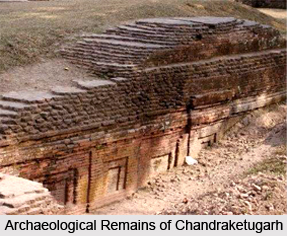
Chandraketugarh is situated in North 24 Parganas district beside Bidyadhari River. Excavations from this site have revealed important artefacts that belonged to the Gupta, Kushanas and Maurya periods. The place has also furnished relics of pottery work, some of which contains Kharosthi and Brahmi inscriptions. Remarkable structures and terracotta work are also important discoveries of Chandraketugarh.


Bharatpur

Bharatpur Archaeological Site in West Bengal is reminiscent of early village farming culture of ancient India. The settlement is believed to have originated between 1735 BC and 1417 BC. The prehistoric settlement at Bharatpur village was first discovered in 1971. Following its discovery, a series of excavations were conducted between 1971 and 1975, revealing significant material evidence of the settlement’s cultural and technological practices. Among the most notable findings were black and red pottery, terracotta objects, and weapons crafted from cut bones. These artifacts reflected the lifestyle, craftsmanship, and daily activities of the people who once inhabited the settlement.


Nanoor

Nanoor is another archaeological site in Birbhum district of West Bengal. Ruins of Sen and Pala Dynasties have been found in this region.


Tilpi Dhosa

Tilpi-Dhosa Archaeological Site is situated along the right bank of the Piyali River, extending across the villages of Tilpi and Dhosa in West Bengal. The site has gained considerable historical significance due to the discovery of ancient artefacts and evidence of early human settlement dating back more than 2,200 years. Exploration and limited archaeological excavations conducted in both villages uncovered a variety of historical remains, including artefacts from the Gupta period and the remains of a Buddhist stupa. Local residents had long been aware of the region’s ancient past, as terracotta bricks and idols had frequently been recovered from the area.

Formal excavations carried out between 2005 and 2007 established that human habitation at Tilpi and Dhosa extended as far back as 200 BC. Archaeologists believe the settlement played an important role in ancient riverine trade networks and was connected to Chandraketugarh through the waterways of the Piyali and Bidyadhari rivers. According to archaeological findings, the earliest cultural phase of the site dates from the 2nd to the 1st century BC. However, a large number of artefacts recovered from the site belong to the Gupta period.


Gauda

Gauda is located in Malda district along the west bank of River Ganga. The place has been found to have inhabited by Pala and Sen Dynasties in ancient times. Many historical monuments have been found and restoration works have been done for some of them. A mound has also been found near Gauda where ruins of an old palace have been discovered.

Kotwali Gate: Kotwali Gate, commonly known as Kotwali Darja, is the site of a ruined medieval gateway located near the Bangladesh–India border in the Malda district of West Bengal. It once served as the southern entrance to an ancient citadel of Bengal. The gate originally functioned as a grand archway and entrance to the fortified city of Gaur, which served as the capital of Bengal for nearly 112 years. Historians believe that Kotwali Gate may have been constructed after the Bengal Sultanate shifted its capital back to Gaur from the nearby city of Pandua in 1446. 


Gosanimari

Gosanimari Archaeological Site, also known as Khalisa Gosanimari, is both a historic village and an important archaeological site located in the Dinhata subdivision of Cooch Behar district in West Bengal. The site is best known for the ruins of Rajpat, which historians believe may once have served as the capital of the ancient Kamata Kingdom. However, carbon dating suggests that the fortifications at the site were originally constructed during the 10th century under the rule of Pala Kamrupa.

Among the major discoveries from the exacavations are two large stone wells, extensive stone walls, and numerous sculptural idols that reflect the architectural and religious traditions of the period. Excavators also recovered a variety of pottery items, including vases, bowls, basins, dishes, and beakers, indicating the presence of a well-developed settlement with sophisticated craftsmanship. The idols discovered at the site display distinct facial and physiognomical features characteristic of the artistic traditions of the 11th and 12th centuries AD. They have strong resemblance with the renowned Pala-Sena school of art.


Pandu Rajar Dhibi

Pandu Rajar Dhibi is the first Chalcolithic or Copper Age site excavated in this state. It is located in Bardhaman district. The main mound of the site is related to King Pandu of the Indian epic Mahabharata. The site has revealed significant relics of a trading township where trade also spanned over the sea routes.


Moghalmari

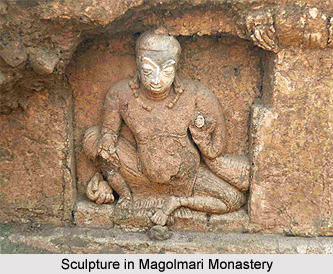
Moghalmari, in Paschim Medinipur district, is an important site of archaeological excavation which has revealed remains of a Buddhist monastery belonging to the period between 6th to 12th centuries. Stucco decorations have also been found in the architectural relics. Articles of Gupta period include some of the important discoveries from Moghalmari.


Debalgarh

Debalgarh Archaeological Site is located in the village of Debagram Anulia in the Nadia district of West Bengal. The site preserves evidence of continuous human settlement spanning nearly 1,500 years, with artefacts belonging to the post-Gupta, Pala, Sena, and Sultanate periods. Excavations have uncovered a variety of significant artefacts, including black-red pottery, traditional Jol pradipa lamps, and idols associated with both Buddhism and Vaishnavism.

Historians believe that Debalgarh functioned as an important trading centre during the Sena period. The remains of a massive defensive wall constructed with mud and bricks further indicate the strategic importance of the settlement. Measuring nearly 15 to 20 feet in width, the wall once surrounded the area, while a broad moat stretching approximately 40 to 50 meters wide and 8 to 10 feet deep lay beyond it, although much of the moat has disappeared over time.


Jagjivanpur

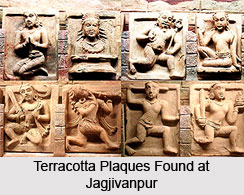
Jagjivanpur Archaeological Site, also known as Jagajjibanpur, is located in Habibpur, Malda district, West Bengal. The site gained immense historical importance following the discovery of a copper-plate inscription belonging to the Pala emperor Mahendrapaladeva, which provided valuable information about the political and religious history of the Pala period in Bengal.


One of the most remarkable discoveries at Jagjivanpur was the structural remains of a 9th-century Buddhist monastery known as the Nandadirghika-Udranga Mahavihara.  Archaeological excavations conducted between 1987 and 1996 uncovered portions of the brick-built vihara complex, stupas, residential cells with corbelled niches, verandahs, and other architectural features that reflected the organized layout of the monastery.


Kana

Kana is an Upper Paleolithic archaeological site located in the Purulia district of West Bengal. The site, which forms part of the Manbazar Formation of the Kumari Basin, has gained significant archaeological attention for its evidence of early human habitation and microblade artefacts associated with the Upper Paleolithic era.

Kana is particularly notable for preserving traces linked to anatomically modern humans who are believed to have lived in the region more than 42,000 years ago. The first phase of excavations in the Ajodhya Hills region was carried out during 1998–99, leading to the discovery of the Upper Paleolithic sites of Kana and Mahadebbera. A second phase of excavations followed in 2012–13, revealing a variety of tools and weapons including stone fragments and ferruginous or iron-manganese soft pellets. 


Karnasuvarna

Karnasuvarna was an important ancient city located in present-day Berhampore in the Murshidabad district of West Bengal. The city served as the capital of the Gauda Kingdom during the reign of Raja Shashanka in the 7th century. Raja Shashanka is regarded as the first major ruler of ancient Bengal, and under his leadership Karnasuvarna emerged as a significant political and administrative center.


Mongalkote

Mongalkote Archaeological Site is located in the Purba Bardhaman district of West Bengal. Archaeological excavations carried out at Mongalkote revealed seven distinct phases of cultural and human settlement, spanning from around 2000 BC to 1800 AD.

The earliest phase, identified as Period I, belongs to the Chalcolithic era and reflects the beginnings of settled human life in the area. Period II is associated with the agricultural age, indicating the growth of farming communities and organized rural settlements. Period III corresponds to the Maurya-Sunga period, while Period IV relates to the Kushana era, both of which marked significant political and cultural developments in the Indian subcontinent. Period V represents the Gupta age, a time widely regarded as a classical era of Indian civilization. The final phases, Periods VI and VII, belong to the medieval period, reflecting the continuation of human habitation and cultural evolution over centuries.


Rajpat

Rajpat or Kamtapur Fort is located in present-day Gosanimari in the Dinhata subdivision of Cooch Behar district. The site is believed to have originally functioned as a fortified settlement during the 10th and 11th centuries under the rule of the Kamarupa Pala dynasty. Historical evidence suggests that the area continued to remain inhabited and politically active in later centuries. The discovery of a coin belonging to Ghiyasuddin Azam Shah indicates that the settlement existed during the late 14th century, around the time the Bengal Sultan invaded the Kamata Kingdom. In the middle of the 15th century, the weak rulers of the Kamata Kingdom were eventually replaced by the Khen dynasty, which ruled the region through three successive rulers before its decline.

Archaeological excavations conducted by the Archaeological Survey of India between 1998 and 2000 at the Rajpat Mound uncovered a limited number of antiquities and pottery fragments. The pottery discovered, showed notable similarities with pottery traditions found in Assam, suggesting regional interaction and shared cultural influences. Some of the antiquities also displayed characteristics associated with the Pala-Sena artistic tradition of the 11th and 12th centuries.


Sayed Jamaluddin Mosque

Sayed Jamaluddin Mosque is a former mosque and present-day archaeological site located in the ancient city of Saptagram in the Hooghly district of West Bengal. Although now partially in ruins, the structure remains an important example of the architectural and historical heritage of medieval Bengal during the Sultanate period. The mosque was constructed during the reign of the Bengali Sultan Nasiruddin Nasrat Shah. A stone foundation plaque attached to the structure records that the mosque was commissioned by Sayed Jamaluddin, the son of Sayed Fakhruddin of Amol. The inscription further states that the mosque was built in the month of Ramadan in 936 AH, corresponding to 1529–1530 CE, during the month of May. Within the mosque complex are three tombs, believed to belong to Sayed Fakhruddin, his wife, and his eunuch.


Mahishadal

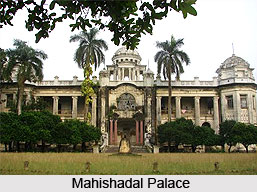
Mahishadal, located in Purba Medinipur district, have revealed excavated artefacts that are older than Harappan civilization. It is also known for a palace belonging to 16th century. Apart from this, the place houses several ancient temples, making it an important historical site.


Kotasur

Kotasur Archaeological Site is located in the Birbhum district of West Bengal, renowned for the remains of an early historic fortified city. Located on the left bank of the Mayurakshi River, the site preserves evidence of continuous human occupation extending from the Chalcolithic period, around 1690–1035 BC, to the early historic period between the 1st century BC and the 2nd century AD.

Archaeological excavations conducted at Kotasur in 1985 and continued during 1986–87 uncovered traces of a fortified settlement, indicating the presence of an organized urban centre with defensive features. Researchers also discovered evidence of domesticated animal remains, suggesting the existence of settled agricultural communities. Among the major findings at the site were extensive pot-sherd assemblages that included Black-and-Red Ware (BRW), Red Ware, and Grey Ware pottery. Excavations also revealed a variety of terracotta figurines, including a pot-bellied Yaksha, decorative elephant figures, and a humped bull.


Laljal Cave

Laljal Cave, also known as Laljal Durga Mandir or Laljal Hill Cave, is a significant prehistoric archaeological site located near Belpahari in the Jhargram district of West Bengal. The cave is widely regarded as a natural shelter that was once inhabited by primitive human communities and is believed to date back to approximately 1000–1200 BC, representing an important phase of the prehistoric Neolithic era in eastern India.

The cave has attracted archaeological interest due to the presence of carvings and images etched onto its inner walls. Excavations and studies conducted at the site revealed traces of several prehistoric periods preserved within different layers of the cave deposits, including the Paleolithic, Mesolithic, Neolithic, Copperstone, and Ironstone ages. A variety of artefacts and fossils have been recovered from Laljal Cave. Among the significant discoveries were stone ploughshares, stone arrowheads, triangular stone choppers, copper axes, and fossils of blue cow bones. Fossil remains of other animals, including the Nilgai, were also uncovered at the site.


Tildah

Tildah Archaeological Site, also known as Tilda or Tildaganj, is located in the Purba Medinipur district of West Bengal. The site has gained historical significance due to the discovery of artefacts belonging to the Chalcolithic, early historic, and later historic periods, reflecting a long sequence of human occupation and cultural development in the region. Archaeological explorations uncovered a variety of material evidence associated with different phases of settlement and civilization. Researchers also believe that Tildah may have been connected to ancient maritime networks due to its geographical position.


Kherur

Kherur Archaeological Site in the Murshidabad district of West Bengal is known for revealing evidence of ancient settlement and cultural development. Excavations carried out at Kherur on several occasions uncovered a rich assemblage of artefacts, including Black-and-Red Ware (BRW), grey ware, and buff ware pottery fragments. Archaeologists also discovered Gupta and post-Gupta period bricks, dating the settlement between the 4th and 7th centuries AD. The findings from Kherur indicate that the Chalcolithic communities inhabiting the region practiced agriculture and established permanent settlements on the older alluvial flood plains of rivers such as the Ajay, Mayurakshi, Kopai, and Bakreswar.

Kherur is also historically significant for the presence of the Kherur Mosque, also known as the Kheraul Mosque, a notable example of pre-Mughal Islamic architecture in Bengal. Constructed in 1494–95 CE by Rafat Khan during the reign of Sultan Alauddin Hussain Shah, the mosque is renowned for its elegant terracotta ornamentation and distinctive architectural style. Built entirely of brick, the structure features a single dome accompanied by a triple-domed veranda decorated with intricate floral terracotta designs.