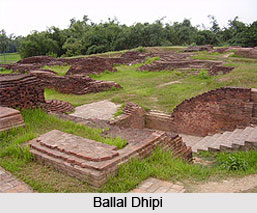
 Archaeological sites in Andhra Pradesh involve the innumerable unique archaeological marvels based at this southern Indian state, which draw hordes of historians and tourists throughout the year. These beautiful historical spots suggest the existence of ancient civilizations which once thrived in this portion of India. Excavations organised by the Archaeological Survey of India have revealed outstanding specimens of archaeology in Andhra Pradesh in regions like Bavikonda, Chandragiri Fort, Nagarjunakonda, Satanikota, Jwalapuram, Machilipatnam, Warangal and several others. Remnants of various royal dynasties, along with their indigenous cultures and traditions are scattered throughout the length and breadth of the archaeological sites in Andhra Pradesh.
Amaravati
This site is also referred to as `Dharanikota` or `Dhanyakataka`. Located on the banks of Krishna River about 35 km from the north-western portion of Guntur District, Amaravati is an ancient town which was once the capital of the Satavahana Empire. The Satavahanas are believed to be the earliest Andhra rulers who reigned over this area till the 3rd century from 2nd century, following the decline of the Mauryan Dynasty. Amaravati is also home to a Shiva temple known as Amareswara Temple or Amaralingeshwara Temple, which is amongst the notable `Pancharamas`. A magnificent Buddhist stupa existed here, prior to the Mauryan rule.
 Bavikonda
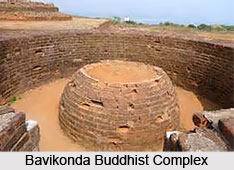
Bavikonda Buddhist Complex is an interesting archaeological site which is situated at a distance of nearly 16 km from Vishakhapatnam, about 130 metres above mean sea level. As per the Telugu language, Bavikonda implies `hill of wells` and it contains numerous wells for collecting rainwater. The Bavikonda Monastery present here is as old as 3rd century B.C. Some of the relics unearthed here include tiles, coins, bricks, pottery works, ancient inscriptions, caskets, a piece of bone reserved in an urn believed to one of the remains of Lord Buddha and many others. The State Archaeological Department had supervised these excavations. Pavurallakonda and Thotlakonda are amongst the Buddhist sites located nearby.
Chandragiri Fort
This historical fort had been constructed during the 11th century and the Raja Mahal Palace is in Chandragiri near Tirupati in Andhra Pradesh. Historical accounts state that the Yadava Naidus ruled over Chandragiri for three hundred years, before it was controlled by Vijayanagara kings during 1367. Under the regime of Saluva Narasimha Rayalu, Chandragiri flourished and it served as the 4th capital of Vijayanagar. During the year 1646, Chandragiri Fort was annexed to the territory of Golconda and eventually was captured by the kingdom of Mysore. It is said to have been neglected since 1792. Presently, Raja Mahal is a beautiful archaeological museum. Indo-Sarcenic style of architecture is displayed by this grand palace which was erected using lime mortar, stone and brick.
Gandikota
Gandikota village is situated about 15 km from Jammaladugu in Kadapa District of this state and was founded by Kapa Raja during 1123, who was the Western Chalukyan ruler of Kalyana. It was prominent during the dynasties of Qutb Shahi, Vijayanagara and Kakatiya and the Gandikota Fort was controlled by Pemmasani Nayaks above 300 years. The Fort of Gandikota is so named due to the existence of a `gorge` which was based near Gandikota Hills and Pennar River, as in the Telugu language `gandi` implies fort. Two old temples dedicated to Raghunatha and Madhava exist in the fort.
 Nagarjunakonda
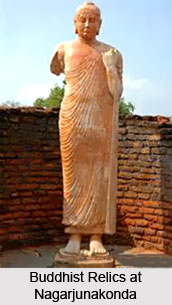
Nagarjunakonda or Nagarjuna Hill is a renowned Buddhist town in Guntur, Andhra Pradesh which is about 150 km from the south-eastern part of Hyderabad. Currently, it is an island, possessing the numerable Buddhist archaeological sites. Popularly known as `Sri Parvata`, Nagarjunakonda is amongst the most famous Buddhist sites which today are present under the Nagarjunasagar Dam. The area has been named in the honour of Nagarjuna, a Buddhist philosopher who followed Mahayana Buddhism. Buddhist monasteries and Buddhist universities are also a part of the ruins at Nagarjunakonda. This area was once the capital of Ikshvaku Dynasty which dates from 225 AD to 325 AD. Ikshvaku kings are said to be the descendants of Satavahanas. Over 30 Buddhist `viharas` are present here.
Thotlakonda
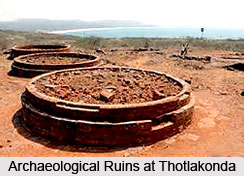
Based about 15 km from Vishakhapatnam, Thotlakonda Buddhist Complex is another impressive archaeological site of Andhra Pradesh. `Thotlakonda` is a Telugu name which is obtained from the existence of a vast quantity of rock-cut `throughs` scattered at the bedrock of the cisterns. It is believed that Thotlakonda was under the control of the Kalinga Empire, which was responsible for the propagation of Buddhism to Sri Lanka and different portions of south-east Asia. It was discovered by the Indian Navy while they were conducting an aerial survey for establishing a new Naval Base. Following this major discovery, the Andhra Pradesh State Archaeology Department arranged some important excavations particularly during 1988 to 1993. A Hinayana Buddhist complex which is as old as 2000 years have been uncovered by the various excavations carried out here.
Other Archaeological Sites of Andhra Pradesh
Apart from these wonderful archaeological areas of this Indian state, one will come across many other interesting historical sites in Andhra Pradesh. They comprise Bojjannakonda, Dantapuram, Golkonda, Erravaram Caves, Ghantashala, Guntupalli Group of Buddhist Monuments, Jaggayapetta, Kotturu Dhanadibbalu, Nampally Saraai, Ramateertham, Thousand Pillar Temple, Salihundam and lots more.