
The Kalingas as a tribe are almost always associated with the Angas and Vangas in ancient Indian literature. These three tribes along with the Pundras and Suhmas are said to have been named after the five sons of Bali, Anga, Vanga, Kalinga, Pundra and Suhtna who were called Baleya Kshatra and also Baleya Brahmanas. These five tribes evidently then lived conterminously and had their distinct entities within respective geographical boundaries to which they gave the names of their respective tribes. In the Markandeya Purana it has been mentioned that a Kalinga tribe had their settlement on the Satadru. In many of the Puranas Kalingas have been described as people of the southern region. It has been said that they dwelt in the southern region along with the Maharastras, Mahisakas, Abhiras, Vaisikyas, Savaras, Pulindas and others.
A number of famous Kalinga kings are mentioned in the Adi Parva of the Mahabharata and they are credited with having contracted matrimonial relations with princesses of the Aryan royal families of the north. According to epic evidence as contained in the Mahabharata, the Kalinga country comprised the entire tract of country lying along the coast of Vaitarani in Orissa to the borders of the Andhra country.
The country of the Kalingas has been mentioned by Panini. According to Kautilya`s Arthasashtra, elephants of Anga and Kalinga belonged to the best of their types. The Jatakas contain a number of references to the Kalinga country and its kings. The Jatakas also refer to the capital city of Kalinga which was Dantapuranagara which was probably identical with Dantakura which has been mentioned in the Mahabharata.
It has been said that the tribes called Kalingas were nearest to the sea, and higher up were the Mandaei and the Malli. The royal city of Kalinga is called Parthalis. The capital city Parthalis of the Kalinga has been identified with Purvasthali.
Kalinga during the days of Kharavela of the Ceta dynasty had risen to historical prominence. Historical accounts by Yuan Chwang states that the people who lived in Kalinga were very different from those who lived in Mid-India. There were few Buddhists, the majority of the people being of other religions. In Kalinga there were also some monasteries and at the same time there were also Deva temples in the land of Kalinga.
The Kalingas have always been distinguished in literature and sometimes also in epigraphs. In the Puranic accounts three types of Kalingas have been distinguished. They were namely the Gangaridae-Kalingae, the Mekala-Kalingas and the Kalingae proper.
Kalingas
Kalingas, as a tribe, is closely associated with the Angas and the Vangas. In ancient Indian Literature there has been a lot of mention of the Kalingas. It is believed that the Kalingas were settled in the state of Orissa.
Recently updated articles in Tribes of India
Arakh Tribe
Arakh Tribe is one of the ancient tribes located in several parts of central India. Their origin dates back to the Tughlaq era. Arakh tribe appears to...
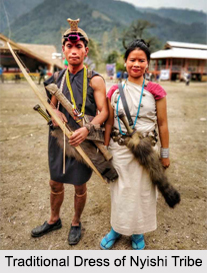
Traditional Dress of Nyishi Tribe
Traditional Dress of Nyishi Tribe is worn during festivals and social gathering. Men wear a cane helmet surmounted with the beak of the great Indian H...
Pasi Community
Pasi is an aboriginal race of India and are mainly distributed over the northern region of the country. The traditional occupation of Pasi is the extr...

Bhojas
Bhojas have been described as a very important tribe in the Aitareya Brahmana. Historical records have said that the Bhojas were settled towards the s...
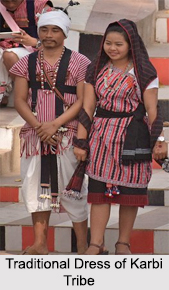
Traditional Dress of Karbi Tribe
Traditional Dress of Karbi Tribe can be easily recognized by the artistic designs inherited from their forefathers. Karbis have their own traditional...
Related articles in Tribes of India
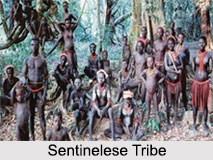
Sentinelese Tribe
Sentinelese tribal community is one of the most isolated and secluded tribes that are found in the whole world.
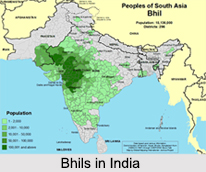
Bhil Tribe
The people of the Bhil tribe are the most widely distributed tribal groups in India.
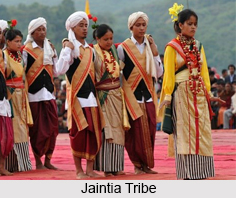
Jaintia Tribe
Jaintia Tribes are located in the Jaintia Hills of Meghalaya. They are also called the Pnars. They are famous for weaving of carpet, making of musical...
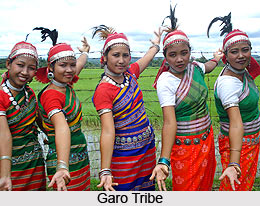
Garo Tribes
Garo Tribes are one of the matrilineal tribes of North-East India who reside in the Garo hills of Meghalaya. Historically, the tribe originated in Tib...
Garasia Tribe
The Garasia tribal community holds a significant position within Indian culture, renowned for their distinctive way of life and rich cultural heritage...