Home > Society > Tribes of India > Traditional Dress of Karbi Tribe
Traditional Dress of Karbi Tribe
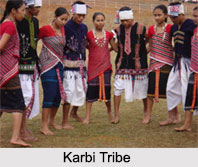
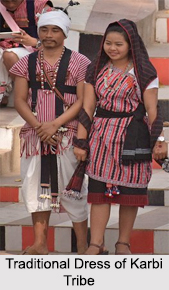
Traditional Dress of Karbi Tribe can be easily recognized by the artistic designs inherited from their forefathers. Karbis have their own traditional dresses and ornaments that are specific to the tribe.

Share this Article:

Introduction

Karbis, the major tribal ethnic group of the Karbi Anglong district of Assam have their own traditional attire. The clothes they wear are homemade from the locally grown cotton or the Eri silk. In Karbi Anglong, it has been observed that the demand for traditional attire is still very high as it is being preferred by the old and the young alike. So Karbi women weavers continue producing the traditional clothes, keeping alive the colours and designs of ancient time and at the same time modernizing them. One notable aspect of traditional dress of Karbi Tribe is the varied designs and colours of the clothes, each meant for particular age, sex and social status of the people wearing them. The Karbi costumes are more or less similar to those of the Khasis of Meghalaya.


Traditional Dresses for Men of Karbi Tribe

The traditional attire of men includes Choi, Poho, Rikong, and Sator, each garment representing cultural heritage and forming an essential part of their customary dress.

Some of the traditional dresses of the Karbi men are as follows:

Choi: Choi is a kind of warm jacket. There are different types of Choi specific to the age of men. Choi hongthor a ki-ik, choi hongthor ake-lok are meant for young men while choi ang, choi miri are for middle aged and aged men.

Rikong: In the remote area, married and aged men of Karbi tribe wear a cloth known as “Rikong” while doing their daily chores. It is a loin cloth available in different types like Rikong jongjong with colourful designs and simple white rikong bamon.

Poho: The use of turban called “Poho” is fast disappearing. Poho is a piece of colourful silk cloth which Karbi men use for making turban and covering their forehead. It is also used as a muffler. Poho comes in various types such as simple long white poho, poho ke-er, and poho kelok.

Sator: Men also wear a dhoti like cloth of symmetrical designs and animal prints known as “Sator”. It is a piece of white cloth secured around the waist and cover the full length of the leg. Sator is often worn with long pe seleng with vibrant designs and borders.


Traditional Dresses for Women of Karbi Tribe

The traditional attire of women comprises Pini, Pekok, Vamkok, and Jiso, each garment reflecting cultural identity and heritage while contributing to a distinctive and graceful ensemble.


Some of the traditional dresses of the Karbi women are as follows:

Pini: Pini is a black skirt worn around the waist and secured with a belt, featuring a variety of traditional designs such as jangre, santok, honki ranchom, marbong homkri, ahi cherop, chamburukso apini, and mekserek, each reflecting distinct cultural patterns and craftsmanship. 

Pinicamflak: The Karbi females use "Pinicamflak" as lower garment and "Pekok" as upper garment. The lower garment is a Karbi version of Assamese Mekhla but little shorter in length. 

Pekok: Pekok is a square piece of cloth used to cover the upper body and is tied at the right shoulder, available in a range of colours and traditional designs such as pe sleng, pe duphirso, pe khonjari, pe luru, pe jangphong, and pe sarpi. Pe Sarpi is mostly worn by elder women while pe sleng and pe jangphong is worn by middle-aged women. Younger women prefer to wear pe duphirso. 

Wamkok: They also use a highly artistic waistband, also called “Vamkok.” It is mainly used to tie the pinni to the waist and is available in different colours with fringes at both ends. Different types of Wamkok are amekpi, amekso, abermung, thoithesuri angphar, suve arvo and phonglong angsu.

Dokherso: In winter, they use coloured and striped scarf known as “Dokherso.” This scarf is also worn during the performances of “Chomangkan” (death ceremony). It is their ritual for showing respect to their elders and also the dead ancestors. 

Jiso: It is a long black cloth adorned with intricate designs and decorative fringes at one end, traditionally worn to cover the breasts.

Piba: Karbi women use “Piba”, a long cloth to carry their new born babies on the back. 


Jewellery of Karbi Tribe

In matters of ornamentation, Karbi society follows specific cultural norms. Karbi women are generally not permitted to wear gold ornaments, which are traditionally reserved for men. As women tend to wear a greater number of ornaments, silver is extensively used in their adornment.

Some of the traditional jewelleries of Karbi tribe are:

Lek: A distinctive ornament worn by Karbi women around the neck is the Lek, typically crafted in silver. These Leks are often made using coins and colourful beads and are locally known by names such as Ser Alek Pongting, Lek Pengkhara, Lek Bonghom, Lek Waikom, and Lek Jingjiri. Men also wear Leks, though theirs are made of gold and are traditionally referred to as Lek Ruve, Lek Sobai, and Lek Manduli.

Roi: Karbi women also wear bracelets known as Roi, with several varieties in use, including Roi Pengkhara, Roi Ke-er, and Roi Kelok, among others.

No Thengpi: The ornaments worn by women to adorn their ears are known as No Thengpi. These come in various types, including Thengpi Angrongkatengbai, Angrong Kangchim, and others, each reflecting traditional craftsmanship and cultural identity.

Norik: Men of the tribe also wear ear ornaments known as Norik, which are traditionally crafted from gold or silver.

Arnan: The rings worn by the Karbi community are known as Arnan. Common varieties include Arnan Ke-et, Arnan Kelop, Rup Bonda, Ser Bonda, and Vokapardon Arnan, which are frequently worn on the fingers. Karbi priests, however, traditionally wear Arnans made exclusively of copper.

Nothengpi: Nothengpi refers to distinctive ear adornments, with elderly Karbi women traditionally stretching their earlobes to accommodate bamboo tubes. This style was fashionable in earlier times and featured ornaments such as Kadengchinro.

The timeless traditions of Karbi dresses and jewellery stand as cherished expressions of cultural identity. Even where modernization is forcing a change, the preservation of these cultural forms remains essential. These exquisite creations distinctly define the Karbi tribe, safeguarding their unique cultural heritage for future generations.


Share this Article:

More Articles in Tribes of India


Tribes of Arunachal Pradesh
Tribes of Arunachal Pradesh form the major part of demography of the state. It is inhabited by almost 20 tribal groups. Some of the dominant tribes of the state are Adis, Apatanis, Aka, Miji, Singphos, Mishmis, Monpas, Nyishi and others.
Tribes of Uttar Pradesh
Tribes of Uttar Pradesh form an integral part and live with a distinct culture of their own.
Tribes of Manipur
Tribes of Manipur, who have largely migrated from nearby areas of Assam and Meghalaya, exhibit a unique socio-political complexion of the region.
Tribes of Mizoram
Tribes of Mizoram inhabit the major part of Mizoram. Tribes of Mizoram with their diverse festivity and heritage echo the true color of Mizoram.
Tribes of West Bengal
Tribes of West Bengal, with their unique culture, religion, costumes and tradition have enriched the culture and tradition of the state of West Bengal.
Tribes of Bihar
Though a large part of tribal population has come under the state of Jharkhand, Bihar still boosts of most socially advanced and culturally rich tribes.
Tribes of Odisha
Tribes of Odisha form a major portion of the total population of the state. Their unique culture and lifestyle have greatly contributed in the vibrancy and diversity of the state’s cultural heritage.
Tribes of Kerala
Tribes of Kerala inhabits in the forests and hilly regions of the state. There are more than 30 tribal communities in Kerala.
Tribes of Madhya Pradesh
Tribes of Madhya Pradesh represent the culture of their state. The Jhabua district has the highest density of tribal population.
Tribes of Himachal Pradesh
Tribes of Himachal Pradesh make their identity with their culture, costumes and tradition and religion they follow.
Tribes of Tripura
Tribes of Tripura are largely located in the mountainous areas of Tripura who represent themselves through their culture and traditions. These tribes vary from region to region.
Tribes of Rajasthan
Tribes of Rajasthan are said to be the original inhabitants of Rajasthan. They comprises of about 12 percent of the total population of the state.
Tribes of Meghalaya
Tribes of Meghalaya mainly include the tribal groups of Garo, Khasi and Jaintias as well as certain other small tribal groups.
Tribes of Maharashtra
Various kinds of tribal groups of Maharashtra with their culture, costume, tradition echoes the colour of the state.
Tribes of Andhra Pradesh
Tribes of Andhra Pradesh have enriched the ethnicity of the state with their typical tribal culture and tradition.
Tribes of Jammu and Kashmir
Tribes of Jammu and Kashmir have established themselves with the outstanding level of masterwork and diversification.
Tribes of Karnataka
Tribes of Karnataka flaunt ample exquisite clothes, festivals, festivities, dance and theatres in their lives.
Sentinelese Tribe
Sentinelese tribal community is one of the most isolated and secluded tribes that are found in the whole world.
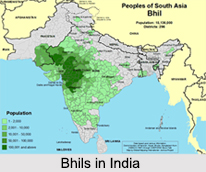
Bhil Tribe
The people of the Bhil tribe are the most widely distributed tribal groups in India.
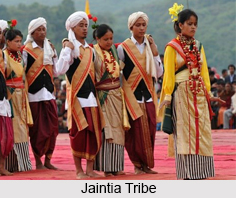
Jaintia Tribe
Jaintia Tribes are located in the Jaintia Hills of Meghalaya. They are also called the Pnars. They are famous for weaving of carpet, making of musical instruments, jewellery and pineapple fibre articles.
Garo Tribes
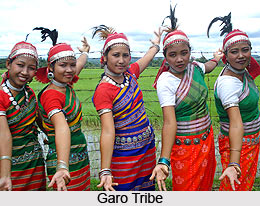
Garo Tribes are one of the matrilineal tribes of North-East India who reside in the Garo hills of Meghalaya. Historically, the tribe originated in Tibet and migrated to India 400 years ago.
Garasia Tribe
The Garasia tribal community holds a significant position within Indian culture, renowned for their distinctive way of life and rich cultural heritage. Concentrated across various regions of the state of Rajasthan, the Garasia tribal community proudly stands as the third largest tribal group in the region.