
 Tribes of Arunachal Pradesh form the major part of demography of Arunachal Pradesh. It is one of the largest states of north east which provides habitation to at least 20 tribal groups who are scattered in the huge state. The tribal people of this region are adept in making baskets, smithy work, weaving, pottery, wood carving and painting.
Tribes of Arunachal Pradesh largely include the tribes of Adis, Apatanis, Buguns, Hrusso, Singphos, Mishmis, Monpas, Nyishi, Sherdukpens, Tagins, Khamtis, Wanchos, Noctes, Yobin, Khambas, Membas, Aka, Miji, Bori, Bokar, Galo etc. Some of them have been detailed below:
Tribes of Arunachal Pradesh form the major part of demography of Arunachal Pradesh. It is one of the largest states of north east which provides habitation to at least 20 tribal groups who are scattered in the huge state. The tribal people of this region are adept in making baskets, smithy work, weaving, pottery, wood carving and painting.
Tribes of Arunachal Pradesh largely include the tribes of Adis, Apatanis, Buguns, Hrusso, Singphos, Mishmis, Monpas, Nyishi, Sherdukpens, Tagins, Khamtis, Wanchos, Noctes, Yobin, Khambas, Membas, Aka, Miji, Bori, Bokar, Galo etc. Some of them have been detailed below:Tribes of Arunachal Pradesh
Tribes of Arunachal Pradesh form the major part of demography of the state. It is inhabited by almost 20 tribal groups. Some of the dominant tribes of the state are Adis, Apatanis, Aka, Miji, Singphos, Mishmis, Monpas, Nyishi and others.
Introduction
Tribes of Arunachal Pradesh form the major part of demography of Arunachal Pradesh. It is one of the largest states of north east which provides habitation to at least 20 tribal groups who are scattered in the huge state. The tribal people of this region are adept in making baskets, smithy work, weaving, pottery, wood carving and painting.
Tribes of Arunachal Pradesh largely include the tribes of Adis, Apatanis, Buguns, Hrusso, Singphos, Mishmis, Monpas, Nyishi, Sherdukpens, Tagins, Khamtis, Wanchos, Noctes, Yobin, Khambas, Membas, Aka, Miji, Bori, Bokar, Galo etc. Some of them have been detailed below:Adi Tribe
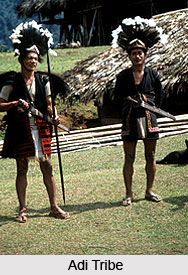 The Adis have two main divisions, the Bogum and Bomis, and under each there are a number of sub-tribes. By nature, the Adis are democratic and organized. Their village council is called Kebang. Their villages are usually situated on the spurs of hills. Adi women are very good weavers.
Bugun Tribe
The Buguns are also agriculturists and perform a number of rites and ceremonies for their welfare. By nature, they are gentle, hospitable and affectionate people.
Hrusso Tribe
They were related with the Ahom Kings. They have a custom of painting their face with black marks. The Hrusso is mainly involved in the trades of cloth, blankets, swords, etc.
Singpho Tribe
The Singphos reside on the banks of Tengapani and Noa Dehang rivers. They are agriculturists and expert blacksmiths. The Singpho women are good weavers.
Mishmi Tribe
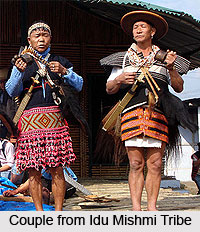
Mishmis form the bulk of the population of Lohit, Upper Dibang Valley and Lower Dibang Valley districts. They are divided into three main groups including Idus or Chulikatas, Digarus or Taroan and Mijus or Kaman. Agriculture is the main occupation of Mishmis. However, they are also good traders. The chief items of trade are deer mask, wild medicinal plants, animal skins etc.
Sherdukpen Tribe
The Sherdukpens are a small tribe and their religion is a blend of Mahayana Buddhism and tribal magic-religious beliefs. They are good agriculturist but trade is their main interest.
Tagin Tribe
The Tagins are main inhabitant of Upper Subansiri district. Agriculture is their main occupation.
Wancho Tribe
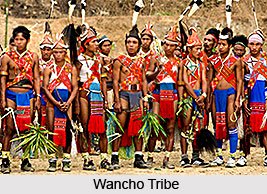
The western part of Tirap district, bordering Nagaland, is inhabited by the Wanchos. The society of this tribe is divided into four classes including Wanghams, Wangpana, Wangaue and Wangaas. The law and order of the society is maintained by a village council. Tattooing is a social custom among them.
Nocte Tribe
The Noctes are settled in the central part of Tirap to the east of the Wanchos. They profess Vaishnavism. The tribe is noted as salt producers.
Yobin Tribe
The Yobin is a small group of people inhabiting the remote easternmost corner of the Tirap district. They are also called Lisus.
Khamba and Memba Tribes
The Khambas and Membas inhabit the northern part of West Siang. They are Buddhist by religion. Agricultural is their main occupation.
Nyishi Tribe
The Nyishis are the largest groups of people inhabiting the major part of Lower Subansiri district. The men of this tribe keep their hair long and tie it in a knot just above the forehead. They wear cane bands around the waist. This tribe believes that after death, the spirit of a dead travels to the "village of the ancestors".
Apatani Tribe
The Apatanis are settled agriculturists. They inhabit the valley around Ziro -the headquarters of Lower Subansiri district. They are good cultivators and practice both wet and terrace cultivation.
Administration of Arunachal Pradesh Tribes
 Administration of Arunachal Pradesh tribes is known by different names and have specific functions assigned to them. Each tribal group has their own traditional system as far as administration of the society, maintenance of law and order and socio-cultural life of the people are concerned. The systems are institutionalized in the form of village council of elders. They are called differently by different tribes like Tsorgen of the Monpas, Jung of the Sherdukpen, Mele of the Akas, Buliang of the Apatanis, Kebang of the Adis, Abbala of the Idu Mishmis, Pharai of Kaman Mishmis, Mokchup of the Khamti, Ngothun of the Noctes, Wangsu-Wangsa of the Wanchos and so on.
Tsorgen of Monpa Tribe
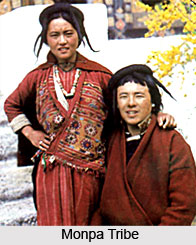
Monpa Tsorgens are elected chiefs to maintain law and order and welfare of the people. The system has undergone several changes. The elected Tsorgens have been increased and autonomous elected village councils were established. Tsorgens are elected in a systematic manner.
Jung of the Sherdukpen Tribe
Jung of the Sherdukpen Tribe consists of the village headman, as chairman, few members, one courier and a watchman. They decide cases by general consensus of opinion and the ultimate decision is given by the headman. The courier and the watchman have their own duties to be discharged.
Mele of Aka tribe
Mele of Aka tribe is also popularly called `Raiz`. The Mele is constituted of a headman, his two juniors and the members of the community. Their functions are similar to that of the Jung of the Sherdukpen tribe.
Buliang of Apatani Tribe
Buliang is the name given to the Local Self government of Apatani Tribe is a council consisting of clan representatives. However it does not have the centralised authority over the inhabitants.
 Gingdung of Nishi Tribe
Gingdung of Nishi Tribe is a system where a middle man tries to settle matters through peaceful negotiations based on traditional customs, manner and society norms. They have no power to exert while settling disputes. However a wise advice is accepted if found satisfactory by the parties at dispute.
Kebang of Adi Tribe
Kebang of Adi Tribe exercises the highest legal and judicial powers. Each Adi village has a Kebang.
Abbala of Idu-Mishmi tribe
Abbala of Idu-Mishmi tribe decides only judicial matters as per customary laws. They have no authority for village administration.
Mokchup of Khamti tribe
Mokchup of Khamti tribe is also called Mokchup-khai-kham. They also act on the basis of laws, procedure and rules of morality and religion as laid down in Thamasat - a sacred text.
Ngothun of the Nocte tribe
Ngothun of the Nocte tribe is a well organized village council of elders. Chieftainship is also prevalent among this tribe who acts on the advice of the elders. The administration and judicial system is democratic.
Wangsu-Wangsa of the Wancho tribe
Wangsu-Wangsa of the Wancho tribe is also a well organised village council. It has a system of administration of justice and management of village affairs that is democratic. The chiefs do not rule arbitrarily and act on the advice of the village elders.
Tribes of Arunachal Pradesh have their own system of local self-governments. The genesis of the system is almost obscure though. The peaceful manner in which the various groups of people have been maintaining their socio-cultural-religious and political life justify the existence of a democratic system. These village councils of almost all the tribes have a similar manner of functioning. They also have common features.
The council deals with the maintenance of paths and bridges; water-supply and sanitation of a village. The dates of communal hunting are fixed by them. As far as development is concerned the local officials have worked it through the local councils.
Recently updated articles in Tribes of India
Arakh Tribe
Arakh Tribe is one of the ancient tribes located in several parts of central India. Their origin dates back to the Tughlaq era. Arakh tribe appears to...
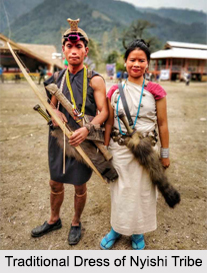
Traditional Dress of Nyishi Tribe
Traditional Dress of Nyishi Tribe is worn during festivals and social gathering. Men wear a cane helmet surmounted with the beak of the great Indian H...
Pasi Community
Pasi is an aboriginal race of India and are mainly distributed over the northern region of the country. The traditional occupation of Pasi is the extr...

Bhojas
Bhojas have been described as a very important tribe in the Aitareya Brahmana. Historical records have said that the Bhojas were settled towards the s...
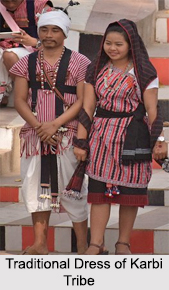
Traditional Dress of Karbi Tribe
Traditional Dress of Karbi Tribe can be easily recognized by the artistic designs inherited from their forefathers. Karbis have their own traditional...
Related articles in Tribes of India
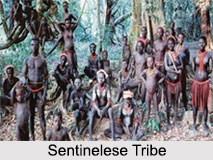
Sentinelese Tribe
Sentinelese tribal community is one of the most isolated and secluded tribes that are found in the whole world.
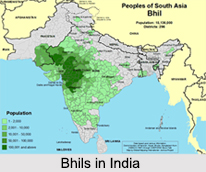
Bhil Tribe
The people of the Bhil tribe are the most widely distributed tribal groups in India.
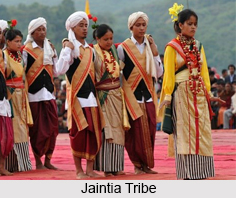
Jaintia Tribe
Jaintia Tribes are located in the Jaintia Hills of Meghalaya. They are also called the Pnars. They are famous for weaving of carpet, making of musical...
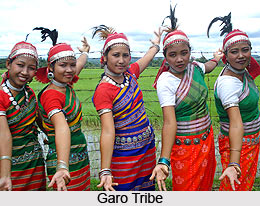
Garo Tribes
Garo Tribes are one of the matrilineal tribes of North-East India who reside in the Garo hills of Meghalaya. Historically, the tribe originated in Tib...
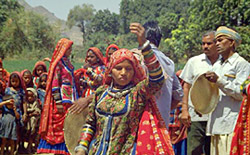
Garasia Tribe
The Garasia tribal community holds a significant position within Indian culture, renowned for their distinctive way of life and rich cultural heritage...