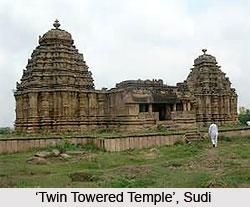
 Archaeological sites of Sudi are some of the most impressive ancient structures like the Twin Towered Temple, Mallikarjuna Temple, Naga Kunda (Well), Ishwara Linga inside a stone shelter, coins and several forms of inscriptions which witnessed the regime of the Kalyani Chalukyas during the period around 1000 AD, as it was their capital during 1100 AD. The panchayat town Sudi is situated in Gadag District, Karnataka, about 3 kms away from Itagi Bhimambika Temple. Certain coins which were minted during that point of time also suggest that these historical structures belong to that era, and that Akkadevi, the daughter of the Kalyani Chalukya ruler lived at that time. Of late, the Archaeological Survey of India is ensuring that these unique structures are properly maintained.
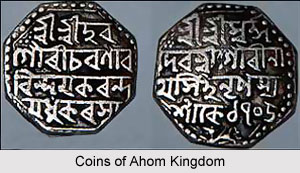
Some of the coins minted during the reign of the Kalyani Chalukyas in the region of Sudi include `Kasu` weighing about 15 grains, `Kalanju`, measuring about 48 grains, `Pana` weighing 9.6 grains, `Dramma` weighing about 65 grains, `Manjadi` weighing nearly 2.5 grains, `Akkam` weighing 1.25 grains and the heaviest gold coin was known to be `Gadyanaka` weighing 96 grains. Sudi and Lakkundi were two of the main mints during the Chalukya reign. Religions like Jainism, Shaivism and Pasupata sects of religion were quite common in Sudi during such times.
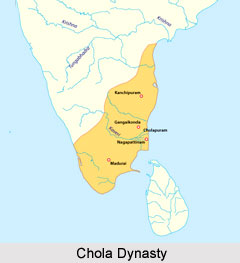
As per the old inscriptions in Sudi which date back to 1050 AD claim that some of the Chalukya princes and their womenfolk had been captured by the Cholas, who had burnt the `Mannandippai`, and it is said that Somesvara ruled Sudi at this time. However, later the Chola ruler was killed by the Chalukyas, at a region called Koppam, following which Rajendra Chola defeated the Chalukyas. Thereafter, Kanchi was conquered by the Chalukyas who defeated the Cholas yet again. An inscription at Sudi dating around 20th January, 1060 AD states that King Trailokyamalla had halted at his personal camp at this very spot, after returning victorious from the southern part of the country, particularly after defeating the Cholas.
The Karnataka State Archaeological Department has decided to supervise the maintenance of numerable stone temples which were constructed during 1100 AD by Maha Samanthadhipati Naga Deva. There also exists a tower known as `hude` as per the local language which is present at the central portion of the village.