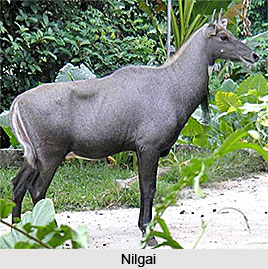
 Blue Bull, the other name of the Nilgai is one of the most commonly found wild animals. Although it is an antelope it looks more or less like an ox. It lives for nearly twenty-one years.
The Indian Blue Bull antelope grows to a length for 1.8 to 2 meters; it weighs nearly one hundred twenty to two hundred and forty kilograms. A baby Nilgai weighs some where between 13.6 to 15.9 kilograms. On the top of the long and narrow head it has two conical horns. The horns are straight and slightly tilted. The horns of the Nilgai measure 21.6 to 25.4 centimeters. Behind the neck there is an erectable mane while the throat there is a tubular shaped hair pennant. The female Nilgai is shorter compared to the male Nilgai and is yellowish brown in colour. As the male Nilgai grows up it starts turning grayish- yellow in colour. On the cheeks and on the edges of the lips there are white spots.
The Nilgai is a gregarious animal, which is found in herds either in single sex or mixed sex. The number of members in a herd can be some where between four and twenty. In winter, the male blue bulls of northern India form a group of thirty to hundred animals. When old the male blue bulls lives in isolation. They can be found in cultivated or semi-urban areas.
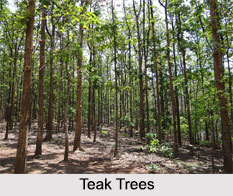
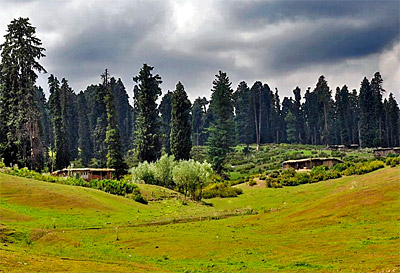
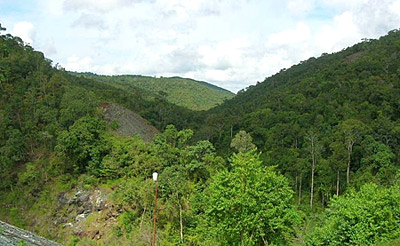
It is a diurnal animal and inhabits in the grasslands and woodlands of India. It avoids dense forests and prefers the plains and low hills with shrubs. They are mainly found in the low plains in the northern plains of India, which stretches from the foothills of the Himalayas in the north to Karnataka in the south. It also covers the area from the Gir forest all along the eastern length of Pakistan, across the border of Rajasthan in the West to the states of Assam and West Bengal in the east.
Nilgai`s attain maturity at the age of eighteen months. The gestation period lasts for nearly eight months. The mother Nilgai usually gives birth to twins. In some cases, the number of young ones may also be one or three. Blue bulls of India are herbivores, and consume grasses, leaves, buds and fruits. Tigers and lions usually attack the Blue bull. Leopards may attack the calves but they cannot kill an adult Nilgai.