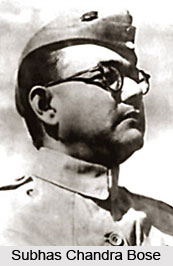
 Bengal Volunteers are regarded the underground revolutionary group against the British rule in India.The group Bengal Volunteers was operational from its origination in 1928 until the Indian independence. It was Subhas Chandra Bose during the 1928 Kolkata session of Indian National Congress, who had unionised a group of volunteers. The group was named Bengal Volunteers, under the headship of Major Satya Gupta. The GOC was Subhas Chandra Bose himself. The Bengal Volunteers continued its activities even after the Kolkata session of the Congress. Bengal Volunteers soon turned into an active revolutionary association.
During the early 1930s, members of the Bengal Volunteers group decided to launch `Operation Freedom`. In the beginning `Operation Freedom` was launched to demonstrate protests against the police subjugation in different jails in Bengal. In August 1930, the revolutionary group Bengal Volunteers planned to kill Lowman, the then Inspector General of Police, who was supposed to be present in the Medical School Hospital to see an unwell senior police officer under treatment. On 29th August 1930, Benoy Basu, in an unconcerned manner clothed in traditional Bengali dress, violated the security and opened fire at close range. Lowman died instantaneously and the Superintendent of Police, Hodson, was grievously wounded.
The Inspector General of Prisons, Col N.S. Simpson was the next target of Bengal Volunteers. Col N.S. Simpson was notorious for brutal subjugation of the prisoners in jails. The revolutionaries however decided not only to murder him but were also planning to strike terror within British official circles by unveiling an attack on the Secretariat Building - the Writers` Building in Dalhousie Square in Kolkata. On 8th December 1930, Benoy Basu along with Dinesh Gupta and Badal Gupta, dressed in European costumes entered the Writers` Building and shot Simpson dead.
Consequently, the British police started firing. A brief gunfight took place between the three young revolutionaries and the police. During the shootout, some other officers like Twynam, Prentice, and Nelson suffered injuries. Soon police overwhelmed the revolutionists. The three did not wish to be handcuffed. While Benoy and Dinesh shot themselves with their own revolvers, Badal consumed potassium cyanide and succumbed to the poison on the spot. Benoy was taken to the hospital where he died on 13th December 1930. Dinesh endured the near-disastrous injury. He was declared guilty and the verdict of the trial was to hang him till death for being involved in anti-governmental activities and murder.