
The Khaksar Movement, also known as the Khaksar Tehrik movement, was a social movement that was established in the year 1931 by Allama Mashriqi. It was based in Lahore during the dominion of the British supremacy in undivided India. The objective of the Khaksar movement was to attain independence for the nation from the rule of the British Empire in India. The movement also aimed to establish a Hindu Muslim government in the country. Inayatullah Khan Mashriqi, also known as Allama Mashriqi, a Muslim intellectual revisited the principles for self-conduct and self-reform which he had laid out in his treatise titled Tazkira in the year 1924. He included these into a second treatise entitled Isharat. This served as the foundation for the Khaksar movement.
Allama Mashriqi started to recruit followers from the village of Ichhra near Lahore for his cause. The Khaksar movement initially started with 90 followers. Eventually it developed and expanded with the addition of 300 young recruits in just a few weeks. By the year 1942, it was estimated that the Khaksar movement had approximately four million members. In the year 1934, Allama Mashriqi founded a weekly newspaper for the Khaksar movement titled Al Islah. Mashraqi was arrested frequently by the British Indian Police and was imprisoned for his various activities. He released on January 19, 1942 from Vellore Jail, but his movements were limited to Madras Presidency. Allama Mashriqi dispersed the Khaksar Tehrik on July 4, 1947.
All the members of the Khaksar Movement wore the same uniform which included a khaki shirt with khaki pant secured with a belt and with military boots. The members also wore a red badge, known as akhuwat, on their right arm as a symbol of brotherhood. They also wore the white handkerchief of the Arabs and Hajis on their heads. All the members of the movement carried a spade or belcha as a sign of unity and strength. The flag of the Khaksar Movement was a customized Muslim symbol that depicted a crescent moon and star in a red background
After the nation attained independence from the rule of the British Empire in India in August 1947 and the formation of the Dominion of Pakistan in October 1947. Allama Mashriqi formed the Islam League. The Khaksar movement had 3 different objectives, to accentuate the idea of supremacy of God, unity of the country and service to mankind. Moreover on November 29, 1936, Inayatullah Khan Mashriqi delineated twenty four principles in an address to a Khaksar camp which was held at Sialkot.
Allama Mashriqi addressed another Khaksar camp of at Lahore on March 14, 1937. There he delivered the 14 points that became the foundation of the Khaksar movement. These points solidified the view that the Khaksar movement was both militaristic and dictatorial.
Khaksar Movement
Khaksar Movement, also known as the Khaksar Tehrik movement, was a social movement that was established in the year 1931 by Allama Mashriqi.
Recently updated articles in History of India
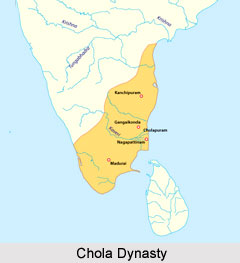
Chola Dynasty
Chola Dynasty is a Tamil dynasty and had longest duration of ruling in parts of South India. Chola dynasty had ruled South India successfully for a ex...
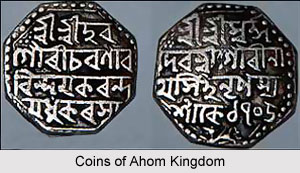
Suhungmung
Suhungmung was the fourteenth ruler of the Ahom dynasty who ruled from the period 1497 to 1539 AD. His reign was significant in terms of expansion of...
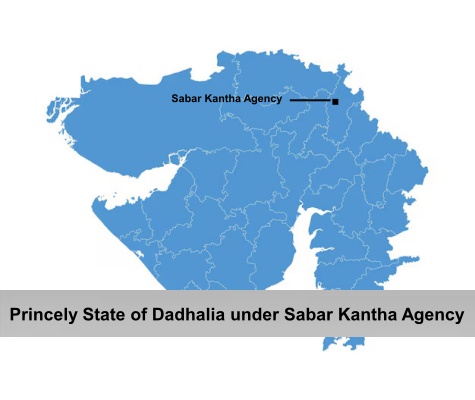
Princely State of Dadhalia
Princely State of Dadhalia was located in the present state of Gujarat. The state covered a total area of 28 sq miles and comprised of 15 villages. Th...
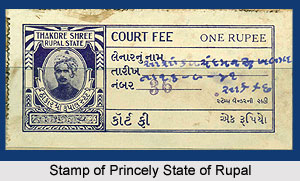
Princely State of Rupal
Princely State of Rupal was a part of the Baroda Agency, a sub division of Western India States Agency. It was under the administrative control of the...
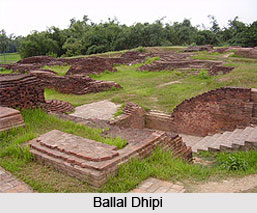
Archaeological Sites of West Bengal
Archaeological sites of West Bengal reveal several aspects of ancient India. Excavations by the Archaeological Survey of India have furnished artefact...
Related articles in History of India

Mughal Architecture during Babur
Mughal architecture during Babur marked the foundation of a new architectural era in India, blending Timurid, Persian, and local influences. His reign...

Architecture during Sayyid and Lodi Dynasty
Architectures during the Sayyid and Lodi dynasty were mainly the tombs and monuments for the dead rulers. It were carefully designed and meticulously...

Brahmanical Sources of Ancient History
Brahmanical Sources of ancient history are contained in the Vedas and they constitute one of the most important literary sources of information about...

Coins of Chola Empire
Coins of Chola Empire were issued in gold, silver and copper and carried the Chola emblem.

Coins of Khilji Dynasty
Coins of Khilji Dynasty had an influential feature that was followed by the other dynasties.