Introduction
Vindhya Mountain Range is the oldest mountain range in central India. It is one of seven chief holy mountain ranges in India. These hills are comparatively less rugged and smaller in size. They actually form a divide between the Indo-Gangetic plains and the Deccan region of the country.
The Vindhya ranges of Indian mountains restrict the path of the winds making the area quite inhospitable and rough. The different slopes of the Vindhya Range are drained by the tributaries of Ganges towards the north and Narmada in the south. Theses ranges have huge sandstone reserve which was used to build Buddhist stupas at Sanchi and other temples at Khajuraho.
Location of Vindhya Mountain Range
Vindhya Mountain Range is located in central India, Madhya Pradesh, and is 970 kilometres long and 910 metres elevated. The range originates from the state of Gujarat continuing into the east and north, extending to the region of river Ganges at Mirzapur.
Etymology of Vindhya Mountain Range
Geography of Vindhya Mountain Range
The Vindhya Range, often referenced in central India, is not a single geological mountain system but a collection of distinct hill systems. Historically, the term encompassed various ranges, including what is now identified as the Satpura Range. Today, the Vindhyas primarily refer to the escarpment and its hilly extensions running parallel to the Narmada River in Madhya Pradesh. Their reach varies based on definition, extending westward into Gujarat, northward into Uttar Pradesh and Bihar, and eastward into Chhattisgarh.
The range's highest point is Sad-bhawna Shikhar, also known as Goodwill Peak, standing at 2,467 feet above sea level. Locally referred to as Kalumar or Kalumbe Peak, it is located near Singrampur in the Damoh district. This peak is part of the Bhanrer or Panna hills, a prominent sub-region within the Vindhya Range. The Narmada Valley`s northern edge is flanked by the Vindhya Range.
The Vindhyas holds significant geographical and cultural importance, forming a natural divide between northern and southern India. Additionally, the range influences the region’s climate and supports diverse flora and fauna, contributing to its ecological significance.
Myths of Vindhya Mountain Range
A mythological story states that the Vindhyas once obstructed the path of the sun. According to another theory, the name "Vindhya" means "hunter" in Sanskrit, and can refer to the tribal hunter-gatherers inhabiting the region. In Mahabharata, the range is also referred to as "Vindhyapadaparvata".
In the prehistoric Indian texts, the "Vindhyas" are seen as the demarcating line of the territory of Indo-Aryans. Several ancient texts mention the Vindhyas as the southern boundary of the Aryavarta, the territory of the ancient Indo-Aryans. The most ancient Hindu texts consider it as the southern boundary of "Aryavarta". Historically, Vindhya Mountain was considered extremely remote and dangerous due to dark plants and the aggressive tribes residing there. The later texts explain that the Vindhya Range is the dwelling of ferocious form of "Shakti" (goddess Kali or Durga), who lived there since killing the demons. She is described as "Vindhyavasini" and a temple is dedicated to her which is situated in the "Vindhyachal" town of Uttar Pradesh. Mahabharata mentions the "Vindhyas" as the "everlasting residence" of goddess Kali.
According to one myth, the Vindhya Mountain once battled with the Mount Meru, rising so high that it blocked the sun. Sage Agastya then asked Vindhya to lower itself, in order to ease his way across to the south. In respect for sage Agastya, the Vindhya lowered its height and promised not to grow until sage Agastya returned to the north. Sage Agastya settled in the south, and the Vindhya Mountain, true to its word, never grew further.
The "Kishkindha Kanda" of Valmiki`s Ramayana states that Maya built a house in the "Vindhyas". In Dashakumaracharita, King Rajahamsa of Magadha and his ministers created a new settlement in Vindhya forest , after being forced out of their kingdom following a battle overpower.
Climate of Vindhya Mountain Range
Vindhya Mountain Range has basically the growth of dry- deciduous forests. Rainfall here is actually seasonal followed up with a long dry season, which hampers the growth of natural vegetation, which loose out their leaves. Trees, which can be found in these places, are mainly teak, sal, and bamboo. The animal kingdom ranges from bison, wild buffalo, spotted deer, leopard, black buck and large brown deer ("sambar"). The Vindhya Range is the home of vast wildlife and forestry. Though there has been major degradation in the natural environment due to human interventions leading up to a vast array of ecological problems.
Rivers of Vindhya Mountain Range
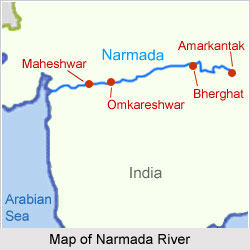
A number of tributaries of Ganga-Yamuna originate from the Vindhyas. These consist of "Chambal", "Betwa", "Dhasan", "Ken", "Tamsa", "Kali Sindh" and "Parbati". The northern hills of Vindhyas are drained by these rivers. The Son, a tributary of the Ganges, drains the southern slopes of the range at its eastern end. Narmada River, which drains further westward to the Arabian Sea in the depression between the Vindhya Range and the parallel Satpura Range to the south, flows in its southern slope. Narmada and Son rivers rise in the "Maikal" hills, which are now distinct as an addition of the "Satpuras", though a number of older texts make use of the term Vindhyas to cover them up.
Significant Landforms in Vindhya Range
Vindhya Range hosts the UNESCO World Heritage Bhimbetka rock shelters, renowned for their ancient cave paintings dating back over 30,000 years. The terrain features diverse landscapes, including plateaus, gorges, and valleys, with notable landmarks such as the Amarkantak Plateau, the origin of the Narmada and Son rivers, and the limestone gorge of Raneh Falls.
East of Malwa, the Vindhya Range splits into multiple branches. The southern branch connects the Son and Narmada rivers to the Satpura Range at the Maikal Hills in Amarkantak, while the northern branch, including the Bhander Plateau and Kaimur Range, stretches northward beyond the Son River, reaching areas from the former Vindhya Pradesh to Bihar’s Kaimur district.
The Vindhyan tableland, also known as the Rewa-Panna plateau, occupies the central northern part of the range. Another key feature is the Panna range, which traverses Bundelkhand, adding to the region’s geological diversity.
Flora and Fauna of Vindhya Range
The Vindhya Range boasts a remarkable diversity of flora and fauna. Its varied topography, comprising dense forests, grasslands, wetlands, and scrublands, provides habitats for numerous plant and animal species, many of which are endemic or endangered.
The forests are rich in tree species like teak, sal, bamboo, and mahua, supporting an intricate web of biodiversity. Notably, the range is home to iconic wildlife such as the Bengal tiger, Indian leopard, sloth bear, and Indian wild dog. Herbivores like the chinkara and Indian gazelle thrive in its arid regions, while the Indian giant squirrel and common langur add vibrancy to the forest canopies. Unique species like the Indian pangolin and Indian porcupine are also part of this rich ecology.
The Vindhya Range is a haven for avian diversity. Birds such as the Indian peafowl, Indian eagle owl, and Indian roller add to its visual charm, while species like the crested serpent eagle and Indian pitta showcase the region's avifaunal richness. The wetlands and water bodies serve as vital ecosystems for aquatic species and attract migratory birds.
Reptiles and amphibians further enrich the range's biodiversity. The Indian rock python, king cobra, and common krait are prominent among its snakes, while lizards like the Indian chameleon and skink showcase adaptability. Amphibians such as the Indian bullfrog and tree frog thrive in its aquatic and arboreal habitats.
National Parks in Vindhya Range
The Vindhya Mountain Range is a treasure trove of
biodiversity, hosting several national parks and wildlife sanctuaries that
safeguard its unique ecological heritage. These protected areas are crucial for
conserving the region’s diverse flora and fauna, including many endangered and
endemic species.
Bandhavgarh National Park
Situated in the Umaria district of Madhya Pradesh, Bandhavgarh
National Park is renowned for its dense forests, expansive grasslands, and
dramatic ridges. It provides critical habitats for species like Bengal
tigers, leopards, and sloth bears. The park’s picturesque landscape and
rich wildlife make it a favorite among nature enthusiasts and conservationists.
Sanjay Gandhi National Park
Located in the Sidhi district of Madhya Pradesh, Sanjay Gandhi National
Park is celebrated for its scenic vistas and biodiversity. The park harbors
rare species such as the Indian wolf, Bengal fox, and chital, contributing
significantly to regional conservation efforts.
Panna National Park
Spanning the Panna and Chhatarpur districts, Panna National Park
is a biodiversity hotspot known for its teak and sal forests. It supports
species like Bengal tigers, Indian leopards, and sloth bears, making it a vital
area for wildlife protection.
Pachmarhi Biosphere Reserve
Though technically part of the Satpura Range, the Pachmarhi
Biosphere Reserve intersects with the Vindhya ecosystem. It serves as a
haven for species like the Indian giant squirrel, Malabar pied hornbill, and
flying squirrel, enhancing the region’s ecological richness.
Satpura National Park
Nestled in Madhya Pradesh’s Hoshangabad district, Satpura National Park
is characterized by its rugged terrain, lush forests, and breathtaking beauty.
It shelters endangered species such as the dhole, Indian leopard, and Indian
giant squirrel.
Palamau Tiger Reserve
Situated in Jharkhand’s Latehar district, Palamau Tiger Reserve
is notable for its unique ecology. Home to species like Bengal tigers, Indian
leopards, and sloth bears, it also boasts lush sal and bamboo forests, vital to
the area’s ecosystem.
Tourism in Vindhya Range
The Vindhya Mountain Range is a perfect place for adventure seekers and cultural enthusiasts, offering a variety of activities that showcase its natural beauty and rich heritage. The Vindhya Range features numerous trekking trails that meander through lush forests, valleys, and picturesque waterfalls. Popular destinations like Panna National Park and Satpura Tiger Reserve provide stunning vistas and a chance to observe the region’s diverse flora and fauna, making them ideal for hiking enthusiasts.
Nature lovers can explore the Vindhya Range’s rich biodiversity through wildlife safaris. Parks such as Panna National Park, known for its Bengal tigers, leopards, and deer, and Satpura Tiger Reserve, home to sloth bears, Indian bison, and wild dogs, offer unforgettable opportunities to witness exotic species in their natural habitat.
For rock climbing enthusiasts, the Vindhya Range offers an array of natural rock formations that promise adventure and challenge. The Bhimbetka Caves, a UNESCO World Heritage Site, attract climbers with their intricate rock formations and breathtaking views, blending adventure with a touch of history.
The region’s rivers, including the Narmada and Son, provide thrilling opportunities for river rafting and water sports. The Narmada River, in particular, is famous for its scenic beauty and challenging rapids, offering adventure seekers an exhilarating experience.
Camping in the Vindhya Range allows visitors to immerse
themselves in its tranquil beauty. Scenic spots in Pachmarhi and Kanha National Park
offer a serene backdrop for camping amidst dense forests and star-lit skies,
creating unforgettable memories.
The Vindhya Range is steeped in history and culture,
boasting ancient temples, monasteries, and pilgrimage sites. Exploring these
landmarks provides insight into the region’s rich traditions and the vibrant
heritage of its local communities.
The Vindhya Range holds significant importance in India, serving as a natural and cultural divide between North and South India. This region is characterized by its rich diversity of landscapes, ranging from scrublands to dense forests. Renowned as one of India's seven sacred mountain ranges, it demarcates the Deccan plains in the south from the Indo-Gangetic plains in the north. While smaller and less rugged compared to other mountain ranges, the Vindhyas play a vital ecological and geographical role.
The range's mineral wealth supports a thriving mining
industry, and its varied ecosystems are home to a wide array of flora and
fauna. The Vindhya Range is also notable for its sandstone deposits,
historically used in constructing significant architectural landmarks, such as
the Buddhist stupas at Sanchi and the temples of Khajuraho. The Vindhyas also influences
local weather patterns by obstructing winds, contributing to harsher climatic
conditions in certain areas.