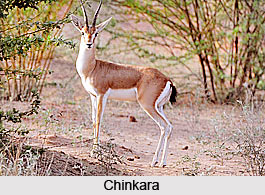
 The Chinkara found in the grasslands and desert areas of India, parts of Iran and Pakistan is a species of gazelle (a variety of antelope) found in South Asia. It is also known as the Indian Gazelle or gazella bennetti. It is the smallest asiatic antelope. It has a life expectancy of 12 - 15 years. Chinkara is classified as extremely vulnerable and included in the list of highly endangered species. It is declining because it is still hunted for the purpose of game.
Physical Features of Chinkara
This gazelle stands at 65 centimetres and weighs about 23 kilograms. During the summers, the body of the chinkara coats a warm biscuit, or reddish-buff colour, with smooth, glossy fur. In the winters, the white belly and throat fur is in greater contrast. The sides of the face have dark chestnut stripes from the corner of the eye to the muzzle bordered by white stripes. The horns of the chinkara can grow as long as 39 centimetres.
Habitat of Chinkara
The chinkara prefers to live in arid plains and hills, deserts, dry scrub and light forests. In India, they inhabit over 80 protected areas. In 2001, the Indian chinkara population was estimated at 100,000 with 80,000 living in the Thar Desert. The best places to see them are various parks across India like Gir, Panna, Ranthambore and the Desert National Park.
The chinkara is basically a shy and demure animal and stays away from human habitation. They like dwelling in solitude although they can sometimes be spotted in small groups of three or four individuals.
This group of shy animal shares its habitat with many other herbivores like chausingha, nilgai, wild goats, wild pigs and blackbuck.
Chinkaras mate once a year. They don`t have any specific breeding period although it is mostly concentrated around autumn and spring. Males compete for access to females. The Chinkaras have a gestation period of five and a half months.
Diet of Chinkara
They prefer to eat all kinds of vegetations. Their favourite food is lush grass and many types of fruits. They have a special characteristic which helps them survive against all odds. They can go without water for long periods and can even live on fluids collected from plants and dew drops.