Iyer Brahmin
Iyer Brahmins are originally from Tamil Nadu of South India. They are known for their adherence to Advaita philosophy and Smarta traditions. Traditionally associated with scholarship, rituals, and temple practices, they have contributed significantly to South Indian culture, education, and intellectual.

Share this Article:

Introduction

Iyers, also spelled as Ayyar, Aiyar, Ayer, or Aiyer, are described as an ethnoreligious community within the Tamil Brahmin population. The majority of Iyers follow the Advaita philosophy established by Adi Shankara and adhere to the Smarta tradition. This distinguishes them from the Iyengar community, who follow Sri Vaishnavism. Together, Iyers and Iyengars are collectively referred to as Tamil Brahmins and are classified under the Pancha Dravida Brahmana grouping in India. In addition to commonly using “Iyer” or “Aiyar” as a surname, members of the community also frequently adopt other surnames such as Sastri or Bhattar.
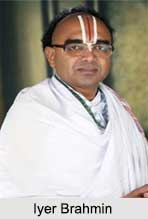
Iyer Brahmin belongs to the largest Brahmin community of South India. Tamil Nadu is their home state, though there is a large number of Iyers in Kerala as well. They are mostly engaged in administration. Slow to change, the Iyers still cherish their age-old Brahminical customs and practices. This community has made a great contribution to the literary and cultural heritage of South India.
Etymology of Iyer Brahmin

The term “Iyer” carries multiple meanings in Tamil and other Dravidian languages, often denoting a person of respect or authority. According to the Dravidian Etymological Dictionary, the word encompasses meanings such as father, sage, priest, teacher, Brahman, superior person, master, or king. It is also associated with cognates like “tamayan,” meaning elder brother, and “ai,” which conveys titles such as lord, master, husband, king, guru, priest, teacher, or father.

It is commonly believed that Iyer is the plural form of "Iye" which evolved from the word "Arya". Linguistic interpretations suggest that related forms such as “Ayya” and “Ayira” or “Ayyira” evolved as Prakrit adaptations of the Sanskrit term Arya, which signifies “noble.” These days, however, the members of this sect have begun to give up the caste name of Iyer. Earlier, a typical Iyer name had four constituents which included the name of the birth place or place of origin of the family, the initial letter of the father’s name, and the “given” name and the caste name.


Origin of Iyers

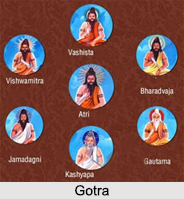
Iyers believe that they are descended from the ancient rishis. Each family belongs to a gotra named after a rishi. Traditionally they adopt one of the following appellations: Iyer, Sastri, Sarma, Dikshitar, Ghanapathigal, Sroutigal and Rao. They are divided into subjects, each denoting either a particular origin, mode of worship or social practice, which are Vathima, Ashtasahasram, Dikshitar, Sholiar (or Chozhiar), Mukkani, Kaniyalar, Sankethi, Prathamasaki and Gurukkal.


Society of Iyer Brahmin

The Iyers like other Brahmins, may follow any of the three Vedas, namely Rig, Yajur or Sama. The followers of the three Vedas are regarded as equals and can inter-marry, the wife adopting the Veda of the husband. There are a number of gotras into which all Brahmins are divided, such as those of Atri, Bhrigu, Rutsa, Vasishtha, Gautama, Kashyapa, Bharadwaja, Kaundinya and Angirasa. In their ceremonial rites, they are guided either by the laws (sutras) laid down by Apastamba or Bodhayana. Iyers are generally vegetarian. Some abjure onion and garlic on the grounds that they activate certain base senses.

 Iyer men are traditionally described as wearing veshtis or dhotis, garments that cover the body from the waist to the feet and are typically made of cotton, with silk used on certain occasions. Iyer women, in keeping with custom, are traditionally draped in a nine-yard saree known as the madisar.


Sub-Sect of Iyer Brahmin

Iyers are further divided into various sub-sects based on cultural and regional differences. The sub-sects are Vadama, Brahacharnam or Brahatcharanam, Vathima, Sholiyar or Chozhiar, Ashtasahasram, Mukkani, Gurukkal, Kaniyalar and Prathamasaki. Each sub-sects claim to be superior to the rest.


Culture of Iyer Brahmin

Iyers generally lead orthodox lives and adhere steadfastly to their customs and traditions. While performing Sandhya or while offering a salute to an elder, an Iyer mentions his lineage or gotra and his law giver (Apastamba or Bodhayana) in addition to his name. The lifestyle of Iyer Brahmin is quite disciplined. They follow religious rites according to the rules and the social customs. These are the foundation stones for the Iyer community.

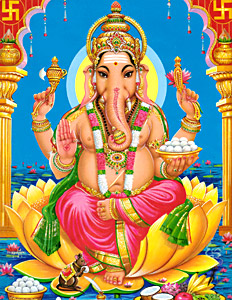
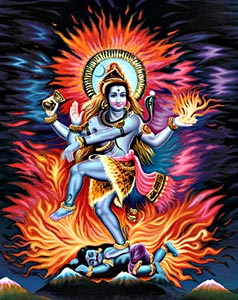
Although they may appear to be Shaivas, Iyers are Smratas i.e. followers of the Smritis. Smarta Tradition is a liberal form of Hinduism whose worship contains 5 key deities, namely Shiva, Vishnu, Shakti, Surya and Ganesha. Most of them are followers of Sankara and Six-Fold Faith or "Shanmata". Another distinction is that the Iyers wear the leaves of both the Tulsi plant, sacred to Vishnu and the bilva plant, sacred to Lord Shiva, on their head.

Like members of other Brahmin communities, Iyers must observe the 16 samskaras (literally meaning refinement but in practice also connoting consecration or sanctification). Some of the important ones are as follows:

Garbhadhanam is performed at the time of the nuptial ceremony and sanctifies the procreative act; ‘pumsavanam’ and ‘siman-tonnayanam’ (parting of the hair) ceremonies protect the mother and the child she is carrying and are performed during the first pregnancy.

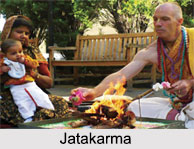
Jatakarma is performed at birth, the child being fed with gold, honey and ghee. Namkaran ceremony (name-giving ceremony) takes place when the child is 11 days old. The rite of ‘annaprasanam’ is the feeding of rice or solid food to the child for the first time. Upanayan must be conducted in the fifth or eighth year although the Iyers are not strict about keeping this rule.

 The boy is invested with the yajnopavita (sacred thread consisting of three strands knotted together) which implies that he has now had a second birth and has become dvija (twice-born) and can now qualify for studentship or Brahmacharya, the scriptures enjoining on him the leading of a disciplined life, the strict observance of celibacy and bodily and mental cleanliness. Finally, samavartana is the ceremony, which concludes studentship. It is doubtful if Iyers today remember the meaning of this samavartana as most of them go through it hurriedly on the day of their marriage.


Religious Duties of Iyer Brahmin

An Iyer is enjoined to lead a disciplined life. He must rise at the hour of Brahma i.e. 3a.m., make his ablutions and recite the Gayatri Mantra at least 108 times. The Brahmachari (believed to be aged below 25 years) performs the samidadhanam and the grihastha (aged between 25 to 50) perform upasana. In both these rites, offerings are made to the sacred fire. This is followed by what is called Shiva puja, though all the deities are worshipped at this time. Along with a Shiva linga, it is important to have a saligram, which is a Vaishnava symbol, in the household. The various images are washed with water and milk as the performer of the puja chants Vedic hymns, this ‘abhisheka’ being followed by the offering of flowers.

The devout Iyer makes it a point to read the Ramayana or the Bhagavad Gita. Iyer make recites the thousand names of Vishnu at dusk, followed by stotras (praises) addressed to Ganapati his guru, Saraswati, Lakshmi, Rama, Krishna, Hanuman, Subramanya and other Gods and Goddesses. He may also read the Devi Mahatmayan. He performs the sandhya at dawn and dusk and the madhayhnikam during midday. The Gayatri japa is the most important part of these daily rites. An Iyer who does not chant the Gayatri is not fit to perform any other ceremony.

Before the commencement of any rite, Iyers invoke Ganapati, Vishnu and Paramesvara (Shiva) but in their ‘sankalpa’ they declare that they are performing the rite to please Paramesvara (the Supreme God). Initiation by a guru is necessary before certain deities can be worshipped. There is a ‘mulamantra’ (root mantra) pertaining to Shiva and to Vasudeva or Narayana into which Iyers are usually initiated.

There is a Shaiva tradition among Iyer community as they are worshipers of Rudra, a form of Lord Shiva. But the worship of Vishnu and Vaishnava deities, such as, Rama, Krishna and Hanuman, has a place of equal importance in their life. When an Iyer male performs his sandhya, he invokes the various names of Vishnu.


Marriage in Iyer Community

An Iyers marriage is a mixture of Vedic ritual and Tamil custom. First, horoscopes are matched. Then an auspicious day is fixed by the priests for the marriage. The bridegroom is taken in procession to the bride`s place and is welcomed with music and the betrothal ceremony is then held. The `vrntam` is conducted on the morning of the marriage day.


The bridegroom goes on a short symbolic “pilgrimage,” possibly to Kasi carrying umbrella, walking stick and a coconut. The bride’s father goes to meet him and persuades him to return and marry his daughter. Some non-Brahmin communities also enact this prelude. 

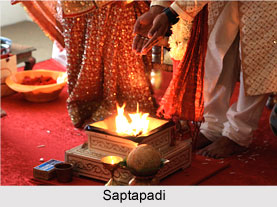
The couple sits before the holy fire and the priests chant Vedic hymns. The bride’s father washes the bridegroom’s feet with milk and water and affirms that he is giving away his daughter in marriage. Then follows the ‘panigrahanam’ or the clasping of each other’s hands by the couple. This is one of the most important rites. Saptapadi or taking seven steps together round the sacred fire, is of equal significance. Among the non-Vedic rites observed is the tying of the tali by the bridegroom round the bride’s neck.


Festivals in Iyer Community

The festivals of the Iyers are numerous, most of them being common to other Hindu communities. They are Upakarma, Diwali (festival of lights), Bhogi Pandigal, Pongal, Taipusam, Mahashivaratri, Ramanavami, Janamashtami, Vmayaka Chaturthi and Navaratri. Iyers observe a number of vratams (vows). One is to propitiate Varalakshmi. Rishipanchami is observed by elderly women. Fasting is common with the devout. An important festival, exclusive to Brahmins of South India, is the Avani Avittam festival, a significant event, primarily observed by Tamil Brahmin men for renewing their sacred thread, which is the "Yajnopavita" or "Poonal".


Evolution of Iyer Community

For centuries the Iyers preserved the Hindu way of life, orthodoxy and Brahminic ritual and though they took to modern education, they did not become westernised. But in recent decades they have spearheaded social reform and played a great role in the struggle for freedom. Their contribution to music is immense. They have produced some of India`s greatest lawyers, administrators, statesmen and scientists and others who have kept alive the religious and cultural heritage of India.

The Iyer community has produced outstanding administrators and politicians, such as, C.P. Ramaswami Aiyar (1879-1966); scholars such as U.V. Swaminatha Iyer (1855-1942) who brought to light many palm-leaf manuscripts to enrich Tamil literature. The famous scientist C.V. Raman (1888-1976) who was the first Indian to win the Nobel Prize in a science subject (physics) was also an Iyer. Many legal luminaries; outstanding poets like the revolutionary poet Subrahmanya Bharati, who gave a new direction to Tamil literature by taking the language to the masses. Famous dancers and musicians from Iyer community are Rukmini Devi Arundale, Muthuswami Dikshitar and Syama Sastri. The defense services have also attracted a large number of Iyer young men.


Share this Article:

More Articles in Religion in India


Religion in Indus Valley Civilization
Religion in Indus Valley Civilisation included Hinduism, Buddhism and Jainism. Details about the religion in Indus Valley Civilization have been gathered from archaeological artefacts.
Shaivism Religion
Shaivism is the second largest “religious community” in modern India with its roots deeply seated in the Hindu Vedic belief.
Vaishnavism
Vaishnavism is among the more popular denominations of Hinduism, with its own distinctive ideas about spirituality and morality. Vaishnavism concentrates on worshipping god Vishnu and of his incarnations.
Hinduism Religion
Hinduism is more of a philosophy which is a way of living according to the understanding of the principles of Vedas and Upanishads.
Islam
Islam is a religion that beliefs in Allah as the one and only God and creator of the Universe. Islamic law or Sharia is characterised by the five pillars of Islam which comprise the essential duties of every Muslim.
Christianity
Christianity is a religion based on the teachings and life of Jesus Christ and it is the largest religion in the world.
Buddhism
Buddhism is a religion and a philosophy that encompasses a wide variety of beliefs, practices and traditions that are chiefly based on the teachings of Gautama Buddha and its later disciples.
Jainism
Jainism chronologically preceded the religion of Buddhism. It is considered as one of the oldest religions of India. Jainism in India shared with Hinduism and Buddhism. It is an integral part of South Asian religious belief and practice, but it is not a Hindu sect and not a Buddhist heresy, as earlier scholars believed.
Zoroastrianism
Zoroastrianism, closely related to Judaism, Christianity and Islam was founded by Zoroaster.
Sikhism
Sikhism is a religion started by Guru Nanak in land of Punjab in 15th century A.D.
Iyer Brahmin
Iyer Brahmins are originally from Tamil Nadu of South India. They are known for their adherence to Advaita philosophy and Smarta traditions. Traditionally associated with scholarship, rituals, and temple practices, they have contributed significantly to South Indian culture, education, and intellectual.
Barai Caste
Barai Caste is the professional cultivator caste of betel leaf. Tamboli and Pansari are the terms used indifferently to the people of Barai Caste. The diversity of names of the sub-divisions of Barai Caste highlights the mixed elements that formed the caste.
Dangi Caste
Dangi Caste is largely distributed in the high land regions, and the word Dangi is said to have originated from the geographical features of their territory. Main occupation of the members of Dangi Caste is cultivation.
Nadar Caste
One of the most renowned castes of Tamil Nadu is the Nadar caste. The Nadar community is a mixture of sub-castes and classes of different origins, which came under one banner of Nadar caste gradually.
Kumbhakar Caste
Kumbhakar is the potter caste who manufactures all kinds of earthen vessels.
Gujjars in Maharashtra
Gujjars in Maharashtra have several sub-castes. Here, in this state the Gurjars are listed as a separate caste. They are included in the Maharashtra OBC list.
Awasthi Brahmin
Awasthi Brahmins are a sub-group of the Kanyakubja Brahmin community traditionally associated with Vedic scholarship and priestly duties. The surname “Awasthi” is linked to the Sanskrit word avastha.
Bhoyar Caste
Bhoyar Caste is largely found in the Central Provinces of the country. Traditional occupation of Bhoyars is agriculture. They are good cultivators and mostly grow sugarcane.
Gujjars in Mughal Era
Gujjars in the Mughal era enjoyed great power. Further their power increased with the decline of Aurangzeb, Mughal emperor.
Origin of Vaishnavism
Origin of Vaishnavism shares its attributes to many sources and religious evolution, dating back to pre-Vedic epoch.
Gotra in Hinduism
In Hinduism, gotra refers to a lineage system tracing descent from ancient sages, primarily through the paternal line. Originating from Vedic tradition, it plays a crucial role in identity and marriage customs. Individuals from the same gotra are considered to share a common ancestor and are traditionally prohibited from intermarrying.