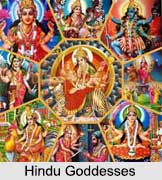
 Hindu Goddesses represent the feminine aspect of the divine forces. All Goddesses are different forms of mother in her divine form. The Hindu Goddesses refer to numerous female deities that are indigenous to the Indian Subcontinent. Hindu Mythology is abundant with many female Goddesses. The spiritual powers of women are considered indispensable also. Hinduism is a religion that worships both the male and female aspects of Nature. This religion recognizes the Supreme Reality in the form of Mother, Father, Friend, Master, Guru, and Saviour. The doctrine of Motherhood of God has established a firm root in Hinduism.
Different Hindu Goddesses
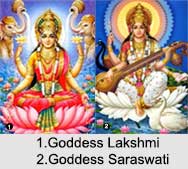
Hindu Goddesses or the form of Divinity generally worshipped is Kali, Goddess of Creation, Destruction, Time and Death. She is often called simply Mother, Goddess Durga, who is the manifestation of the power that helps in preserving the moral order and virtue in the creation. She is like the mother who protects and nurtures her child or mankind, Goddess Lakshmi, is the Goddess of wealth and prosperity. She is Lord Vishnu"s consort and is worshipped in various forms. Goddess Saraswati is the Goddess of knowledge, music and all other creative forms. She is the repository of Brahma`s creative intelligence and Mother of the Vedas. Other Goddesses of Hindu religion include Bhuvaneshwari, Aditi, Parvati and Maha Lakshmi.
 Nature of Hindu Goddesses
The motherly trait of the Lord is established by worshipping God as the Divine Mother. Hindu Goddesses are epitome of tenderness and forgivingness. The unconditional love between a Mother-and her-child is expressed through Goddess worship. According to the popular Hindu view, the universe is the manifestation of Shakti of Brahman, whose essence is absolute existence. Hindu Goddesses portray the motherly aspect of God in nature. All the Goddesses are associated with full of beauty, gentleness, kindness, and tenderness. In Hinduism a devotee worshipping God as Divine Mother, the devotee appeals to `Her` tenderness and unconditional love. This kind of devotion tends to unite the devotee with God, like a child with its mother.
Festivals of Hindu Goddesses
There are numerous festivals that honour the Hindu Goddesses, the two most important are Navratri and Diwali. Navratri is celebrated over 9 nights, reflecting the different aspects of Durga. Diwali, the festival of lights, is linked to the Goddess Lakshmi.
In Hinduism, Hindu Goddesses are the first manifestation of Divine Energy. Divine mother represents the idea of omnipotence, omnipresence, energy, love, intelligence, and wisdom. It is portrayed that through the worship of God in the form of Mother, Hinduism offers a unique reverence to womanhood.