Chasa Caste

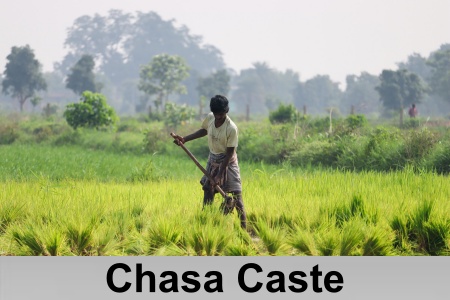
Chasa caste is a prominent agrarian community native to Odisha. Traditionally associated with cultivation and farming, Chasas have historically played an important role in the region’s rural economy. Over time, members of the community have diversified into various professions while retaining significant social, agricultural, and economic influence in Odisha.

Introduction

The Chasa is a caste native to the Indian state of Odisha. Chasa is also the chief cultivating caste inhabiting Odisha. Traditionally, members of the Chasa community were primarily engaged in cultivation, although they are now involved in a variety of professions. The Odia word “chasa” means farmer or ‘a cultivator.’ The Chasas constitute the third-largest caste in Odisha by population.

Chasa Caste 

History of Chasa Caste

The Orh/Oda Chasas claim to have been the first tribe to settle in Odisha and to have initiated the cultivation of the land. They also associate their community with the naming of Odisha. Within the Hindu caste system, they are classified as Shudra. The association of the Chasas with manual labour, particularly ploughing, was historically used to stigmatize them and distinguish them from the upper castes, a practice that continued into the early 19th century. 

Around the beginning of the 20th century, the Chasas were primarily small farmers and marginal raiyats. In modern-day Odisha, they are considered one of the dominant castes in many villages, with members of the community occupying positions as landowners and possessing considerable economic influence.

Different Sects within Chasa Caste

This caste is also known as ‘Alia’ in Sonepur. In the past, Chasas were mostly enumerated in the regions of Sambalpur and other adjoining states, but majority of them moved to Bengal in the year 1905. It is said that Chasa caste has a loose organisation making it possible for outsiders to be admitted into the caste. This fact is proved by the names of the sub-divisions of this caste. Like for instance, three of the sub-divisions namely ‘Kolta,’ ‘Khandait’ and ‘Ud’ are actually the names of different castes.

Society of Chasa Caste

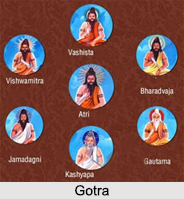
Each family of Chasa community has a gotra or sept as well as a varga or family name. In their society, marriages are arranged on the basis of the vargas. Union of members of the same varga is prohibited. The names of the sept are totemistic while the family names are usually territorial or titular. Some of the totemistic names of the sept are bachhas (calf), dipas (lamp) nagas (cobra), harin (deer), hasti or gaj (elephant), mahumachhi (bee) and so one. Some of the varga names of Chasa caste are Pitmundia, Hulbulsingia, Dumania and Giringia. All these are the names of villages in Angul District. Nayak is the name given to the headman of the village or community. Kandra is the name given to a bamboo-worker, a worshipper or priest is called Dehri, Mahanti is the name for writer, Behera is the cook, and so on. 

In Chasa community, girls get married before reaching the stage of adolescence. If no suitable match is found then she may be married to a flower or an arrow and when a suitable husband is found she is united with him in the form of widow-marriage. Widow re-marriage and divorce are permitted in Chasa community. They bury the dead if unmarried, and burn the dead if married. Chasa caste worships various Hindu deities. Occasionally they also sacrifice animals. Brahmin priests are employed for performing religious ceremonies. They have an enriching culture.

Religious Beliefs with Chasa Caste

The members of different sects worship their totems and draw figures of them on the walls of their houses. Interestingly, if they find the footprints of animal, after which their sect has been named and which they worship, they bow to the marks and demolish them with hands, with the belief of giving protection to the totem animal from the hunters. They also believe that if they injure the totem animals in some way they would be attacked by leprosy and eventually their family lineage would die out. The members of the dipas sect will not eat if they find a lamp is put out at night and they do not touch a lamp with unclean hands. Those belonging to the madhumakhi or mahumachhi (bee) sect, will not take honey or eat it. Some of these exogamous septs have an Ishta Devata, whom they worship. Members of the gaj sect worship Lord Ganesha, similarly the members of harin sect worship Lord Pawan.

Recently updated articles in Religion in India

Chasa Caste
Chasa Caste Thumbnail

Chasa Caste

Chasa caste is a prominent agrarian community native to Odisha. Traditionally associated with cultivation and farming, Chasas have historically played...

Vigneswara, A Form of Lord Ganesha
Vigneswara, A Form of Lord Ganesha Thumbnail

Vigneswara, A Form of Lord Ganesha

Lord Vigneswara is another form of Lord Ganesha or Vinayaka, prominently worshipped as the God of intelligence and good luck in the Indian subcontinen...

Maheswara
Maheswara Thumbnail

Maheswara

Maheswara, meaning “the Great Lord,” is a revered name of Lord Shiva in Hindu tradition. It represents Shiva’s supreme authority over creation, preser...

Anganyasa and Karanyasa
Anganyasa and Karanyasa Thumbnail

Anganyasa and Karanyasa

Anganyasa and Karanyasa are preparatory rituals in Hindu worship that sanctify the body and hands through the recitation of sacred mantras and symboli...

Kumbhakar / Kumhar Caste
Kumbhakar / Kumhar Caste Thumbnail

Kumbhakar / Kumhar Caste

Kumbhakar or Kumhar caste is a traditional artisan community in India known for pottery making. Derived from Sanskrit word Kumbhakar, meaning potter,...