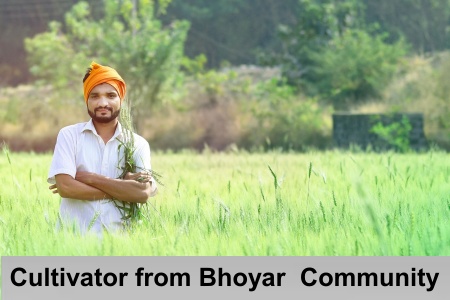
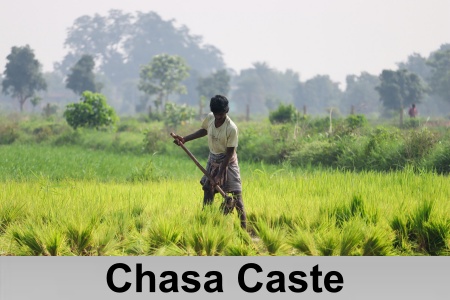
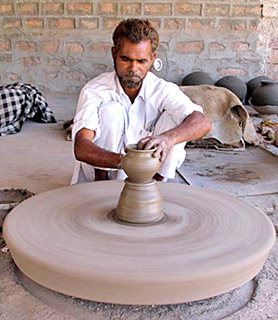
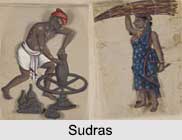
 Sudra was the last of the four sections in the Indian Varna System. Sudras, in the later Vedic Age, referred to those people who were labourers. According to the Vedas, they form the base of Indian society. They were assigned to the rank of servants in Indians. This is the reason why the farmers, potters, cobblers and vendors belonged to this community. The Sudras are the lowest rank of the Caste System. The other castes of the Varna System are Vaishyas (merchants), Kshatriyas (warriors) and Brahmins (priests); who represent progressively higher level of status in the Indian society.
Etymology of Sudras
The word Sudra has evolved from Sanskrit "Shuchat Dravanam" meaning a person who is in pain or mourning. The word Sudra originally belonged to a tribe in the Vedic period. The word can also be found in Rig Veda. The first and only mention of Sudra in the Rig Veda is in the "Purushasukta".
Origin of Sudras
According to Rig Veda, the Sudras have originated from the feet of Lord Brahma. The origins of the Sudras render the class with an importance of its own. Foot or the base is crucial for a society.
Social Status of Sudras
The Sudras did any kind of work that the other three upper classes denied to do. They served the society in a way no other community could. They formed the support system of the ancient Indian society. In the Aryan society, the Sudras were considered as "Dasas". The later Vedic age was known for its social flexibility. Hard work and good service was appreciated. Hence, Sudras in ancient India were allowed passive access to temples and allowed to listen to the Vedas being preached, but were not allowed to participate in the rituals themselves.
However, with the evolution of the caste system in India, the position of the Sudras deteriorated. The practice of untouchability came into existence and they were treated as social outcasts in the Indian society. Due to the inequality of the Caste System, many Sudras converted to other faiths such as Islam, Christianity, Buddhism, Jainism and Sikhism. The Varna system and caste system had been changing over time from its beginning.