
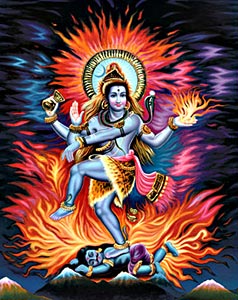
 Maheswara, also known as Maheshvara, is one of the many
revered names of Lord
Shiva in Hinduism.
Within the Shaivite
tradition, Shiva is regarded as the Supreme Lord who is responsible for
the creation, preservation, and transformation of the universe. In the Shakta tradition,
which centers on the worship of the Divine Goddess (Devi), Shiva is recognized
as the equal and complementary counterpart of Shakti,
the Supreme Goddess who embodies the universe's creative energy and power. In
the Smarta
tradition of Hinduism, Shiva is worshipped as one of the five principal
deities in the Panchayatana Puja. His divine nature encompasses both benevolent
and fearsome aspects, reflecting his role as a deity of compassion,
destruction, renewal, and transcendence.
Maheswara, also known as Maheshvara, is one of the many
revered names of Lord
Shiva in Hinduism.
Within the Shaivite
tradition, Shiva is regarded as the Supreme Lord who is responsible for
the creation, preservation, and transformation of the universe. In the Shakta tradition,
which centers on the worship of the Divine Goddess (Devi), Shiva is recognized
as the equal and complementary counterpart of Shakti,
the Supreme Goddess who embodies the universe's creative energy and power. In
the Smarta
tradition of Hinduism, Shiva is worshipped as one of the five principal
deities in the Panchayatana Puja. His divine nature encompasses both benevolent
and fearsome aspects, reflecting his role as a deity of compassion,
destruction, renewal, and transcendence.
Maheswara
Maheswara, meaning “the Great Lord,” is a revered name of Lord Shiva in Hindu tradition. It represents Shiva’s supreme authority over creation, preservation, and transformation. Worshipped as the cosmic ruler, Maheswara embodies both benevolent and destructive forces, guiding the universe through cycles of dissolution, renewal, and spiritual liberation while symbolizing ultimate divine consciousness.
Introduction
Etymology of Maheswara
The name Mahesvara is derived from the Sanskrit words “Maha,” meaning “great,” and Ishvara, meaning “lord” or “supreme controller.” Together, the name signifies the “Great Lord” or the “Supreme Master” who governs the entire universe. This epithet emphasizes Shiva's position as the highest divine authority, presiding over all aspects of existence.
The title Mahesvara is mentioned in Hindu scriptures,
including the Mahabharata
(Anusasana Parva), where it reflects Shiva's greatness and his status as the
ultimate Lord of all creation, encompassing both mobile and immobile beings.
The name reflects his supreme sovereignty and his role as the cosmic ruler who
transcends and governs the entire universe.
Names of Maheswara
Lord Shiva is venerated under numerous names, each
highlighting a distinct aspect of his divine character and attributes. In
addition to Maheswara or Maheshvara, he is widely known as Mahadeva, Mahasu,
Mahesha, Shankara, Shambhu, Rudra, Hara, Trilochana, Devendra, Neelakanta,
Subhankara, Trilokinatha, and Ghrneshwar.
Concept of Maheswara in Buddhism
In Mahayana
Buddhism, Shiva is recognized as Mahesvara, a deva who resides in
Akanishta Devaloka, the highest of the form realms. Buddhist traditions portray
him as a celestial being whose role differs from that found in Hinduism while
still acknowledging his spiritual significance. According to certain Mahayana
Buddhist texts, Mahesvara ultimately attains enlightenment and becomes a Buddha known as
Bhasmeshvara Buddha, meaning the "Buddha of Ashes." This
transformation symbolizes his attainment of Buddhahood within the Mahayana
Buddhist tradition.
Concept of Maheswara in Hindu Trinity
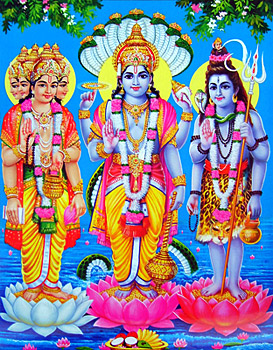 Trimurti
represents the threefold manifestation of supreme divinity in Hinduism, where the
essential cosmic processes of creation, preservation, and dissolution are
personified through three principal deities. This sacred triad comprises Brahma, the Creator
responsible for the emergence of the universe; Vishnu, the
Preserver who sustains cosmic order; and Maheshwara (Shiva), the Destroyer and
Transformer who governs the process of dissolution and renewal.
Trimurti
represents the threefold manifestation of supreme divinity in Hinduism, where the
essential cosmic processes of creation, preservation, and dissolution are
personified through three principal deities. This sacred triad comprises Brahma, the Creator
responsible for the emergence of the universe; Vishnu, the
Preserver who sustains cosmic order; and Maheshwara (Shiva), the Destroyer and
Transformer who governs the process of dissolution and renewal.
Within the Trimurti, Maheshwara fulfills the vital role of cosmic transformation. At the conclusion of each cosmic cycle, he dissolves the manifested universe, creating the conditions necessary for a new cycle of creation to begin. His role is not understood as destruction in a negative sense but as a divine process of transformation, purification, and regeneration that restores balance within the cosmos.
According to Hindu philosophy, Maheshwara is associated with tamas guna, one of the three fundamental qualities of nature (gunas). This quality represents darkness, stillness, inertia, transformation, and the dissolution of illusion. Through this aspect, Maheshwara facilitates the removal of ignorance and attachment, allowing the universe to progress through cycles of change and renewal.
The concept of the Trimurti reflects the eternal rhythm of
existence, in which creation, preservation, and dissolution remain
interconnected and interdependent forces within the cosmic order. Through this
cycle, the end of manifested existence ultimately returns to the formless
supreme reality known as Brahman,
the source from which all creation arises and into which all existence
eventually merges.
Iconography of Uma–Maheswara
Uma–Mahesvara is a revered form of the divine couple Shiva, known as Mahesvara, and his consort Parvati, also called Uma, in Hindu iconography. This representation portrays the two principal Hindu deities in a serene and benevolent form, symbolizing their harmonious and inseparable union.
The iconography of Uma–Mahesvara embodies the sacred
relationship between Shiva, the Supreme Lord, and Parvati, the primordial
feminine cosmic energy and Supreme Goddess. In Hindu philosophy, Shiva is
regarded as the manifestation of Purusha,
the universal consciousness or cosmic spirit, while Parvati represents Prakriti,
the primordial nature and creative force of the universe. Their divine union
signifies the eternal interplay of the masculine and feminine principles, whose
combined energies give rise to srishti, or creation. This sacred partnership
sustains the continuous cycle of creation, preservation, and cosmic balance,
reflecting the fundamental harmony that underlies the universe.
Significance of Fourteen Mahesvara Sutras
The fourteen Maheshvara Sutras, also known as the Shiva Sutras, are a set of foundational aphorisms that systematize the phonetic structure of the Sanskrit language. These sacred linguistic principles organize the sounds and phonemes of the Sanskrit alphabet and serve as the essential framework for understanding Sanskrit grammar.
According to traditional belief, the Maheshvara Sutras originated from the fourteen rhythmic beats produced by Lord Shiva’s damaru (cosmic drum). These divine sounds are regarded as the source of the phonetic arrangement that later became the structural foundation for Paṇini’s renowned Sanskrit grammar treatise, the “Aṣṭadhyayi.” Through these sutras, Shiva is symbolically associated with the origin and organization of the Sanskrit language, bridging divine revelation with the systematic study of grammar and linguistics.
Each verse of the Maheshvara Sutras consists of a sequence of fundamental Sanskrit phonemes, which are basic open syllables formed either by initial vowels or by consonants followed by the inherent vowel sound “a.” These phoneme groups are followed by a single marker letter known as an anubandha, which is conventionally represented in uppercase and identified by Pāṇini as an “IT” marker.
The anubandhas serve as grammatical indicators that allow Paṇini to efficiently classify and reference groups of sounds through a system known as pratyaharas. A pratyahara is formed by combining a phoneme with its corresponding anubandha, often including the vowel “a” to assist pronunciation. This combination represents all the phonemes occurring between the initial sound and the marker within the Maheshvara Sutras.
Although pratyaharas function as single syllabic units, they can be grammatically declined and applied within the framework of Sanskrit grammar. Through this system, Paṇini was able to create a concise and highly systematic method for describing the structure and usage of Sanskrit sounds in the Aṣṭadhyayi.
Recently updated articles in Religion in India
Kusumayudha
Kusumayudha is a name of Kamadeva, the Hindu God of Love. Depicted with a sugarcane bow and flower-tipped arrows, he represents attraction and longing...

Bhoyar Caste
Bhoyar Caste is largely found in the Central Provinces of the country. Traditional occupation of Bhoyars is agriculture. They are good cultivators and...

Chasa Caste
Chasa caste is a prominent agrarian community native to Odisha. Traditionally associated with cultivation and farming, Chasas have historically played...
Vigneswara, A Form of Lord Ganesha
Lord Vigneswara is another form of Lord Ganesha or Vinayaka, prominently worshipped as the God of intelligence and good luck in the Indian subcontinen...
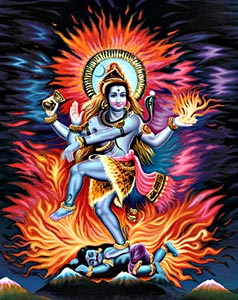
Maheswara
Maheswara, meaning “the Great Lord,” is a revered name of Lord Shiva in Hindu tradition. It represents Shiva’s supreme authority over creation, preser...
Related articles in Religion in India
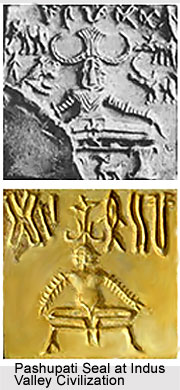
Religion in Indus Valley Civilization
Religion in Indus Valley Civilisation included Hinduism, Buddhism and Jainism. Details about the religion in Indus Valley Civilization have been gathe...
Iyer Brahmin
Iyer Brahmins are originally from Tamil Nadu of South India. They are known for their adherence to Advaita philosophy and Smarta traditions. Tradition...
Kumbhakar / Kumhar Caste
Kumbhakar or Kumhar caste is a traditional artisan community in India known for pottery making. Derived from Sanskrit word Kumbhakar, meaning potter,...

Gujjars in Mughal Era
Gujjars in the Mughal era enjoyed great power. Further their power increased with the decline of Aurangzeb, Mughal emperor.
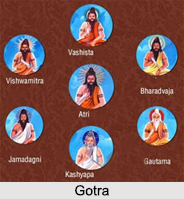
Gotra in Hinduism
In Hinduism, gotra refers to a lineage system tracing descent from ancient sages, primarily through the paternal line. Originating from Vedic traditio...