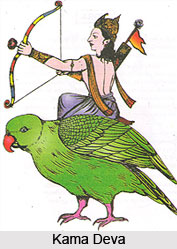
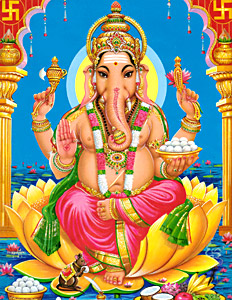
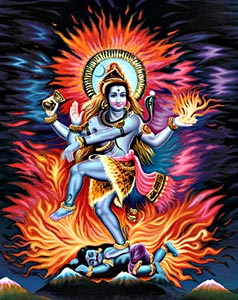
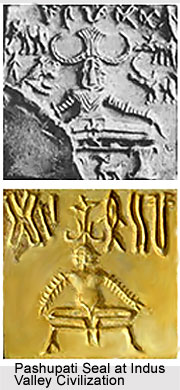
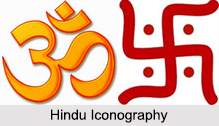
 In Hindu iconography, God"s image is a direct symbol of the God himself. The image is worshipped with all the rituals which in turn are a way of serving God. The significance of the iconography differs according to the regions. Tilak, Rudraksha, Om, Swastika, Vibhuti are some of the symbols. Certain symbols like conch, Shiva lingam, Veena, lotus and Chakra are associated with particular Gods. The elements of Hindu iconography are based on cultural traditions and scriptures.
Images in Hindu Iconography
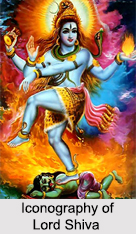
The features of an image in Hindu iconography have a different meaning. Through gestures, clothing and attributes; the image reveals certain aspects of the God, which mythological story is being brought to attention and so on. The iconography serves to identify the particular deity in their pictorial or sculptural representations. The symbolism also often links the deities with a particular natural or human attribute, or profession.
Postures in Hindu Iconography
The pose assumed by God shows at a glance whether the God is relaxed or aggressive or in a contemplative mood. Samabhanga, Abhanga, Padasvastika, Alidhapada and Padmasana are some of the body positions assumed by different Gods.
 Mudras in Hindu Iconography
Mudras or hand gestures play an important role as it is the “language of gestures of the Gods†with which their intentions, emotions and qualities are expressed sophisticatedly. Various mudras include Abhaya, Jnana, Tarjani, Varada, Vismaya, Vitarka and so on.
Ornaments in Hindu Iconography
Amulets were a common ornament at that time. It was meant to protect the body from diseases. The ornament worn by the Gods reflect significance in their form and also indicate whether the God is benevolent or terrifying. The ornaments consists of flowers, wood, silver, gold, precious stones, pearls and snakes, teeth, bones and skulls.
Universal Symbols in Hindu Iconography
Om, Swastika and Chakra Yantra are the common symbols of Hindu iconography. "Om" is a holy symbol that represents the ultimate reality. "Swastika" indicates universal auspiciousness. "Chakra Yantra" is a Mandala which is formed by 9 knit triangles. Tilak is another most common symbol in Hinduism which is visible and is seen on the forehead.
In Hindu iconography, these symbols represent philosophies, teachings and the various Gods and Goddesses are contemporary representatives of a culture. It is important to understand the symbolism, in order to appreciate the references in the Hindu scriptures.