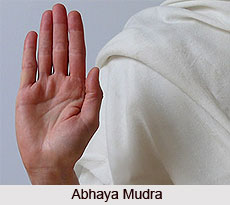
 Abhaya mudra is the mudra of fearlessness and is one of the earliest mudras found depicted on a number of Hindu, Buddhist, and Jaina images. "Abhaya" means `fearless` in Sanskrit and `mudra` is a form of expression by the use of fingers of both the hands of a human being. Abhaya mudra symbolises protection, peace, and dispelling of fear. This mudra is believed to be used before the commencement of Buddhism as a symbol of proposing friendship while approaching stranger. This mudra is also called the "Gesture of Protection." This position is shown with the palms facing outward and the fingers extended upwards. The arm is elevated and slightly bent. Abhaya mudra is also shown with a left-hand gesture. This mudra has the characteristic of Buddha Shakyamuni and Dhyani Buddha Amogasiddhi.
Practice of Abhaya Mudra
The practitioner can usually practise by raising the right hand to shoulder height. The arm is bent and the palm is faced outward with the fingers upright and joined with the left hand hanging down while standing. The process of Abhaya mudra involves rising of both the hands to the sides of one`s head. Touch the forefinger to tip of thumb just as in Gyan Mudra and hold the hand vertically straight by the sides.
Benefits of Abhaya Mudra
•Mind becomes fearless.
•Gives a feeling of courage and strength.
•Affects body`s energetic system and flow of prana.
•Quiets mind and strengthens inner resolve.