Home > Health > Yoga > Patanjali Yoga Sutras
Patanjali Yoga Sutras
Patanjali’s Yoga Sutras presents a foundational guide to the philosophy and practice of yoga. Through concise aphorisms, it outlines the nature of the mind, the eightfold path of discipline, and the means to attain inner stillness. Its teachings continue to inspire modern yoga, meditation, and spiritual exploration.

Share this Article:

Introduction

The ‘Yoga Sutras of Patanjali’ comprise either 195 sutras, as noted by Sage Vyasa and Krishnamacharya, or 196 sutras according to other scholars, including B.K.S. Iyengar. Compiled in India during the early centuries CE, though often associated with much older yogic knowledge, these aphorisms were gathered and systematized by the Sage Patanjali. He drew from Samkhya philosophy, Buddhist teachings, and older yogic traditions to create a unified framework of yoga practice and philosophy. Recognized by traditional Vedic schools as an authoritative source on yoga, the ‘Yoga Sutras’ reflect these three major intellectual streams dating from roughly the 2nd century BCE to the 1st century CE. In this seminal compilation, Patanjali distilled the scientific and spiritual dimensions of yoga into four distinct chapters.
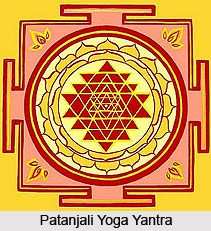
Significance of Patanjali Yoga Sutras

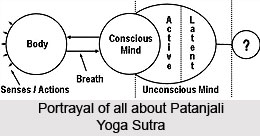
Yoga is fundamentally a set of meditative disciplines that aim to bring the practitioner into a state of consciousness free from active or discursive thought. Ultimately, it seeks to cultivate a level of awareness in which consciousness no longer perceives any external object but recognizes only its own pure nature, unmixed with any worldly object or emotion. This state is valued not only for its intrinsic serenity but also because its attainment is believed to free the practitioner from all forms of material pain and suffering.

In the broader Indic soteriological traditions, the theological study of liberation in India, is a realization that is considered a primary pathway to release from the cycle of birth and death. For this reason, the ‘Yoga Sutras’ have long been regarded across philosophical schools as the authoritative manual on meditative techniques and yogic practice. They also present the classical Indian understanding of mind and consciousness, explain the mechanisms of action and rebirth, and outline the metaphysical foundations of spiritual liberation, including the attainment of mystical powers.


About Sage Patanjali

As compared to the reputed founders of other classical schools of thought, little is definitively known about Patanjali himself. First clearly recorded in the 11th-century commentary of Bhoja Raja, Sage Patanjali is identified as the same scholar who authored the principal commentary on Paṇini’s celebrated grammar and credits him with a treatise on medicine as well.


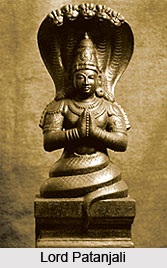
Patanjali is also regarded as an incarnation of the serpent Ananta (meaning “endless”), the thousand-headed naga of Indian mythology who serves as Lord Vishnu’s divine couch and guardian of the world’s treasures. According to legend, wishing to share the knowledge of yoga with humanity, he descended or “fell” (pat) from heaven into the offered palms (anjali) of a woman, giving rise to the name Patanjali.

Estimates of his lifetime vary widely, ranging from the 2nd century BCE to the 4th century CE, though many scholars today place him more narrowly in the 2nd century CE.


Compilation of Patanjali’s Yoga Sutras

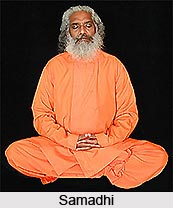
The Yoga Sutras is organized into four padas, or chapters. The first, Samadhi Pada, defines yoga as the complete cessation of all mental activity and describes the progressive stages of insight that arise from deep concentration. It ultimately points to yoga’s highest goal, which is pure, content-less awareness that surpasses even the loftiest states of insight. The second, Sadhana Pada, details the disciplines, practices, and ethical observances required for serious meditative advancement. The third, Vibhuti Pada, focuses on the extraordinary abilities that may emerge when the mind reaches profound levels of concentration. In ancient India, many practitioners pursued such powers for their own sake rather than striving for the true aim of yoga, and this chapter serves as Patanjali’s caution against being distracted by these abilities. The fourth, Kaivalya Pada, discusses liberation and its philosophical foundations.

The 195 or 196 sutras are distributed across these four chapters: Samadhi Pada contains 51 sutras, Sadhana Pada includes 55, Vibhuti Pada comprises 56, and Kaivalya Pada consists of 34.


Samadhi Pada

Samadhi is described as a state of direct, dependable perception (pramaṇa) in which the “seer” (Purusha—pure consciousness, the true Self) rests fully in its own nature. It is the primary method a yogi uses to still the fluctuations of the mind, ultimately leading to Kaivalya, the complete separation of the seer from the impurities and activities of the mind. In this chapter, the author explains the essence of yoga, the nature of samadhi, and the means by which it can be realized.

The core idea of this pada is “citta-vṛtti-nirodha,” the calming or restraint of the mind. Samadhi pada is essentially a guide to achieve moksha for religious practitioners who have already achieved a higher state of consciousness.

Samadhi Pada includes the following:

  • Yoga- The Path to Achieve Higher Consciousness
  • Vrittis/ Changes Impacting Mind
  • Removing the Vrittis through Abhyasa & Vairagya
  • Reaching Samadhi After Removal of Vrittis
  • Intensity or Eagerness toward Yoga
  • Devotion to Ishwara
  • Fruit of Sadhana
  • Obstacles in the Yoga Path
  • Ways to remove the obstacles
  • Fruits of Meditation-oneness of Chitta
  • Attaining Samadhi
  • Practicing Samadhi with Seed
  • Practicing Samadhi without Seed
  • Cosmic Experience After Attaining Samadhi


Sadhana Pada

Sadhana, the Sanskrit term for “practice,” is the focus of this chapter. This chapter marks the beginning of a complete guide to achieve moksha or liberation of the soul for a common human being. Here, Sage Patanjali presents two principal forms of yoga, namely- kriya yoga (the yoga of action) and ashtanga yoga (the eightfold path). Kriya yoga, often associated with karma yoga, is echoed in the philosophy of the Bhagavad Gita, where Arjuna is advised to act without attachment to the outcomes. It emphasizes selfless action and service.


Sadhana pada includes the following:

  • Discipline for Sadhana
  • Causes of Pain or Klesha
  • Reducing or Removing Kleshas
  • Removing Kleshas with Meditation
  • Relationship between Klesha and Karma
  • Understanding causes of Heya or Pain
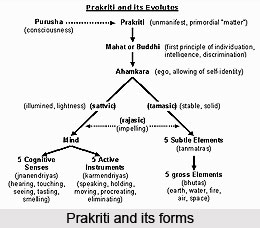
  • Properties of Nature / Prakriti
  • Relationship between Prakriti and Purusha or Seer
  • Understanding Samyoga- Union of Purusha and Prakriti
  • Hana/ Absence of Samyoga
  • Stages of Enlightenment after Hana
  • The Path from Kleshas to Kaivalya
  • Disciplines of Ashtanga Yoga- Yama, Niyama, Asana, Pranayama, Pratyahara, Dharana, Dhyana, and Samadhi
  • Yama, Niyama, Asana, Pranayama, and Pratyahara are included in Sadhana pada
  • Dharana, Dhyana, and Samadhi are included in Vibhuti Pada


Vibhuti Pada

Vibhuti is the Sanskrit term for “power” or “manifestation.” In this third chapter, Patanjali introduces the final three limbs of Aṣṭanga Yoga, collectively known as ‘samyama.’ Through samyama, a yogi not only gains insight into pure awareness (Purusa) but may also acquire siddhis, or extraordinary abilities, that arise as the practitioner gains mastery over the tattvas, the fundamental constituents of prakriti. However, the text cautions that these powers can become obstacles for those seeking true liberation.

Vibhuti pada includes the following:

  • Samyama- Dharana, Dhyana, and Samadhi
  • Fruit of Samyama
  • Antaranga Sadhana
  • Bahiranga Sadhana
  • Nirodha Parinama
  • Samadhi Parinama
  • Ekagrata Parinama
  • Dharmi or The Common Substratum
  • Obstacles to Samadhi
  • Attainment of Kaivalya


Vibhutis Achieved by Practicing Samyama:

  • Knowledge of past and present
  • Knowledge of all speech
  • Knowledge of previous births
  • Knowledge of other’s mind but not of the mental image
  • Invisibility
  • Disappearance of the Tanmatras
  • Knowledge of time and death
  • Powers of friendliness, compassion, joy for others, and equanimity.
  • Attainment of strength
  • Hidden knowledge
  • Knowledge of the solar system
  • Knowledge of the stars
  • Knowledge of the space
  • Knowledge of the human body
  • Cessation of hunger and thirst
  • Power of steadiness
  • Spiritual vision
  • Intuitive knowledge
  • Awareness of Chitta
  • Knowledge of Purusa
  • Intuitive perceptions


Kaivalya Pada

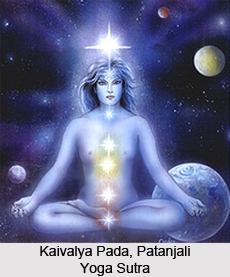
The Kaivalya Pada is sometimes considered a later addition to the Yoga Sutras, yet it plays a crucial role in describing the nature of final liberation. Kaivalya, meaning “isolation,” refers to the complete separation of the ‘Seer’ from the contents and fluctuations of the mind, such that consciousness is no longer affected by mental activity. The term signifies emancipation or ultimate freedom and is used in contexts where other traditions commonly employ the word ‘moksha.’

This chapter explains the process through which liberation is attained and clarifies the true nature of the ‘Seer.’ Moksha represents the state of complete freedom, realizing that individual consciousness (purusha) is entirely distinct from matter (prakriti). This highest state of enlightenment involves full awareness, total detachment from suffering, and complete release from the cycle of birth and death (samsara).

Kaivalya Pada includes the following:

  • Sources of Siddhis or Divine Powers
  • Fundamental Transformation
  • Creation of Mind
  • Manifestation of Vasanas
  • Source of Vasanas
  • Removing Vasanas
  • Existence of Past and Future 
  • Theory of Perception
  • Separation of Purusha from the mind
  • Limitations of the mind
  • Confusion of Memories
  • Cessation of Distinction
  • Return of Pratyayas
  • Removal of Pratyayas
  • Attaining Dharmamegha Samadhi
  • Infinity of Knowledge
  • Attaining Kaivalya


Yoga Sutras and Samkhya Philosophy

Patanjali’s metaphysics rests on the same dualistic foundation as the Samkhya school. In the Samkhya-Yoga tradition, the universe is understood as comprising two fundamental realities: puruṣha (pure consciousness) and prakriti (mind, cognition, emotions, and matter). Consciousness and matter—Self and body—are seen as entirely distinct. A living being (jiva) arises when puruṣa becomes associated with prakriti through various combinations of elements, senses, emotions, actions, and mental processes. When these components fall out of balance, or when ignorance prevails, certain constituents dominate others, resulting in bondage. The dissolution of this bondage is known as kaivalya, or liberation, equivalent to moksha in both Yoga and Samkhya.


The ethical framework of the Yoga school is grounded in the Yamas and Niyamas and is supported by Samkhya’s Guṇa theory, which Patanjali adopted. According to this theory, all beings embody three innate qualities (guṇas) in varying proportions: sattva (clarity, harmony, goodness), rajas (activity, passion, restlessness), and tamas (inertia, ignorance, chaos). An individual’s nature and psychological tendencies are shaped by the relative dominance of these guṇas. When sattva prevails, qualities such as wisdom, harmony, peace, and constructive behavior arise. A predominance of rajas leads to craving, attachment, agitation, and incessant activity. When tamas dominates, ignorance, delusion, lethargy, destructiveness, and suffering manifest. This guṇa framework forms the philosophical foundation for Patanjali’s understanding of the mind in the Yoga school of Hindu thought.


Yoga Sutras and Ashtanga Yoga

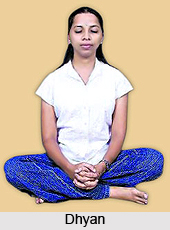
The Yoga Sutras is most widely recognized for its teachings on ashtanga yoga, the eightfold path of practice that ultimately leads to samadhi. These eight limbs—yama (ethical restraints), niyama (observances), asana (posture), pranayama (breath regulation), pratyahara (sense withdrawal), dharana (concentration), dhyana (meditation), and samadhi (complete absorption)—outline a progressive discipline for stilling the mind. When mental fluctuations (vritti nirodha) subside, a state known as kaivalya or “isolation” is achieved. In this state, the practitioner directly discerns purusa (pure consciousness, the witnessing self) as entirely separate from prakriti (nature, including the mind and its instinctual patterns).


Yoga Sutras and Jainism

The five yamas, or ethical restraints, in Patanjali’s Yoga Sutras closely parallel the five major vows of Jainism, suggesting a historical influence. Several other ideas associated with Jain thought also appear in Yoga philosophy such as the doctrine of karmic “colors” (lesya), the goal of spiritual isolation (kevala in Jainism and kaivalya in Yoga), and the central practice of ahimsa (nonviolence). Although ahimsa is fundamental to Jainism, its earliest known expression in the sense familiar to Hinduism appears in the Upanishads. The Chandogya Upaniṣad, dated to the 8th or 7th century BCE, contains the oldest reference to ahimsa as a code of conduct, prohibiting harm toward “all creatures” (sarvabhuta). It also states that one who practices ahimsa is freed from the cycle of rebirth and identifies it as one of five essential virtues.


Share this Article:

More Articles in Yoga


Meditative Asanas
Meditative Asanas are essentially designed to aid one’s meditation and concentration, and formed the basis for several other Asanas in creating a complete physical culture.
Cultural Asanas
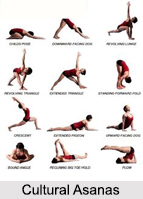
Cultural Asanas refer to the daily physical exercise postures that train the body and mind in Yoga Practice.
Soma Chakra
Soma Chakra is a minor chakra in the seventh chakra which is located above the third eye, in the centre of the forehead.
Jihva-Bandha
Jihva Bandha is one of the cultural asanas that improves the nervous and circulatory system. It means tongue-lock which strengthens the muscles of the neck and the cervical nerves.
Nauli Kriya
Nauli Kriya is a cultural asana where the Yogi rotates the abdomen speedily like a rotating whirlpool.
Tantra Kundalini
The Kundalini Tantra is the awakening of the vital force according to the Kundalini.
Kundalini Chakras
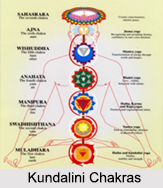
Kundalini Chakras are psychic energy centres or vortices, which connect between our psychic and physical energy systems.
Tadasana Yoga Asana
Tadasana, or the Mountain Pose is a standing Yoga posture with feet together and hands at the sides of the body, and improves one`s height and flexibility.
Asanas in Sitting Position
Asanas in Sitting Position help in aligning the spine and develop a sense of stability required for practice of pranayama and meditation.
Types of Yoga
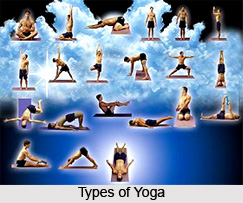
Types of Yoga benefits the practitioner mentally, physically and spiritually. However, speculating the right Yoga as per the need of an individual is very important.
Siddhasana Yoga Asana
Siddhasana is one of the most well known meditative postures, and is termed ‘the chief of all Asanas’ in the Hatha Yoga Pradipika.
Asanas in Standing Pose
Asanas in Standing Pose are generally held for shorter times than other poses, and tend to be more energetically uplifting and opening.
Patanjali Yoga Sutras
Patanjali’s Yoga Sutras presents a foundational guide to the philosophy and practice of yoga. Through concise aphorisms, it outlines the nature of the mind, the eightfold path of discipline, and the means to attain inner stillness. Its teachings continue to inspire modern yoga, meditation, and spiritual exploration.
Vakrasana - Yoga Asana
Vakrasana is a simplified form of the Ardha Matsyendrasana, an asana named after Matsyendranath, the founder of Hatha Yoga. It stretches the thigh and tones the abdomen.
Types of Yoga Asanas
Types of Yoga Asanas are stated on varied bases like postures, methods and objectives. The practice of yoga asanas provides a wide range of mental and physical benefits.
Impact of Yoga on Excretory System
Impact of Yoga on excretory system is indefinable as it not only helps the particular system but the body.
Yoga Asanas
Yoga Asanas are comfortable and peaceful postures that make the physical body ready for the higher and more spiritual levels of Yoga practice.
Surabhi Mudra
Surabhi Mudra is a powerful and effective mudra that helps in breaking barriers and achieving ultimate meditation.
Yoga - Discipline for Complete Health
Yoga is the traditional physical and mental disciplines in India that aims to keep body and mind fit.
Kubera Mudra
Kubera Mudra, a form of Hatha Yoga, leads to the elevation of mental peace and physical relief by proper practice and cleanses frontal sinuses.
Asanas in Lying Position
Asanas in lying position are known as Supine pose which are helpful to relax the body as well as to strengthen the muscles.