Home > Health > Yoga > Kaivalya Pada
Kaivalya Pada
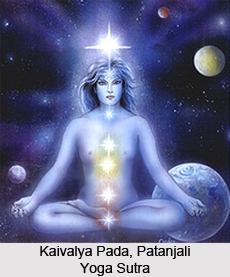
Kaivalya Pada, the fourth chapter of Patanjali Yoga Sutra denotes an absolute, indivisible state of existence of the Yogi. The Kaivalya Pada is sometimes considered a later addition to the Yoga Sutras, yet it plays a crucial role in describing the nature of final liberation. Kaivalya, meaning “isolation,” refers to the complete separation of the ‘Seer’ from the contents and fluctuations of the mind.

Share this Article:

Introduction

The Kaivalya Pada plays a crucial role in describing the nature of final liberation in 34 sutras. Kaivalya, meaning “isolation,” refers to the complete separation of the ‘Seer’ from the contents and fluctuations of the mind, such that consciousness is no longer affected by mental activity. The term signifies emancipation or ultimate freedom and is used in contexts where other traditions commonly employ the word ‘moksha.’


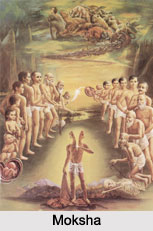
This is the final chapter in Patanjali Yoga Sutra that explains the process through which liberation is attained and clarifies the true nature of the ‘Seer.’ Moksha represents the state of complete freedom, realizing that individual consciousness (purusha) is entirely distinct from matter (prakriti). This highest state of enlightenment involves full awareness, total detachment from suffering, and complete release from the cycle of birth and death (samsara).

Sources of Siddhis

According to Maharshi Patanjali, Siddhis are obtained in five ways:

By birth: Some are born with certain Siddhis due to their higher spiritual state in previous birth.

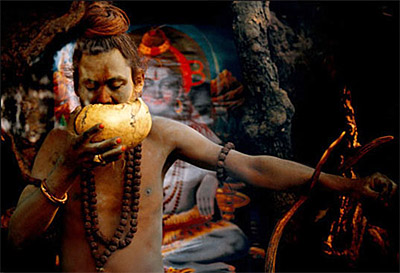
By herbs/ medicines: Certain herbs or medicines when consumed promoted mastery over a specific organ, faculty, or element, either within or outside the body. This mastery is a form of Siddhi.

By mantras: Regular mantras chanting can help the mind reach higher level of concentration, achieving Siddhi.

By austerity (tapas): Austerity, whether physical, mental, or spiritual can bring Siddhis.

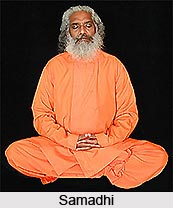
By Samadhi: With constant practice of yoga, kleshas can be weakened to purify mind, heart and consciousness. Then with Samyama in the state of Samadhi, Siddhis can be achieved.

These five means of attaining siddhi (perfections) do not modify nature’s processes or modes of operation; they merely remove the obstacles and hindrances encountered on the yogic path. They do not interfere with the natural functioning of Prakṛti. For this reason, the sage refers to them as ‘nimitta,’ auxiliary causes rather than agents of change.


Fundamental Transformation

When a living entity develops a higher quality and when that expression becomes saturated in his nature, he is automatically transformed into a higher species of life, either as an elevated human being, an angelic personality or a divine being.


Instrumental Cause of Transformation: The body and the senses are great instruments for progressing on the path of Yoga. Both possess latent powers within them. The body, senses, mind, intellect, and heart are all products of Prakriti (nature). Every entity produced by nature is complete, but human life is a journey. Therefore, nature has created these instruments in a basic form while embedding within them the potential for perfection. Now it is the duty of the human being to awaken this latent capacity and attain their completeness.


Creation of Mind

Chitta, in common language, is often referred to as “mind.” The chitta is composed of a principle called asmita, meaning ahankara (ego). From the modification of sattva, rajas, and tamas emerges mahat-tattva which creates asmita. Thus, the fundamental cause of the creation of chitta is the principle called asmita or ahankara. Despite different types of activities or functions the human performs, chitta that directs these activities is of a single kind.

Natural Mind Directs
The mind that is created by the practice of meditation is devoid of all kinds of desires. The basis of such a mind formed by meditation is not a ritual but a burnt seed. With this in mind, a yogi takes all the effort to stop the innumerable impulsive operations of the mind. 

Free from impressions: With this mind, the actions of the yogi are beyond the quality of sin. These actions do not work by earning good deeds and do not commit sins. There is a smooth movement about their actions. Whatever they do is good. 

Influence of karma: An advanced yogi, who has mastered the dhyana effortless linkage of the mind to a higher reality, may perform cultural activities just as others do, but for him, these do not result in rewarding, penalizing nor fruitless results. He gains absolutely nothing, because his detachment allows the reactions to fall back into material nature without creating any further karma.


Manifestation of Vasanas

Everything in the material creation works according to innate tendency, manifesting according to time and place. Sometimes it takes thousands of years before something can manifest. Every human naturally has latent desires. As a yogi has mystic insight, he understands how countless different dispersals of energy arise in the chitta. Thus, he withdraws that sense and deactivates the mundane consciousness, freeing himself from being a slave to desires which arise in the seat of feelings.

Memory and Impressions
Past lives affect the present one, even though the individual may or may not recall his past. A different status, a different place and a different time, though separated from a cultural activity of the past, is in sequence according to how it was laid into the memory of the individual. Irrespective of the present circumstances, the memory and the urges from past lives, operate in timeful sequence.


Source of Vasanas

A human being has the constant desire to live forever, the flow of desires (vasanas) has existed since beginningless time and will continue to flow in the same way into the future. Humans know that as long as there is life, there are experiences and enjoyments. Therefore, the desire to remain forever is the mother of all desires, the foundation of all vasanas. Therefore, if one is freed from the fear of death, one can also easily be freed from the influence of other vasanas.


Disappearance of Vasanas

Every action has a cause and an effect. Past actions are often stored in the memory or chitta and when it finds a stimulus, be it an incident or circumstance, the memory reminds the person of the past action prompts him to perform similar action which results in creating impressions. When alh the four- cause, result, memory, and stimulus of action are completely absent, then the impressions of action, that is vasanas, also disappear.


Past and Future Exist

According to Maharshi Patanjali, the past and future are real existences, which cause the present. Time is not an illusion. It is real in that sense. Every object has definite characteristics, which time, in its due course, takes from the past into the present and into the emerging future. Any substance, from the perspective of time (past and future), never truly ceases to exist because it remains in existence by virtue of its quality or characteristics, and therefore cannot be completely destroyed.

Factor of Existence
The three phases of time, the past, present and future, are perpetual, having a relationship with each other. They are reliant on their inherent energies which comprise the subtle and gross material nature. Every substance comprises of three gunas- sattva, rajas, and tamas, which are eternal and the root cause of all creation. Until these causes are destroyed or dissolved, the destruction of any substance is impossible. These qualities are fully capable of re-creating that substance again.


Essence of Object

The actual composition of an object is based on the uniqueness of the transformation of its three gunas-sattva, rajas, and tamas. When these three gunas come together to form a particular substance, that object becomes a single entity. It is not referred to by three separate names or regarded as three separate existences.


Theory of Perception

Due to the difference in the mento-emotional energy of two persons, separate prejudices manifest in their viewing of the very same object. Separate prejudices lie dormant in the mento-emotional energy of each living entity. When viewing the same object which has the same composition, persons react differently. These prejudices are sponsored in material nature by time which, with the power of the past, regulates the present and future.


Mind and Object

Maharshi Patanjali refutes the idea that the world is dependent on a limited mind or on a group of such minds. Otherwise, if that or those limited minds were to lose perception of an object, the item would no longer exist.

Reflection of Object: The application or non-application of consciousness is what brings objects into purview. An object is known or unknown, all depending on the mood and expectation of the mind of a particular person in reference to it. 

Purusha Knows the Mind: The spirit appears to be affected by the operations of the mind or the psyche. It is due to the changelessness of the spirit, which serves as a background for the movements of consciousness.


Chitta is not Self-illuminative

The mind or chitta has the capability of being perceived but is not self-illuminative. This has to be studied objectively in meditation by the yogi.

Limitation of Mind: Mind or chitta has its own limitation. It cannot both focus on itself and the seer at the same time. This has to be verified in deep meditation.

Confusion of Memories: According to Maharshi Patanjali, it is absurd to think that without a spirit one’s mind could perceive another mind. Unless there is a spirit behind a mind, there would be no perception in that energy.


Knowledge of its own Nature

The soul is free from all kinds of actions and attachments, and when it associates with the mind that has grasped an object, the soul experiences its own knowledge or the awareness of its own intellect.

Apprehension of Mind: The chitta sometimes becomes an object for the soul and at other times becomes the knower of external objects. Thus, it is imbued with both the external objects and the soul. When it is associated with outer objects, it appears as if unconscious, and when it comes into contact with the soul, it appears as if conscious. The chitta can be compared to a mirror, the cleaner the mirror, the clearer is the reflection, and the more distinctly it appears. 

Chitta Works for Purusha: The chitta is composed of sattva, rajas, and tamas; therefore, it is an inert substance. Inert substances do not act for themselves but work for the purusha. Its function is to provide the soul with both experience and liberation.


Cessation of Distinction

There is total cessation of the operations of mind for the yogi who perceives the distinction between feelings and the soul. A yogi is capable of distinguishing between his soul and his mind. He has to transcend the proximity of the two. 

Heading to Kaivalya: In the path to kaivalya, the mind is inclined towards discrimination but also is also gravitating towards total separation of Purusha from his psyche. The yogi has to achieve this state to gain kaivalya. It does not come by wishful thinking but only by practicing higher form of yoga.


Pratyayas Still Arise

The yogi has to continue practicing yoga without being frustrated. He might face failures at every step but he must forge ahead. His main energy is the mind’s content, which is deeply inlaid in the mento-emotional force as impressions from the past. Some of these surface as memory and others surface as pictures, sound formation, and then are expanded into meaningful or meaningless picturizations and sounds which distract the yogi by keeping him occupied in the mind. A yogi has to overcome these pratyayas to gain kaivalya. 

Removal of Pratyayas: Maharshi Patanjali has stated that the complete removal of pratyayas is like the elimination of the mento-emotional afflictions. It is a personal struggle. As a becomes preoccupied removing all causes for the mental and emotional troubles in the beginning of the journey to achieve kaivalya, similarly at this point of practicing higher form of yoga, the yogi has to remove the content of his mind which the mind often clings to in the state of relaxation.


Dharmamegha Samadhi

When the yogi weakens and ultimately dissolves all remaining impressions from past lives, only the predominance of sattva guṇa remains. In this stage of viveka-khyati (discriminative insight), he becomes entirely detached from worldly pleasures and comforts, even from the yogic powers (vibhutis) he may have attained. The sole pure, sattvic aspiration that endures within him is the longing to realize his natural, simple, and pure state- kaivalya.

This state is what Maharshi Patanjali describes as Dharma-megha Samadhi, the condition in which the uninterrupted flow of knowledge leading to kaivalya remains, completely free from the influence of any desire.

Freedom from kleshas: As the fruit of Dharma-megha Samadhi, the yogi attains the complete destruction of the remaining afflictions carried over from previous births. After this state, all kleshas, whether arising in this life or accumulated over countless past lives, are reduced to burnt seeds (dagdha-bija). From this point onward, the yogi’s entire being moves effortlessly toward kaivalya.


Infinity of Knowledge

In the higher state of samadhi, all afflictions (kleshas) and (desire-driven) karmas are dissolved. When karmas are dissolved, the veils and impurities that had until now covered the yogi’s knowledge are also removed. That is when infinite knowledge manifests within the yogi. This knowledge is so vast that, in the entire existence, very little remains for him to know. With true realization of his self, he no longer considers this world to be essential.


Gunas Retire

When the yogi reaches the state of Dharma-megha Samadhi, the three guṇas withdraw. As they cease all movement and fluctuation, no further actions arise from them. When the gunas become inactive, both their sequence (krama) and their transformations (pariṇama) come to an end.

Krama Apprehensible
The advanced yogi alone achieves this state. This is an individual accomplishment, where the yogi sees the moments, which in sequence (krama) make up time. Time, here, is the changing mundane energy. The yogi clearly perceives this krama of his journey from afar. Time that hypnotizes other and keeps them under its control subjectively and objectively, is now looked upon by the yogi, just as the supreme power would normally see it. 


Attaining Kaivalya

Separation of the soul from the mind is called the state of kaivalyam, which occurs when there is neutrality in respect to the influence of material nature. It is a state when the yogi’s psyche becomes devoid of the general aims of a human being. At last, the spirit is established in its own form as the force empowering the mento-emotional energy. This is where the practice of higher form of yoga ends.


In human life, the fourfold aims known as puruṣartha catuṣṭaya are described as Dharma (righteousness), Artha (prosperity), Kama (desire), and Mokṣa (liberation). Among all living beings, only humans can traverse this full journey, from Dharma, through Artha and Kama, ultimately to Mokṣa.

When a person, as a yogi, through steadfast practice, destroys all afflictions (kleshas) and self-centered actions (sakama karma), and removes the coverings that obscure true knowledge, he transcends the guṇas and attains Mokṣa or Kaivalya.

Kaivalya is the establishment of the soul in its purest essence. From this state, the yogi is never reborn. Having realized his own true nature, he becomes utterly free from the desire to attain anything further. Whatever portion of embodied life remains is lived in a state of disembodied awareness (videha), performing only selfless actions and resting in the bliss of the Supreme.


Share this Article:

More Articles in Yoga


Meditative Asanas
Meditative Asanas are essentially designed to aid one’s meditation and concentration, and formed the basis for several other Asanas in creating a complete physical culture.
Cultural Asanas
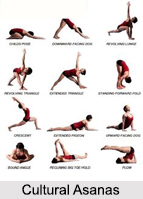
Cultural Asanas refer to the daily physical exercise postures that train the body and mind in Yoga Practice.
Soma Chakra
Soma Chakra is a minor chakra in the seventh chakra which is located above the third eye, in the centre of the forehead.
Jihva-Bandha
Jihva Bandha is one of the cultural asanas that improves the nervous and circulatory system. It means tongue-lock which strengthens the muscles of the neck and the cervical nerves.
Nauli Kriya
Nauli Kriya is a cultural asana where the Yogi rotates the abdomen speedily like a rotating whirlpool.
Tantra Kundalini
The Kundalini Tantra is the awakening of the vital force according to the Kundalini.
Kundalini Chakras
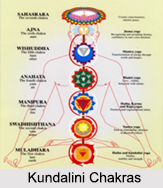
Kundalini Chakras are psychic energy centres or vortices, which connect between our psychic and physical energy systems.
Tadasana Yoga Asana
Tadasana, or the Mountain Pose is a standing Yoga posture with feet together and hands at the sides of the body, and improves one`s height and flexibility.
Asanas in Sitting Position
Asanas in Sitting Position help in aligning the spine and develop a sense of stability required for practice of pranayama and meditation.
Types of Yoga
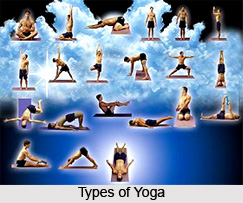
Types of Yoga benefits the practitioner mentally, physically and spiritually. However, speculating the right Yoga as per the need of an individual is very important.
Siddhasana Yoga Asana
Siddhasana is one of the most well known meditative postures, and is termed ‘the chief of all Asanas’ in the Hatha Yoga Pradipika.
Asanas in Standing Pose
Asanas in Standing Pose are generally held for shorter times than other poses, and tend to be more energetically uplifting and opening.
Patanjali Yoga Sutras
Patanjali’s Yoga Sutras presents a foundational guide to the philosophy and practice of yoga. Through concise aphorisms, it outlines the nature of the mind, the eightfold path of discipline, and the means to attain inner stillness. Its teachings continue to inspire modern yoga, meditation, and spiritual exploration.
Vakrasana - Yoga Asana
Vakrasana is a simplified form of the Ardha Matsyendrasana, an asana named after Matsyendranath, the founder of Hatha Yoga. It stretches the thigh and tones the abdomen.
Types of Yoga Asanas
Types of Yoga Asanas are stated on varied bases like postures, methods and objectives. The practice of yoga asanas provides a wide range of mental and physical benefits.
Impact of Yoga on Excretory System
Impact of Yoga on excretory system is indefinable as it not only helps the particular system but the body.
Yoga Asanas
Yoga Asanas are comfortable and peaceful postures that make the physical body ready for the higher and more spiritual levels of Yoga practice.
Surabhi Mudra
Surabhi Mudra is a powerful and effective mudra that helps in breaking barriers and achieving ultimate meditation.
Yoga - Discipline for Complete Health
Yoga is the traditional physical and mental disciplines in India that aims to keep body and mind fit.
Kubera Mudra
Kubera Mudra, a form of Hatha Yoga, leads to the elevation of mental peace and physical relief by proper practice and cleanses frontal sinuses.
Asanas in Lying Position
Asanas in lying position are known as Supine pose which are helpful to relax the body as well as to strengthen the muscles.