Introduction
Meditation is a practice that involves using specific techniques to cultivate focus and awareness, allowing individuals to step back from automatic, wandering thoughts and reach a state of mental clarity and emotional balance. While meditation is deeply rooted in many religious traditions, it is also widely practiced outside spiritual contexts for its proven health benefits and well-being. Its earliest documented references, known as dhyana, appear in the Upanishads, and the practice holds a central place in different religion.

Concept of Meditation
Meditation is an intense spiritual as well as personal
experience. Described as a state of concentrated attention on a thought, an
object, or on awareness, this process intends to turn the attention inward, to
the mind itself. Meditation is used for personal development, better
concentration, to achieve peace and harmony for spiritual closeness to God
and even to impart calmness, love, purity, wellbeing and truthfulness.
Etymology of Meditation
The word Meditation comes from the Latin word
"meditatio", which originally indicated any physical or mental exercise that is done
scientifically. Meditation is considered to be the component of Eastern religion,
where it has been practiced for more than 5000 years. Later the concept evolved
into a more specific meaning, "contemplation", where awareness is
brought forward on the reality of the present moment without deliberately
encouraging imagination.
Benefits of Meditation
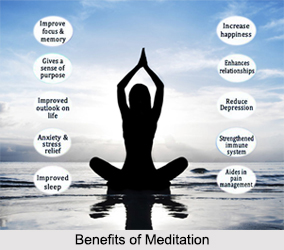
One of the benefits of meditation is the ability to control the activities of the mind, speech and body. Steadying the mind or focusing the concentration is one of the prime objectives of meditation.

Health benefits of Meditation:
·
With the recent growth of stress and
strain, meditation has a unique way to calm the mind.
·
Meditation has been found to strengthen the
immune system, which helps ward off diseases before they actually affect the
human body.
·
Meditation also helps to release negative mental
states such as fear, worry and anger and replace them with positive attitudes.
·
According to some researches, meditating twice a
day for 20 minutes can reduce blockages in one’s blood vessels and can lower
the risk of heart attacks and sudden strokes.
· Daily practice of meditation helps to gain control over the flow of life force, while letting one turn inward.
Spiritual benefits of Meditation:
·
A state of relaxed concentration over one’s mind
while keeping the reality of the present moment intact-dhyana
·
A state of freedom of the mind, when the
person’s mind is free of any kind of thoughts-dharana
·
A state of spiritual concentration, which brings
one closer to God- Samadhi
·
A state of concentration which helps one focus
the mind on a single object or thought- Sabija
samadhi or Samprajnata samadhi.
· Attaining
the state of pure concentration without any thought or object- Nirbija
samadhi or Asamprajnata samadhi.
History of Meditation
The history of meditation is closely intertwined with the religious traditions in which it developed. Early references to meditative practices, along with proto-Samkhya philosophy, appear in ancient Indian texts such as the Upanishads and the Mahabharata, including the Bhagavad Gita. Over time, diverse schools and styles of meditation emerged within Hinduism, Jainism, Buddhism, and Sikhism, reflecting their distinct spiritual and philosophical foundations.
Meditation
in Hinduism
In Hinduism, meditation if often defined as the method of
‘Samyama,’ the unified practice of Dharana, Dhyana, and Samadhi. Dharna, the first stage of meditation involves
training the mind to focus steadily on a single point. Dhyana, the second stage
of meditation signifies a process or journey of inner reflection. Samadhi, the
final stage of mediation represents a state in which awareness fully withdraws
from the external world and rests in the inner self.
Meditation
in Jainism
In Jainism, spiritual practice is structured around the
Ratnatraya, or “Three Jewels,” which consist of right perception and faith,
right knowledge, and right conduct. Meditation in this tradition is directed
toward attaining and abiding in the soul’s pure state, understood as pure
consciousness that exists beyond attachment and aversion. The practitioner
seeks to remain a knower-seer (gyata-drashta), observing reality without
emotional entanglement. Broadly, Jain meditation is classified into Dharma
dhyana and Shukla dhyana. Dharma dhyana involves discriminative knowledge
(bheda-vijnana) of the tattvas, or fundamental truths, while Shukla dhyana
refers to meditation in its most refined and focused form.

Meditation
in Buddhism
In Buddhism, meditation is pursued as an essential
component of the path toward awakening and nirvana. In the classical languages of
Buddhism, the practice is most closely associated with the term “bhavana,”
meaning “development.” Core meditative practices include contemplations of the
body, such as reflections on repulsiveness and cemetery contemplations, as well
as anapanasati, or mindfulness of in-and-out breathing.
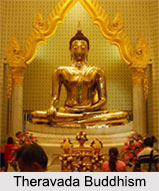
The Theravada tradition places strong emphasis on the cultivation of samatha (calm) and vipassana (insight), identifying more than fifty methods for developing mindfulness based on the Satipaṭṭhana Sutta and forty methods for developing concentration as outlined in the Visuddhimagga. The Tibetan tradition integrates Sarvastivada and Tantric practices with Madhyamaka philosophy, giving rise to thousands of visualization-based meditations.
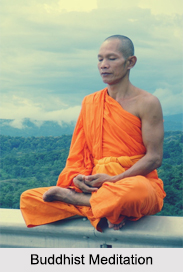
In Zen Buddhism, mindfulness and breath-centered meditation were adopted through the Dhyana Sūtras, which draw from the Sarvastivada tradition. Sitting meditation, known as zazen, remains a central and defining element of Zen practice.
Meditation
in Sikhism
In Sikhism, simran, or meditation, is regarded as
essential to spiritual progress and must be accompanied by righteous action, as
meditation without good deeds is considered ineffective. Through meditation,
Sikhs seek to experience the presence of God and to immerse themselves in the
divine light. The desire to begin meditative practice is believed to arise only
through God’s divine will or order. A central form of meditation, known as ‘nam
japna,’ involves concentrating the mind on the names and exalted attributes of
God.
Meditation in Ancient Texts
In ancient texts, Yoga and Dhyana are practiced as means to realize “pure awareness” or “pure consciousness,” understood as the eternal self that remains undisturbed by the fluctuations of the mind. From vedas to ancient philosophies, meditation has
Advaita Vedanta: Within Advaita Vedanta, the jivatman, or individual self, is regarded as illusory and ultimately identical with the omnipresent, non-dual Atman-Brahman.
Samkhya Philosophy: In contrast, the dualistic traditions of Yoga and Samkhya describe the Self as Purusha, a state of pure consciousness unaffected by Prakriti, or nature. Across these traditions, the moment of spiritual liberation is variously referred to as moksha, vimukti, or kaivalya.
Patanjali’s Yoga Sutras: One of the most influential works of classical Hindu Yoga is Patanjali’s Yoga Sutras (circa 400 CE), a text associated with the Yoga and Samkhya schools and shaped in part by Buddhist thoughts. It also refers to Ashtanga yoga, an eightfold path that include meditation, to achieve liberation of mind and body.
Ashtanga
yoga: The text
presents an eightfold path aimed at achieving kaivalya, or inner awareness. The
first four stages in Ashtanga yoga, known as the “outer limbs,”
consist of ethical disciplines (yamas), observances (niyamas), physical
postures (asanas), and breath regulation (praṇayama). The last four limbs are
withdrawal of the senses (pratyahara), concentration (dharaṇa), meditation
(dhyana), and ultimately samadhi.
Techniques of Meditation
Meditation
remains a deeply personal experience, as a method that feels calming to one
individual may prove distracting to another. Most techniques of meditation are relatively simple,
ranging from basic breathing exercises to more structured and complex
practices. For those who find it challenging to calm the mind, guided
meditations often provide a supportive and effective alternative.

In practice, meditation incorporates several key elements such as:
· Preparing the body for meditation
· Preparing the mind for meditation
· Meditation Postures
· Mudras in meditation
· Bandhas in meditation
Preparing the Body for Meditation
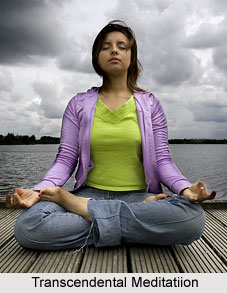
Preparing for meditation begins with creating the right inner and outer conditions. Arranging the body correctly is an essential first step in supporting meditation, whether the aim is spiritual awakening or improved mental well-being. The practitioner starts by choosing a comfortable posture with an upright yet relaxed spine. The head, neck, and shoulders should be naturally aligned. A few slow, deep belly breaths like inhaling through the nose and exhaling through the mouth allow the nervous system to settle and signal a shift away from the busyness of the day. Ideally, meditation is practiced on a light or empty stomach, avoiding heavy meals or stimulants beforehand.
Spine: When the spine remains upright, a gentle natural curve is preserved in the lower back, it supports healthy posture and prevents strain.
Shoulders: The shoulders are allowed to soften and roll slightly back and down, opening the chest.
Chin: The chin is tucked in just enough to lengthen the back of the neck, creating a sense of extension through the spine.
Hands: Hand placement is flexible and
guided by comfort. While some traditions recommend symbolic gestures, or
mudras, any position that maintains balance without pulling the body forward or
backward is appropriate.
Preparing the Mind for Meditation
Before beginning, the practitioner briefly reflects on their intention for meditating. Expectations are consciously released, allowing the experience to unfold naturally. Attention is gently anchored, often on the natural rhythm of the breath or a simple mantra, with wandering thoughts redirected calmly and without judgment. The objective is to find a balance between relaxation and alertness.
During Meditation (The Transition Inward): Thoughts are observed as they arise, without engagement, and allowed to pass freely.
Finishing
the Practice: As
the session concludes, the sense of calm awareness is then carried forward into
the next activity, allowing meditation to gently inform the rest of the day.
Meditation Postures
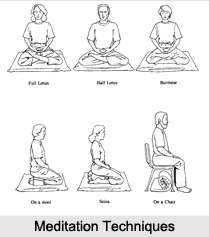
Meditation can be practiced in a variety of seated, standing, or reclining postures. It is important to choose a position that supports both physical comfort and mental alertness. Below are several commonly used meditation postures.
1.
Quarter Lotus
Quarter
lotus is the cross-legged position often learned in childhood, where each foot
rests below the opposite knee. A meditation cushion is especially helpful in
this posture, as it lifts the hips and gently tilts the pelvis forward,
preventing the lower back from rounding. Sitting toward the front of the
cushion supports this alignment. Ideally, the knees rest below the hips and
make light contact with the feet, though adjustments can be made for comfort.
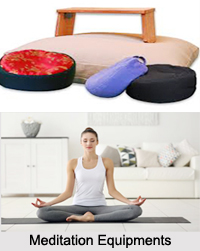
At longer meditation retreats, practitioners often use combinations of zafus (round cushions) and zabutons (larger base cushions) to elevate the hips and cushion the knees and ankles. A wall may also be used for back support. Placing a rolled-up sweatshirt between the lower back and the wall can help maintain proper spinal alignment.
2. Half
Lotus
Half lotus is similar to quarter lotus, except
one-foot rests on the opposite thigh. This posture requires greater hip
flexibility and should be approached with care to avoid strain on the knees.
Warm-up poses such as pigeon or reverse pigeon can help prepare the body,
particularly for those new to seated yoga postures or experiencing knee
sensitivity.
3. Full
Lotus
Full lotus is the most advanced seated
posture, with each foot placed on the opposite thigh. Its symmetry and
stability are beneficial for meditation, but it demands significant flexibility
in the hips, knees, and ankles. This posture should not be attempted by those
with existing knee or hip issues, nor should the body ever be forced into
position. Gradual preparation through hip-opening yoga poses is essential to
avoid injury for beginners.
4.
Burmese Position
In Burmese
position, both feet rest flat on the ground in front of the pelvis without
crossing. This simple posture can be very comfortable if the knees naturally
rest on the floor. Sitting toward the front of a cushion, practitioners are
encouraged to gently shift forward, backward, and side to side until a sense of
balance and grounding is found.
5. Seiza
Pose (Kneeling)
Seiza,
meaning “proper sitting,” is a traditional Japanese kneeling posture. It can be
practiced using a meditation bench or with a cushion or yoga block placed
between the legs. The top of the feet rests flat on the floor, and the posture
naturally supports an upright spine while reducing pressure on the lower-body
joints. For beginners, cushioning under the knees and feet is recommended.
6.
Standing Meditation
Standing meditation is useful for practitioners who
struggle with drowsiness or experience pain while sitting. All meditation
techniques practiced while seated can also be performed standing. Care should
be taken not to lock the knees. Some teachers suggest standing body-scan
meditations or walking meditation as effective alternatives when seated
postures feel challenging.
7.
Lying-Down Meditation
If sitting
or standing causes discomfort, meditation can be practiced lying down. This is
typically done in savasana (corpse pose), lying flat on the
back with arms by the sides and palms facing upward. The body remains still
while the mind stays alert and aware. While accessible, this posture carries a
higher risk of falling asleep, especially for beginners, and should be
approached mindfully.
Mudras in Meditation
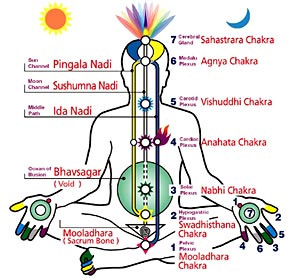
Mudra refers to a symbolic gesture used in yoga and meditation. The Sanskrit word mudra translates to “gesture,” “mark,” or “seal.” In yogic practice, mudras are most commonly expressed through specific hand positions believed to influence the flow of energy within the body. By stimulating energy channels and balancing the chakras, these gestures help clear psychic pathways and harmonize the body and mind. There are different mudras, each producing a distinct physical, mental, or energetic effect.

Hasta Mudra: Hasta mudras work through the five fingers of the hands, each of which represents one of the five essential elements in the body. By bringing different fingers together, specific elements can be balanced to support overall well-being.
The thumb
represents Agni (fire).
The index
finger represents Vayu (air).
The middle
finger represents Akash (space).
The ring
finger represents Prithvi (earth).
The little finger represents Jal (water).
Gyan Mudra: Gyan Mudra is one of the most widely practiced hand mudras and is commonly used in meditation, worship, healing practices, and even classical dance. To form this mudra, the practitioner sits comfortably in meditation while the hands rest on the knees, and the tips of the thumb and index finger gently touch skin to skin, not nail to nail. The remaining fingers stay relaxed and extended. This mudra is associated with wisdom, clarity, and heightened awareness.
Vayu Mudra: Also known as Vayu Shamak Mudra, this gesture helps reduce excess air element in the body. The practitioner presses the tip of the index finger into the base of the thumb, then folds the thumb inward to apply gentle pressure. The remaining fingers stay straight and relaxed. This mudra can be practiced in any seated meditation posture.
Surya Mudra: Surya Mudra is commonly practiced to reduce the earth element within the body and stimulate metabolic energy. It is performed in any meditative posture by placing the tip of the ring finger at the base of the thumb and gently pressing it with the thumb.
Linga Mudra: Linga Mudra is considered effective for increasing the fire element in the body. The practitioner sits in a meditative pose and interlocks the fingers of both hands, keeping the left thumb extended and pointing upward. This mudra is traditionally associated with warmth, vitality, and inner strength.
Prithvi Mudra: The Sanskrit word Prithvi means “the vast one” and refers to the earth element. Prithvi Mudra helps increase the earth element while reducing excess fire. It is formed by gently touching the tips of the ring finger and thumb while sitting in a meditative posture.
Pran Mudra: Pran means life force, and Pran Mudra is believed to strengthen all five pranas in the body. To practice, the practitioner sits in a meditative pose and lightly touches the tips of the little finger, ring finger, and thumb together. This mudra supports vitality, immunity, and overall energy.
Varun
Mudra: Varun Mudra
increases the water element in the body and is therefore also known as Jal
Vardhak Mudra. It is practiced by sitting comfortably and gently touching the
tips of the little finger and thumb together. This mudra is associated with
hydration, fluid balance, and emotional harmony.
Bandhas in Meditation
Bandhas are known as energetic locks in yoga, and there are three primary bandhas practiced to regulate the flow of prana within the body. They are Jalandhara Bandha (the chin lock), Uddiyana Bandha (the abdominal lock), and Mula Bandha (the anal or root lock).
Jalandhara Bandha (Chin Lock): Jalandhara Bandha involves gently lowering the chin toward the hollow of the throat. The internal and external carotid arteries, which supply blood to the brain, run along both sides of the neck. When subtle pressure is applied in this area through the chin lock, nerve impulses to the brain are softened, reducing body awareness and inducing a trance-like state. This stimulation also slows the heart rate and allows the vijnani nadi, often described as the “channel of consciousness,” to come under conscious regulation. As a result, the practitioner experiences increased inward focus and mental stillness.
Uddiyana Bandha (Abdominal Lift): Uddiyana Bandha is a powerful abdominal lock that engages the diaphragm, rib cage, and abdominal muscles. It may be practiced either standing or seated in a meditative posture. In the standing variation, the feet are placed about two feet apart, the spine remains upright, and the knees are slightly bent. The practitioner leans forward from the waist, resting the palms just above the knees. After exhaling fully, the chin is placed into the hollow of the throat. Without inhaling, the abdominal muscles are drawn inward and upward, pulling the navel toward the spine. This action lifts the diaphragm and creates a hollow space beneath the rib cage, while the back rounds slightly. The lock is held comfortably before slowly releasing and inhaling. This bandha is known for stimulating digestive fire and directing energy upward.
Mula
Bandha (Root Lock):
Mula Bandha, often referred to as the root or anal lock,
involves the contraction of the sphincter muscles at the pelvic floor. Both the
internal and external sphincter muscles are gently engaged and held. This
bandha is commonly applied during pranayama and meditation to stabilize energy,
enhance concentration, and support the upward movement of prana along the
spine.
Types of Meditation
There are many forms of meditation, each offering a distinct pathway toward calmness, focus, and self-awareness. Rooted in yogic tradition, these practices address the mind, breath, and consciousness in different ways, allowing practitioners to choose methods that align with their personal needs.
Japa
Yoga Meditation
Japa Yoga meditation is a spiritual practice centered on
the silent or audible repetition of a mantra, a sacred sound, word, or phrase.
This repetition helps quiet the mind, strengthen concentration, and lead the
practitioner into deeper meditative states. A japa mala, or rosary of beads, is often used to count
repetitions, traditionally totaling 108 cycles. Through sustained awareness and
devotion, japa meditation gradually refines mental patterns, purifies the mind,
and supports spiritual growth. Commonly used mantras include “Om” and “So Hum.”
Mantra
Siddhi Yoga Meditation
Mantra Siddhi Yoga Meditation integrates powerful sound
vibrations with structured yogic practices such as asana and pranayama. The aim
is to attain siddhi, or mastery, over the mind, energy, and consciousness.
Through disciplined repetition, visualization, and inner stillness, habitual
patterns are purified and negativity is dissolved. Over time, the mantra
becomes a vehicle for deep meditation, unlocking inner potential and guiding
the practitioner toward profound spiritual realization.
Ajapa Meditation
Ajapa meditation,
also known as Ajapa Yoga, is an advanced meditative practice that focuses on
the natural, spontaneous sound of the breath. It is commonly associated with
the mantra “So-Ham,” where “So” accompanies the inhalation and “Ham” the
exhalation. Unlike conscious mantra repetition, this practice allows the mantra
to flow effortlessly with the breath, synchronizing breath, mind, and prana.
This transition from deliberate repetition to automatic awareness leads to deep
relaxation, heightened self-awareness, and expanded consciousness.
Yoga
Nidra Meditation
Yoga Nidra, often referred to as yogic sleep,
is a guided restorative practice that deeply relaxes the body while keeping the
mind alert. It places consciousness in a state between waking and sleeping,
allowing profound rest and rejuvenation. Particularly beneficial for those
experiencing stress or sleep deprivation, Yoga Nidra encourages brainwave
patterns associated with the parasympathetic “rest-and-digest” response,
supporting both physical and mental recovery.
Antar
Mouna Meditation
Antar
Mouna, meaning “inner silence,” is a systematic meditation technique that
cultivates awareness by observing thoughts without judgment. Through a gradual
withdrawal from external distractions and internal mental noise, the
practitioner develops a witness attitude toward thoughts and emotions. The
practice progresses through stages that include observing spontaneous thoughts,
consciously creating and dissolving them, and ultimately resting in stillness.
Antar Mouna helps break habitual thought loops and fosters deep inner calm and
mental clarity.
Chidakasha
Dharana Meditation
Chidakasha
Dharana is a profound meditative practice focused on the inner “space of
consciousness,” or Chidakasha, located behind the eyebrows at the Ajna Chakra. Through sustained concentration, the
practitioner observes thoughts, inner visions, colors, or light as they arise
and dissolve without attachment. As awareness deepens, attention moves beyond
body consciousness into a vast inner stillness, culminating in an experience of
infinite space and union with the true Self. This practice enhances intuition,
inner calm, and self-realization.
Trataka
and Antar Trataka Meditation
Trataka and Antar Trataka are classical
yogic gazing practices designed to strengthen concentration and deepen
meditative awareness. Trataka, or external gazing, involves steady focus on a
physical object, most commonly a candle flame. This practice trains the mind to
remain one-pointed, reduces mental distractions, and enhances clarity and
memory.
Antar Trataka, or internal gazing, follows naturally from external Trataka. With the eyes closed, the practitioner shifts attention to the after-image of the object or to an inner focal point, such as the Third Eye or Ajna Chakra. This inward focus bridges the transition from external concentration to deeper meditation, cultivating inner awareness and stillness.
Nada
Yoga Meditation
Nada Yoga meditation is a sound-based yogic practice
that uses both external and internal vibrations to cultivate inner peace,
self-realization, and unity with cosmic consciousness. The practice typically
begins with awareness of external sounds, such as music, chanting, or mantra repetition, gradually
refining attention toward subtler internal sounds, often experienced as
humming, ringing, or bell-like tones.
As concentration deepens, the practitioner becomes attuned to the universal vibration of OM (AUM), which represents the primordial sound underlying all creation. This inward journey through sound harmonizes the body and mind, quiets mental fluctuations, and induces deep states of relaxation and awareness.
Zen
Meditation
Zen meditation is an ancient Buddhist practice
that centers on sitting upright and gently observing the breath, especially its
natural movement in and out of the abdomen, while allowing thoughts to arise
and pass without interference. The practice encourages the mind to simply be,
cultivating deep presence, clarity, and quiet alertness.
Prana
Vidya in Meditation
Prana Vidya
is an ancient yogic system dedicated to the understanding and conscious
application of prana, the vital life force that sustains all living beings.
This practice is used to support healing, enhance overall well-being, and
foster spiritual growth by working directly with the body’s subtle energy
systems. Through structured techniques such as breathwork, visualization,
mantra repetition, and chakra-based practices, Prana Vidya helps purify the
energy body and refine inner sensitivity. By activating the body’s innate
healing intelligence, Prana Vidya guides practitioners toward greater vitality
and higher states of consciousness.
Kundalini
Kriyas in Meditation
Kundalini kriyas in meditation consist of structured
sequences of postures (asanas), breathwork (pranayama), mantras, and mudras
designed to awaken and consciously direct prana, the life force energy. These
practices work systematically with the body’s energy centers, or chakras, to
remove energetic blockages, strengthen willpower, and support spiritual growth.
Through techniques such as Breath of Fire, Alternate Nostril Breathing, and
specific hand gestures, Kundalini kriyas create both physical and subtle
energetic shifts. As the flow of energy becomes more balanced, mental clarity
increases and deeper layers of awareness are accessed.