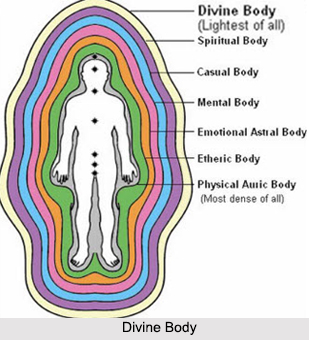
 Divine Body is the seventh and the supreme layer of the Bodies and Chakras. There is a connection with the fifth chakra which is the Sahasrara Chakra. In this body, one associates to the glint of the divine within oneself. Through this energy one can deeply feel the presence of God in one"s life and feel united with God.
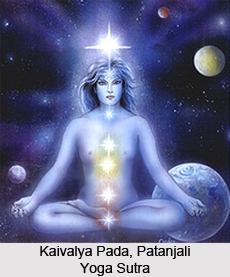
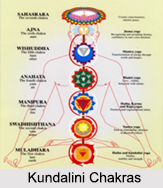
The following illustrations portray the locations of the seven chakra levels of Divine Body:
1. Physical Level
Twenty Locations: ends of fingers and toes. Function: curing energies and discernments of energies around oneself. Too open: depletes energy. Blocked: may turn into rage and a craving to push or kick one"s way clear, symbolically or literally; can impact on health of hands and feet.
2. Emotional Level
Location: devotional chakra, centre of back of head. Function: conveying devotion for the divine. Too open: may be exceptionally devoted to one"s own ego or a cause (fanaticism or over-zealousness), particularly if the crown is also blocked. Blocked: lack of feeling, curiosity or even recognition of a divine level or beings or one"s connectedness with this area; occasionally cold towards others.
3. Mental Level
Two Locations: just inside the pelvic bones, above where the legs join the body. Function: manifestation of thankfulness and faith; opens one to richness. Too open: Pollyanna behaviour; avaricious. Blocked: may limit thankfulness and hinder the flow of abundance.
4. Intuitional/Compassionate Level
Location: solar plexus, just below the xiphoid process chakra; associated to the pancreas. Function: spiritual energies enter in for dispersion within the body; arouses and polishes the system to higher vibrations and sweetness of life; many energies flow through this chakra for materialisation of circumstances in one"s life; connects to one"s place in the world. Too open: searching overly for sweetness of life; exaggeratedly concerned about one"s place in life. Blocked: closed to spiritual energies, sweetness and joy of life; fear of modification and opening up to bigger things in life.
5. Will/Spirit Level
Location: within hollow, at base of throat (bones build a horseshoe shape). Function: yearning or will to serve in the world. Too open: unreasonable commitment to others at the price of one"s own destiny-energy; feelings of delivering the world. Blocked: fear of giving to or serving others; martyr sensations.
6. Soul Level
Two Locations: 1 or more than 1 inch on both sides of the navel (depending upon body size). The Chakras of the Seven Bodies Function: union of the energies of the body with divine energies or with others. Too open: unwarranted search for unification. Blocked: can be harmful to self or others.
7. Divine Level
Location: crown chakra, middle or top of head. Function: association with elevated spiritual levels; poise in everyday life. Too open: spacey; unable to serve in daily life; may feel exhausted or weak. Blocked: negativity; down on oneself; deficiency of link with divine levels; demented; mystification.