Hindu Philosophy
Hindu Philosophy is the root of Hinduism where the entire concept and the content of Hinduism exist.

Share this Article:

Hindu Philosophy

Hindu PhilosophyThe history of Hindu Philosophy goes back to the earliest times, when systems of ritual using Yoga and meditation, elaborate and often highly sophisticated doctrinal schemes and metaphysical speculation developed within Hinduism. However, from around 700 B.C proto-philosophical period, when karma and liberation doctrines bloomed, the proto-scientific ontological lists in the Upanishads were compiled. Subsequently was the advent of classical period, spanning the first millennium ad, in which there was constant philosophical swap between dissimilar Hindu, Buddhist and Jain schools. While there are undoubted similarities between traditional Hindu thinking and modern western philosophy, what traditional Hindu thinkers do would only be partially recognized in contemporary departments of philosophy in western universities.

While the flowering of Hindu philosophy and theology occurs between the seventh and seventeenth centuries CE, the origins of philosophical speculation go back to the Vedas. The primal rhapsodies of the Hindu philosophers concerned metaphysics, epistemological issues, philosophy of language, and ethical philosophy. Distinguished by their alternative approaches to reality, all the schools considered the Vedas (the sacred scriptures) authoritative, and all believed that there is an eternal individual self or atman, apart of the larger entity Brahman and Hindu philosophy discerns such Nasadiya Sukta (Creation Hymn) of the Rig Veda unfolds:
Who really knows?
Who will here proclaim it?
Whence was it produced? Whence is this creation?
The gods came afterwards, with the creation of this universe.
Who then knows whence it has arisen?
The Rig-Veda thus letting an individual seeks and discovers the meaning of his life in his adjourning quest, highlights the philosophy of life and transcendence.
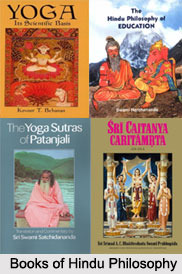
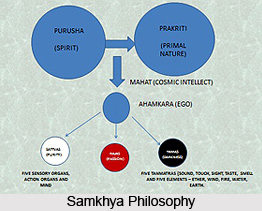
Hindu PhilosophyHindu philosophy is classified into six schools of thought, known as Darshanas. Samkhya philosophy is a strongly dualist theoretical exposition of mind and matter. Yoga philosophy emphasizes meditation closely based on Samkhya. Nyaya philosophy and Vaisheshika, an empiricist school of atomism relate to Hindu philosophy. Mimamsa is an anti-ascetic and anti-mysticism school of orthopraxy, while Vedanta and opposes Vedic ritualism in favour of mysticism.

In the history of Hindu philosophy, the distinction of these six philosophical schools existed in the Gupta period, the `Golden Age` of Hinduism. With the disappearance of Vaisheshika and Mimamsa, it was archaic by the later middle ages. Eventually the various sub-schools of Vedanta, like the Dvaita `dualism`, Advaita `non-dualism` and others came to prominence as the main partition of religious philosophy. Nyaya survived into the 17th century as Navya Nyaya `Neo-Nyaya`, however Samkhya gradually lost its status as an independent school and its doctrine absorbed into Yoga and Vedanta.

In Hindu philosophy, Yoga is the name of one of the six orthodox philosophical schools and the Yoga philosophical system is intimately associated with the Samkhya School. The Yoga school as explained by Patanjali concept, it is related to the Samkhya psychology and metaphysics, but is more theistic than the Samkhya. The Nyaya School is based on the Nyaya Sutra and was written by Aksapada Gautama.

The Hindu philosophy includes the thoughts of the Upanishads that are referred to as the Vedanta, the `end of the Veda`. This is a term which is also used for the theological tradition developing from them. This immensely rich tradition is so influential that, at a popular level in the West, `Vedanta` is taken to be Indian philosophy par excellence. The Vedanta tradition is, however, divided into two main developments which are both referred to as schools of exegesis or enquiry (mimamsa). Advaita is probably the most recognized of all Vedanta schools of Hindu philosophy. Three categories of existence, namely Brahman, soul, and matter are followed by this school of thought. Shuddhadvaita by Vallabhacharya and Achintya Bheda Abheda by Chaitanya Mahaprabhu were the important thoughts of Hindu philosophy in later ages.

The most influential school of theology in India has been the Vedanta, exerting enormous influence on all religious traditions and becoming the central ideology of the Hindu Renaissance in the nineteenth century. It has become the philosophical paradigm of Hinduism par excellence. Hindu philosophy with its entire reality, spirituality, theories of creation is one of the colossal and unlimited areas of cultivation and research for the Indian scholars. The different schools of thoughts still prevail in different sects of the nation.

Gunas - Hindu Philosophy

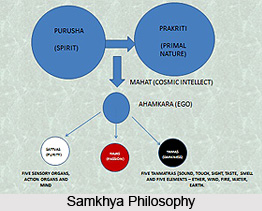
According to Samkhya philosophy the whole universe is based on the three gunas in different proportions. It is an analogy of three strands of rope twisted together. The three gunas are sattva (virtue, goodness), rajas (passion, activity), and tamas (darkness, dullness). In Classical literature a guna is an attribute of the five elements. In Nyaya philosophy, twenty-four Gunas are enumerated as properties or characteristics of all created things rupa.

Guna in Samkhya Philosophy :  Sattva is associated with virtues and qualities such as wisdom, joy, altruism, and brightness. A person with more of sattva has a positive or even orderly state of mind. Such a person is psychologically kind, calm, alert and thoughtful. Rajas is associated with greed, ambition, activity, and anger. It leads one to activity and is explained by the term Yogakshem. Yoga in the present context is acquiring something that one does not have. Kshem means losing something that one already has. Tamas is associated with idleness, ignorance, and delusion. A tamas quality also can imply that a person has a self-destructive or entropic state of mind. That person is constantly pursuing destructive activities. The soul must strive to detach itself from all three gunas. Everything in the universe is involved with the three gunas, which form the basis of the qualities and values of life. In all human beings one of the three gunas has superior strength and this is reflected in all they do and think.

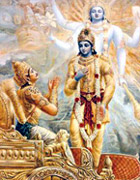
Guna in Classical Literature : Bhagavad GitaGuna in epics like Mahabharata and religious texts like Bhagavata Purana and Bhagavad Gita is related to five senses, five elements and five body parts. Each guna is associated with an organ, ether has sound for its Guna (and the ear for its organ) and air has tangibility and touch for its Gunas (and the skin for its organ). Fire has shape or colour, tangibility, and sight for its Gunas (and the eye for its organ), water has flavour, shape, tangibility, and taste for its Gunas (and the tongue for its organ), earth has all preceding Gunas and its own peculiar Guna of smell (and the nose for its organ). According to the Bhagvad Gita those who can conquer the Gunas live in eternal happiness .At the same time conquering the Gunas frees one from birth old age, disease and death.

In Nyaya philosophy the twenty-four Gunas are shape, colour , rasa (savour), gandha(odour), sparsa(tangibility), samkhya (number), parimana (dimension), prthaktva(severalty), samyoga(conjunction), aparatva(proximity), gurutva(weight), vibhaga(disjunction), paratva(remoteness), dravatva(fluidity), sneha(viscidity), prayatna(effort), shabda(sound), buddhi or jnana(understanding or knowledge), sukha(pleasure), dukkha(pain), iccha(desire), dvesa(aversion),dharma( merit or virtue), adharma(demerit), samskara(the self-reproductive quality).

Guna in Ayurveda : According to the Ayurveda medicines and foods are sattivic ,rajasic or tamasic or a combination of these gunas. Sattvic foods are fresh juicy, light, nourishing, sweet and tasty and give necessary energy to the body without taxing it. For example fresh fruits and vegetables that are easily digestible. Rajasic foods are bitter, sour, salty, pungent, hot and dry. They over stimulate the body and excite the passions. For example sattvic foods those have been fried in oil, cooked too much or eaten in excess are Rajasic. This includes coffee and tea, fish, eggs salt and chocolate. Tamasic foods are dry, old, decaying and consume a large amount of energy while being digested. The body`s resistance to disease is destroyed and the mind filled with dark emotions, such as anger and greed. For example foods those have been strongly processed, canned or frozen and are old, stale or incompatible with each other. Meat, vinegar, liquor are especially tamasic. Overeating is also regarded as tamasic.

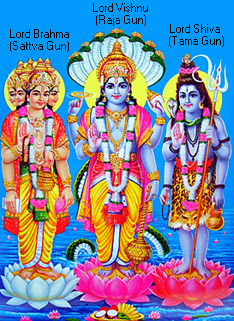
The Gods and the Three Qualities : Sattva, raja, and tama correspond to the three major deities Lord Brahma, Lord Vishnu & Lord ShivaThe three basic gunas are formed by the union of prakrti and Purusha. In Brahma, the creator, three guns are present and in balance too. In other beings, one or the other guna prevails. Gods are largely considered as sattvagun. Brahmans are sattvagun. Kshatriyas are rajogun and the Shudras are tamogun. Demons and animals are rajogun and plants and minerals are tamogun.
According to a legend, there are three forms of the goddess that corresponds to the three gunas: Goddess Kali, or tama gun, Goddess Lakshmi, or raja gun, and Goddess Sarasvati, or sattva gun. These three forms form the basis of the social order and of the people`s participation in the pujas. There are different approaches to the gods that varies from one gun to the other. The sattvik mat is the way of Vaisnavas, The rajasik mat is a worship that insists on power, the ego and Tamasik mat is the worship of the householder who wants everything that is from the deities that is required to carry out everyday duties.

Sattva, raja, and tama also correspond to the three major deities Lord Brahma, Lord Vishnu, and Lord Shiva. The first is truth, the second is power and the third is the way of everyday life, the householder pressed by social burden. Sattva leads to Moksha; dharma is the responsibility of rule; Kama and artha are the units of everyday life tama.


Moksha, Hindu Philosophy

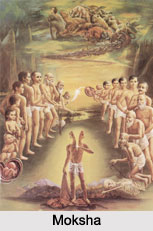
Moksha, Hindu PhilosophyMoksha is one of the basic themes of Hindu philosophy. The term is found prevalent in Hinduism, Jainism, Buddhism and Sikhism, and it refers to the liberation from the cycle of death and rebirth as well as all the sufferings and limitations of worldly existence. This kind of liberation can be achieved by and accompanied with the complete ending of all material passions. The beliefs of the Hindu Religion hold that true liberation occurs when the individual soul recognizes itself with the Source of all phenomenal existence known as Brahman.
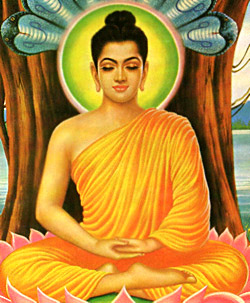
Moksha is basically forsaking the material and worldly life and establishing oneself as a devoted servant of Lord Vishnu in Vaishnavism, which is the largest branch of Hinduism. The Upanishads, Bhagavad Gita, Mahabharata and the Ramayana also emphasize on the personal, devotional type of Moksha which is achieved through the practice of Bhakti Yoga. Within Moksha, there lies the ultimate peace, the ultimate knowledge, the ultimate enlightenment and the ultimate paradise. In Buddhism liberation is Nirvana. This is the goal of the Buddhist path. In Jainism, when a soul is released from the cycle of births and deaths it achieves Moksha. Thereafter it becomes a Siddha. In Sikhism it is Jivan Mukti that stands for ultimate reality. The Mukta becomes the master of sense and self, fearless and devoid of resentment, upright, humble, no desires and clings to nothing.

Kinds of Moksha
The concept of Moksha in the Hindu Religion is mainly of two types. These are personal and impersonal. Moksha is defined as the loving, eternal union with God and considered the highest perfection of existence. In Advaita philosophy Moksha is union with the oneness which Advaita advocates.

Path to attain Moksha
In Hinduism self-realization is the key to obtain Moksha. There are believed to be four Yogas or paths for the attainment of Moksha. They are the ways of working for the Supreme, realizing the Supreme, meditating on the Supreme and serving the Supreme in loving devotion. One must achieve Moksha on his or her own under the guidance of a "guru".

Knowledge required for attaining Moksha
According to Upanishads Jnana is the sole means to Moksha. One should achieve not mere verbal knowledge but a kind of intensive knowledge which is generated by constant meditation. The view that knowledge derived by the study of sacred texts leads to upasana has been established on the basis of the Upanishadic teachings. The knowledge of Brahman generated by the study of the Upanishads thus serves as an aid to nididhyasana or meditation.


Sources of Hindu Philosophy

Sources of Hindu PhilosophyCertain documents have come from a remote antiquity in which lies the sources of Hindu philosophy. It contains various systems of philosophical thought. A Hindu concentrates his homage and adoration on each of the four Vedas. The Vedas constitute three parts - Mantra, Brahmana and the Upanishads. The hymns and prayers make up the Mantra division; and the ceremonial directories constitute the Brahmana portion and the Upanishad embodies the philosophy by which the meaning of the hymnology and the ritual are interpreted.
In the Upanishads Man is represented as sacrifice, and the different stages of his life are also enumerated. It is said that in the first twenty-four years of his life he is under the special protection of the fire-gods. During the period between twenty-fourth and the forty-fourth year his presiding deities are the storm-gods. Between the forty-fourth and the eighty-fourth year of his life he is under the guidance of the sun-gods. The closing period extending from the eighty-fourth to the one hundred and sixteenth is represented as the evening sacrifice. It is also stated that the person will live for one hundred and sixteen years if he knows the significance of the first three periods of life.

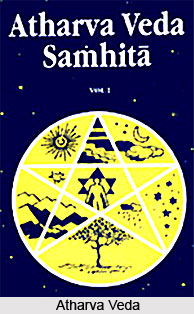
Rig Veda, Yajur Veda, and Sama Veda have many references to various rituals. Atharva has also references but less often. The treatises are undeveloped and lack system. The four castes are mentioned definitely however they do not appear separate from the other. The age depicted in the Upanishads is an age of inquiry and much more matured. The gods worshipped were originally natural forces. The belief in the current creed and current forms of worship was very strong in the most thoughtful minds then. The notion is that the form of religion inculcated in the Upanishads is pure and inspiring theism. Their contents are mixed in nature. The various isms that flourished can be attributed to the Upanishads. These books have maintained an acknowledged swing over the Indian intellect for more than two millenniums. Other rival systems also derive their phraseology, thought, reasoning from these treatises. The cosmogonies embodied in the Upanishads support nihilism and materialism and pantheism. In the last four Upanishads appears the concept of Pantheism.

These texts do mention about human duty and its consequences. Some forms of the Trinity have been at the bottom of the varied systems of religion which have won and lost dominance in India. All the types of Upanishads excepting the Svetasvatara Upanishad cannot be properly represented as a source of Hindu Philosophy. All these treatises show a marked advance on the modes of thought and reasoning. The style is less extravagant and less burdened, with incongruous metaphors and allegories and irrelevant matter. The minor Upanishads set a great value on ascetic renunciation, mortification, and penance. The advanced stage of asceticism is also indicated in these treatises. The cosmogonies presented in the smaller Upanishads indicate a gradual progress from the absurd fancies of the larger Upanishads toward what was elaborated in the Vedantic school.

Brahma according to the philosophy of these records cannot be defined. The solution of the problems mentioned in these treatises is that there is one divine being who is manifested in various forms spiritual and material forms.


Share this Article:

Related Articles

More Articles in Indian Philosophy


Classical Indian Philosophy
Classical Indian Philosophy contains many analyses, rational principles and explanations. The Vedas have been considered as the first and the oldest scriptural texts of the Classical Indian Philosophy.
Ajivika Philosophy
Ajivika philosophy is different from the mainstream religion
Gunas - Hindu Philosophy
Guna in Hindu Philosophy in its philosophical sense refers to the constituent quality. The whole universe is guided by the three gunas, which are basically attitudes, qualities found in human being.
Bodhisattvas - Hindu Philosophy
Bodhisattva is a concept in Hindu philosophy and the Buddhist philosophy and refers to someone who is committed to attain Enlightenment.
Religion and Philosophy in Later Vedic Period
Religion and Philosophy in later Vedic period did see minute growth. However, rituals and traditions were religiously followed.
Theory of inference in Nyaya philosophy
Nyaya theory of inference is divided into five steps.
Theory for God in Nyaya philosophy
The Naiyayikas tried to establish the existence of God through logic.
Religious Influence on Indian Philosophy
Religious influence on Indian philosophy has been almost enigmatic, making it complimentary in perspective.
Morality and Ethics in Jain philosophy
Jains follow a fivefold path of morality and ethical purity, by which one can reach moksha.
Indian Philosophy In The Vedic Period
Indian Philosophy in the Vedic Period was primarily based on the concepts of nature worship.
Metaphysics in Jain philosophy
Metaphysics in Jain philosophy revolves heavily around the soul and its governing path and final emancipation.
Nether World in Jain Philosophy
Nether World according to Jain Cosmology consists of seven subterranean regions. Of the seven regions the above two regions serve as the abode of heavenly gods and in the rest torture of the souls is undertaken for any kind of misdeed.
Achintya Bheda Abheda Philosophy
Achintya-Bheda-Abheda is a School of Vedanta that represents the philosophy of unimaginable one-ness and difference in relation to the power creation and creator.
Samkhya Philosophy
Samkhya philosophy is one of India’s oldest intellectual traditions, explaining reality through the interplay of Puruṣha (pure consciousness) and Prakrti (primordial nature). By enumerating twenty-five tattvas, it offers a rational path to liberation, emphasizing discernment, self-knowledge, and freedom from suffering through understanding the true nature of the Self.
Jain Cosmology
Jain Cosmolgy presents the universe in the form of a male figure. In the figure various body parts are dedicated to various lokas. For instance the region above the head is said to be the siddha lokas and so on.
Charvaka Philosophy
The Charvaka Philosophy believes that only those things that can be perceived is the ultimate reality.
Indian Philosophy
Indian Philosophy is intense spirituality that emphasises on the attainment of salvation and eternal bliss through a righteous path.
Jain Philosophy
Jain Philosophy is a religion and philosophy originating in ancient India that separates body from the soul completely. The concept of Jain philosophy has the non-violence among the people.
Twelve Nidanas
The twelve nidanas are aimed to understand the root cause of suffering in samsara, guided from ignorance and hankering.
Vedanta Philosophy
Vedanta Philosophy is one of the six orthodox systems. It consists of 555 Sutras and its observation and explanations are based on Samkhya system.