 Yoga Philosophy is a fascinating inquiry into the realms of Indian philosophy. The Yoga School of Philosophy introduced by Patanjali forms a part of the orthodox school of Indian Philosophy. Yoga is a Sanskrit word which means Yuj which in turn means to unite. It also means mental and physical rejuvenation of an individual. This school of philosophy is also known as the Bahiranga Yoga or Yoga of the eight limbs. It is closely associated with the Samkhya and the Vedantic schools of philosophy. Even in Buddhism and Jainism the word Yoga means a meditative practice. Within Hinduism, the Yoga Philosophy has been further divided into the Karma Yoga, Jnana Yoga, the Bhakti Yoga, the Raj Yoga and the Hatha Yoga. The main aim of this Philosophy is to realise the mind and the inner self.
Concepts of Yoga Philosophy
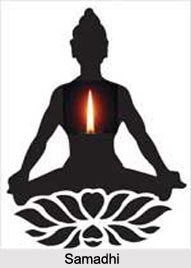
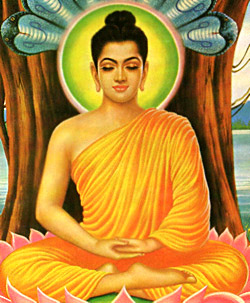
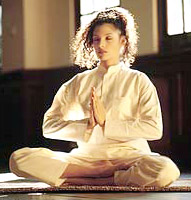
The central theme of Yoga Philosophy is that the mind is the ultimate reality and nothing exists beyond the mind. The goal of this philosophy is to emancipate the human mind from all kinds of misconceptions and falsehood. The only way to emancipate the mind from all kinds of uncertainties is to carry on a regular meditative practice which will guarantee mind`s calmness and tranquillity. With a constant meditative practice an individual is able to achieve a state in which he is able to control his mental faculties and in turn is enriched with a new kind of wisdom.
Yoga Philosophy also believes in the existence of God. It states that an individual should maintain absolute moral and religious control in order to purify the mind. A Yogi needs to adhere to practices like truthfulness, sincerity, sex-control, non-injury and self-contentment to maintain a purified mind.
Purity of the mind, thought and action are given the prime importance. The philosophy states that an individual culminates the stages of Yoga step by step. When an individual has been able to conquer a particular stage, he automatically moves on to the next stage. The state of Purusha can be achieved by concentrating on a particular object so that it becomes the point of consciousness and gradually all the other falsehood are eliminated from the faculties of mind.
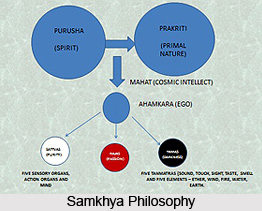
This Philosophy is the counterpart of the Sankhya Philosophy. The Yoga system however is more of an art rather than a science. The varieties of body and mental exercises by which science is practically developed are enumerated and described in Yoga Philosophy. The accessories of Yoga are restraint, obligation, posture, breath regulation, abstraction, devotion, contemplation and meditation. This Philosophy has been compared to mesmerism and spiritualism.