Chadar Caste
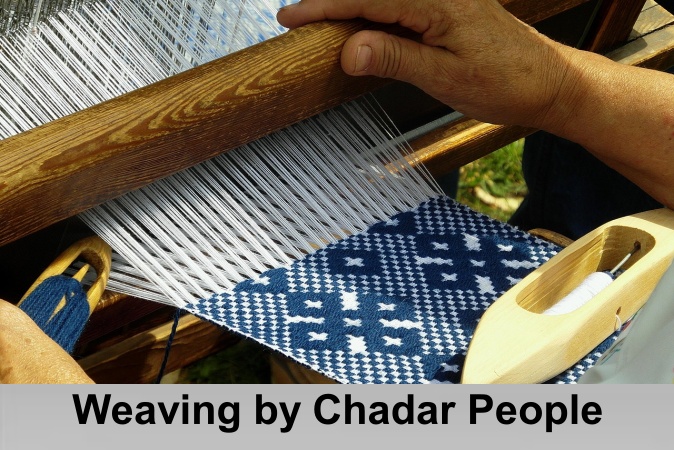
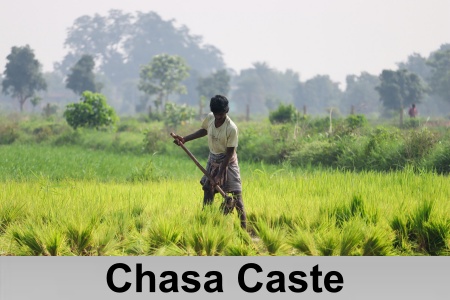
Chadar Caste is a Hindu caste principally found in the Central region of India. Chadar Caste members are mostly employed as village watchmen, weavers, farm servants and field-labourers.

Share this Article:

Introduction

Chadar caste is a small caste of weavers and village watchmen. They are mainly the residents of several regions of Saugor, Damoh DistrictJabalpur District and Narsinghpur District. However, Chadar caste is not largely found outside the northern districts of the Central Provinces of India. They are also known to work as farm servants and field labourers.


Origin of Chadar Caste

The name of this caste has been derived from Sanskrit term ‘chirkar’, which means a weaver belonging to Bundelkhand. Beyond this fact, the Chadars have no knowledge of their origin. It is believed that in the past, probably the Chadars were an occupational group that was constituted by the members of the Dravidian tribes and others members who took to the occupation of village watchmen. Some claim that the Chadars are the descendants of Chandelas.


Sub-Groups of Chadar Caste

In northern India, a number of other occupational castes are also found. Numerous occupational castes arose from the destruction of forest tribal organizations by invading Bundelas and other groups, such as nomadic invaders, centuries ago. They were initially deprived of the land and demoted to the performance of tedious duties. They have created a new set of sub-divisions into the castes that arose from the different occupations, which they adopted. The Chadars principally have two sub-castes created on the basis of differences in religious practices. The names of the two sub-castes are the Parmesuria, worshippers of Lord Vishnu, and Athia, devotees of Devi. It is not certain, whether these sub-divisions are endogamous or not. 

Chadar caste has various exogamous septs or groups, which are named after animals, plants and other objects of nature. Some of the names are Dhana (a leaf of rice plant), Kasia (bell-metal), Gohia (a kind of lizard), Sugaria (a pig), Laraiya (a jackal), Barraiya (a wasp), Bachhulia (a calf), Gujaria (a milkmaid), Moria (a peacock), Khatkira (a bug), Neora (a mongoose), Bhartu Chiraiya (a sparrow) and others. 

The Chadars will admit other caste members into their community. Several surnames are used by people Chadar Caste such as Chidar, Charar, Vilye, Gehlot, Sandariya, Athiya, Chandel, Charul, Thakur, Pushkar, Pawar, Soniya, Verma, Sagar, Chandravansi.


Marriage in Chadar Caste

During marriage ceremonies, members of each exogamous sept of Chadar caste draw the figure of that particular animal or the plant, after which it has been named, on the wall and they worship it. They do not kill the totem animal. In Chadar community, marriage within members of the same gotra or sept is not allowed. Further, marriage between first cousins and other close relations is prohibited. They have a belief that marriages of persons closely related by blood are not successful. Girls usually get married in fifth, seventh, ninth, or eleventh year of age and boys get married between eight and sixteen years of age. Chadar caste allows widow remarriage and divorce is also permitted. They always prefer a Brahmin priest to fix the date of weddings and occasionally for naming of kids. However, the Brahmin will not be present in the ceremony or event.


Culture of Chadar Community

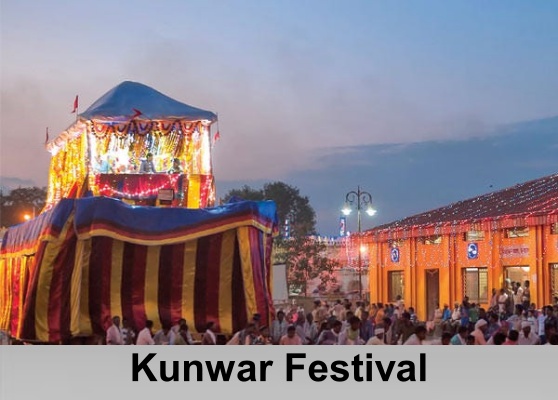
Chadar people worship all their weaving implements during the festivals of Diwali and Holi. The indigenous cultures and customs of Chadar community are based on several superstitious beliefs. The Athia sub-group within the Chadar caste is distinguished by its elaborate religious and cultural practices. They worship the goddess Devi with great devotion and ceremony, offering a virgin she-goat to her during the month of Asarh (June–July). During the Kunwar festival (September–October), they feed crows, which they believe symbolize the spirits of their ancestors. This practice is rooted in the belief that crows do not die of natural causes but only through external harm.


Their traditional healing practices include tying an irregularly knotted blue thread around the wrist of a person suffering from fever, as a form of remedy. The community also holds mythological beliefs, such as viewing thunderbolts as arrows shot by Indra to destroy his enemies in the underworld, and considering the rainbow to be Indra’s bow, pointing at it is believed to cause pain in the finger

Mourning rituals are observed for ten days after a death, during which a burning lamp is placed at a distance from the house. On the tenth day, items such as a tooth-stick, water, and food are set out for the soul of the deceased. Certain customs are also followed regarding children’s first tooth. They avoid throwing the tooth onto tiled roofs, as it is believed this would result in the child’s permanent tooth growing wide and unattractive like tiles. Instead, it is common practice to throw the teeth onto thatched roofs. 

In terms of dietary habits, the Chadar community consumes meat, including pork and fowl, and also drinks liquor. They accept cooked food from many higher castes, as well as from communities such as Kalars, Khangars, and Kumhars.


Society of Chadar Community

The Chadar community has traditionally been associated with occupations such as village watchmen and weaving. Over time, educated members of the community established their own caste association, the Chadar Kshatriya Samaj, with the aim of safeguarding their interests and promoting social order. They regard themselves as descendants of the esteemed Rajput lineage, reflecting a strong sense of cultural identity and heritage.

The population of the Chadar community remains relatively small in India, with their presence largely confined to certain districts of the central provinces. Despite their limited numbers, they are often recognized for their disciplined and hygienic way of life. Cleanliness forms a significant aspect of their cultural practices, including daily bathing and the ritual of cleaning the kitchen before meals, which contributes to their relatively high social standing among many caste groups.


Share this Article:

More Articles in Religion in India


Religion in Indus Valley Civilization
Religion in Indus Valley Civilisation included Hinduism, Buddhism and Jainism. Details about the religion in Indus Valley Civilization have been gathered from archaeological artefacts.
Shaivism Religion
Shaivism is the second largest “religious community” in modern India with its roots deeply seated in the Hindu Vedic belief.
Vaishnavism
Vaishnavism is among the more popular denominations of Hinduism, with its own distinctive ideas about spirituality and morality. Vaishnavism concentrates on worshipping god Vishnu and of his incarnations.
Hinduism Religion
Hinduism is more of a philosophy which is a way of living according to the understanding of the principles of Vedas and Upanishads.
Islam
Islam is a religion that beliefs in Allah as the one and only God and creator of the Universe. Islamic law or Sharia is characterised by the five pillars of Islam which comprise the essential duties of every Muslim.
Christianity
Christianity is a religion based on the teachings and life of Jesus Christ and it is the largest religion in the world.
Buddhism
Buddhism is a religion and a philosophy that encompasses a wide variety of beliefs, practices and traditions that are chiefly based on the teachings of Gautama Buddha and its later disciples.
Jainism
Jainism chronologically preceded the religion of Buddhism. It is considered as one of the oldest religions of India. Jainism in India shared with Hinduism and Buddhism. It is an integral part of South Asian religious belief and practice, but it is not a Hindu sect and not a Buddhist heresy, as earlier scholars believed.
Zoroastrianism
Zoroastrianism, closely related to Judaism, Christianity and Islam was founded by Zoroaster.
Sikhism
Sikhism is a religion started by Guru Nanak in land of Punjab in 15th century A.D.
Iyer Brahmin
Iyer Brahmins are originally from Tamil Nadu of South India. They are known for their adherence to Advaita philosophy and Smarta traditions. Traditionally associated with scholarship, rituals, and temple practices, they have contributed significantly to South Indian culture, education, and intellectual.
Barai Caste
Barai Caste is the professional cultivator caste of betel leaf. Tamboli and Pansari are the terms used indifferently to the people of Barai Caste. The diversity of names of the sub-divisions of Barai Caste highlights the mixed elements that formed the caste.
Dangi Caste
Dangi Caste is largely distributed in the high land regions, and the word Dangi is said to have originated from the geographical features of their territory. Main occupation of the members of Dangi Caste is cultivation.
Nadar Caste
One of the most renowned castes of Tamil Nadu is the Nadar caste. The Nadar community is a mixture of sub-castes and classes of different origins, which came under one banner of Nadar caste gradually.
Kumbhakar Caste
Kumbhakar is the potter caste who manufactures all kinds of earthen vessels.
Gujjars in Maharashtra
Gujjars in Maharashtra have several sub-castes. Here, in this state the Gurjars are listed as a separate caste. They are included in the Maharashtra OBC list.
Awasthi Brahmin
Awasthi Brahmins are a sub-group of the Kanyakubja Brahmin community traditionally associated with Vedic scholarship and priestly duties. The surname “Awasthi” is linked to the Sanskrit word avastha.
Bhoyar Caste
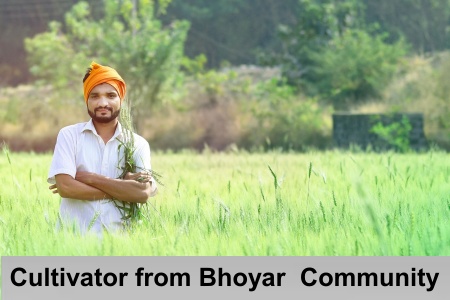
Bhoyar Caste is largely found in the Central Provinces of the country. Traditional occupation of Bhoyars is agriculture. They are good cultivators and mostly grow sugarcane.
Gujjars in Mughal Era
Gujjars in the Mughal era enjoyed great power. Further their power increased with the decline of Aurangzeb, Mughal emperor.
Origin of Vaishnavism
Origin of Vaishnavism shares its attributes to many sources and religious evolution, dating back to pre-Vedic epoch.
Gotra in Hinduism
In Hinduism, gotra refers to a lineage system tracing descent from ancient sages, primarily through the paternal line. Originating from Vedic tradition, it plays a crucial role in identity and marriage customs. Individuals from the same gotra are considered to share a common ancestor and are traditionally prohibited from intermarrying.