
Balahi caste is the functional caste of weavers and village watchmen. They are mostly scattered over several regions of central India. They are practically confined to Hoshangabad District and Nimar District. They are the offshoots of the Kori caste of weavers. Further, it is also believed that in the central provinces, the Balahi caste have received accretions from Katias, the spinner caste and also from the Mahars, the menial caste of Maharashtra. Interestingly, in Hoshangabad District, the Balahi caste is alternatively called as Mahars whereas in Burhanpur, they are called as Bunkar or weavers by outsiders.
The Balahi caste is of mixed origin. There are several legends that suggest the mixed origin of the community. According to one legend, the ancestors of Balahi caste came to Nimar as part of the militia of Raja Man of Jodhpur, who invaded the country when it was under the Muhammadan rule. He was defeated by the Muslim soldiers and his forces were captured. One of the captured Balahi soldiers won the favour of the Muhammadan general and requested for his own freedom as well as the other Balahis from among the captured soldiers. The general replied that it would be impossible for him to determine the Balahi prisoners. On this the Balahi prisoner replied that he had a valuable test. He killed a cow and cooked its flesh. He invited the prisoners to have a share of it. Many of the prisoners as consented to eat the flesh were considered to be Balahis and open-minded; many members of other castes also obtained their freedom, and their descendants eventually got included in the Balahi community.
The Balahi caste has several sub-castes or endogamous groups that distinctly specify the functional character of the caste. The names given to these sub-castes are Nimari, Katia, Kori, Gannore and Mahar. Katia, Kori and Mahar are the names of distinct castes, whereas Nimari is a local sub-division that speaks the local dialect of this tract. Gannore has been named after the Rajput clan of that name. The Nimari Balahis are said to be the oldest residents of Nimar. Balahi caste has some exogamous groups, such as Bagmar, a tiger-killer, Bhagoria, a runaway, and others. During marriages, a Brahman is employed by them to calculate the horoscopes of the couple and he also fixes the date of the wedding. After marriage, a girl starts residing in her husband`s place. Just like the Mahars, the Balahis also follow certain indigenous customs and traditions. Like for instance, they are not supposed to kill a dog or a cat under pain of exclusion. They admit Hindus into their community. They are religious by nature.
Balahi Caste
Balahi Caste is the occupational caste of central India and is also considered as an offshoot of Kori caste. According to some legends, Balahi Caste has a mixed origin.
Recently updated articles in Religion in India
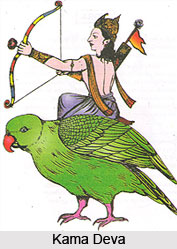
Kusumayudha
Kusumayudha is a name of Kamadeva, the Hindu God of Love. Depicted with a sugarcane bow and flower-tipped arrows, he represents attraction and longing...
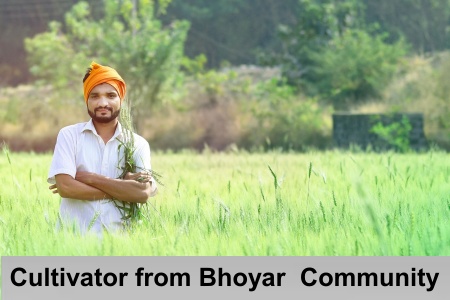
Bhoyar Caste
Bhoyar Caste is largely found in the Central Provinces of the country. Traditional occupation of Bhoyars is agriculture. They are good cultivators and...
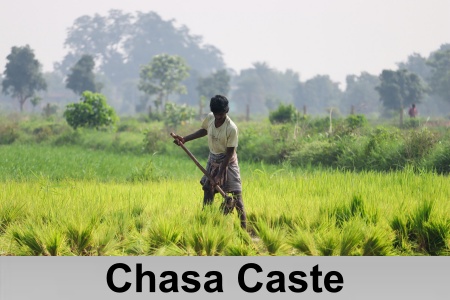
Chasa Caste
Chasa caste is a prominent agrarian community native to Odisha. Traditionally associated with cultivation and farming, Chasas have historically played...
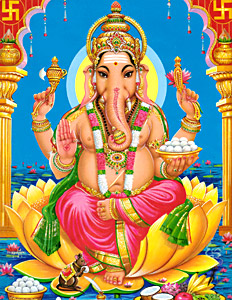
Vigneswara, A Form of Lord Ganesha
Lord Vigneswara is another form of Lord Ganesha or Vinayaka, prominently worshipped as the God of intelligence and good luck in the Indian subcontinen...
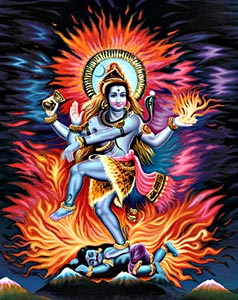
Maheswara
Maheswara, meaning “the Great Lord,” is a revered name of Lord Shiva in Hindu tradition. It represents Shiva’s supreme authority over creation, preser...
Related articles in Religion in India
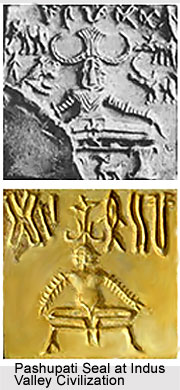
Religion in Indus Valley Civilization
Religion in Indus Valley Civilisation included Hinduism, Buddhism and Jainism. Details about the religion in Indus Valley Civilization have been gathe...
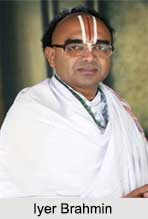
Iyer Brahmin
Iyer Brahmins are originally from Tamil Nadu of South India. They are known for their adherence to Advaita philosophy and Smarta traditions. Tradition...
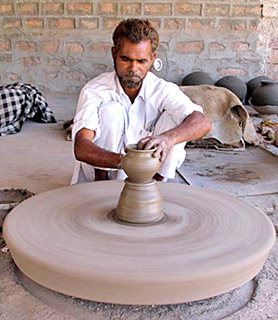
Kumbhakar / Kumhar Caste
Kumbhakar or Kumhar caste is a traditional artisan community in India known for pottery making. Derived from Sanskrit word Kumbhakar, meaning potter,...

Gujjars in Mughal Era
Gujjars in the Mughal era enjoyed great power. Further their power increased with the decline of Aurangzeb, Mughal emperor.
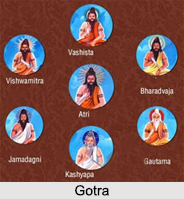
Gotra in Hinduism
In Hinduism, gotra refers to a lineage system tracing descent from ancient sages, primarily through the paternal line. Originating from Vedic traditio...