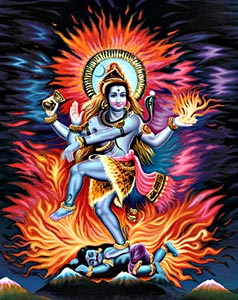
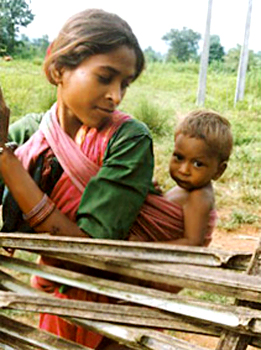
 Dewar is a Dravidian caste of Central India. The name of Dewar caste has been derived from Devi, whom they religiously worship. Another version suggests that the name is derived from the term `Diabar`, meaning a person who lights a lamp. They are by profession musicians. The Dewars traces their origin from a Binjhia tribe named Gopal Rai. He accompanied Raja Kalyan Sai of Ratanpur on a trip to Court of Delhi during the rule of Akbar. Gopal Rai was a wrestler, and during his stay in Delhi he seized an elephant belonging to Akbar. After hearing this, Akbar ordered a wrestling match to be organised between Gopal Rai and the champion wrestler of his kingdom. Gopal Rai defeated his opponent. Raja Kalyan Sai asked him to compose a victory song. He composed the song in honour of Devi, the divine Mother. Thus, it is believed that since then the composition and recitation of triumphal songs has been the profession of his descendants known as Dewars. It is said that the members of this caste are descendants of Gond tribe and Kawar tribe. They admit members of other castes.
Dewar caste has two major divisions based on their locality, named Raipuria and Ratanpuria, being named after two principal towns Raipur and Ratanpur of Chhattisgarh. Within these divisions, there are various other local sub-divisions, namely Navagarhia, those belonging to Nawagarh in Bilaspur; Sonakhania from Sonakhan; Sarangarhia from Sarangarh state; Chatarrajiha from Chater Raj in Raipur. Some of the other divisions are either social or occupational; thus the Baghurra Dewars tame tigers and generally live in Bastar District; the Baipari Dewars are traders of brass ornaments, and the Lohar Dewars are so called because of two reasons either their ancestors belonged to this caste or probably they adopted the occupation of blacksmiths. These sub-divisions of Dewar caste are not strictly endogamous.
Sonwania, Marai, Dhurwa, Markam, Salam, Katlam, Ojha, Netam and Jagat are the sects of Gond tribe which are also possessed by Dewar caste. On the other hand, Telasi, Karsayal and Son-Mungir are sects of Kawar tribe which have been adopted by Dewars. The Dewars claim that their ancestors were members of the sects of Gonds and Kawars. The sects are exogamous. In Dewar community, there is no restriction regarding marriage, they also allow the union of first cousins. In their society, the marriage ceremony is performed within three or four months after the engagement ceremony. The members of Dewar caste worship Devi Maha Mai as well as Dulha Deo. Dewars bury the dead. They have some unique and indigenous social rules. Widow marriage and divorce are permitted. Few members of the Dewar community are also engaged in cultivation.