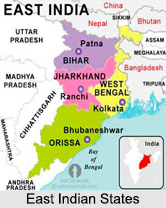
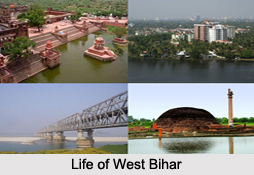
Bihar is home to key urban centers such as Patna, Bhagalpur, Darbhanga, Muzaffarpur, Gaya, Katihar, and Purnia, with Patna serving as the capital and largest city. As the second most populous city in Eastern India, Patna is a major hub for administration, industry, and education. It holds the distinction of being one of the world’s oldest continuously inhabited cities. The state is surrounded by Uttar Pradesh in the west, Nepal in the north, West Bengal in the east and Jharkhand in the south. The Bihar plain is split by the River Ganges which flows from west to east. The capital of Bihar is Patna. Bihar occupied an important position in the early history of India. Gaya is an important place of Hindu pilgrimage where Lord Buddha attained enlightenment.
Historically, Patna was known as Pataliputra, the capital of the Magadha Empire during the reigns of the Haryanka, Nanda, Mauryan, Shunga, Gupta, and Pala dynasties. Renowned as a center of learning and fine arts in ancient times, Pataliputra’s legacy is deeply intertwined with India’s cultural and intellectual history.
Modern Patna lies along the southern bank of the Ganges River, spanning 35 kilometers in length and up to 18 kilometers in width. It also intersects the rivers Sone, Gandak, and Punpun. In addition to its urban significance, Patna is a gateway to nearby pilgrimage sites for Buddhists, Hindus, Jains, and Sikhs. Sacred landmarks like Vaishali, Rajgir, Nalanda, Gaya, Bodhgaya, and Pawapuri surround the city, and it holds special importance for Sikhs as the birthplace of Guru Gobind Singh, the last Sikh Guru. Patna uniquely blends historical grandeur with spiritual significance.