Costumes of Union Territories of India
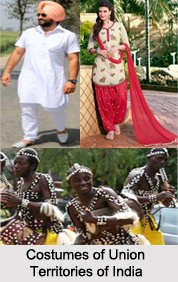
Costumes of the Union Territories are as different as their culture. These eight union territories are equally vibrant in their dressing as compared to other states of the nation.

Share this Article:

Introduction

India is a nation that is so vibrant and diverse. In this nation, every state as well as the union territories exhibits a different culture, tradition, a way of life, language, and cuisine. India consists of 28 States and 8 Union Territories. The culture, religion, languages spoken, and attire of the people of India are as diverse as the landscape of this vast country. Due to its diversity this cultural hub does not have just one dress, which can be called the "National Dress" or "Indian Dress". Needless to say, each state and union terror in India have its traditional dress for both men and women that is unique to the region and reflects the history and culture of the region.

Traditional dresses of these states and union territories also showcase the changing climate and weather condition each region because they are made to provide comfort to the wearer. Woollen fabrics are most choosen for the attire of people living in colder regions like Jammu and Kashmir while people living in humid regions like Puducherry prefer clothes made of cotton fabric.

Costumes of Dadra and Nagar Haveli

The lifestyle of people of Dadra and Nagar Haveli is influenced by the Portuguese culture. Men in Dadra and Nagar Haveli are spotted in a waistcoat and a shirt, and a long Dhoti along with a headgear called "Varli". Women of Dadra and Nagar Haveli wear "Lugden" which goes to the length of the knee, "Padar," a cloth used to cover the body of women in Dadra and Nagar Haveli. Women of Dodhia and Kokna tribe wear colourful sarees, especially of blue colour. These tribal women are also seen wearing tattoos on their bodies.


Costumes of Chandigarh

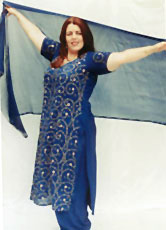
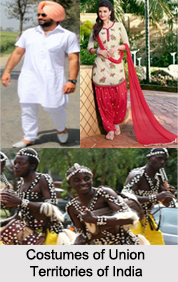
People in Chandigarh are spotted wearing colourful clothes with a wide range of designs and fabrics. The traditional dresses of Chandigarh are heavily influenced by the vibrant culture of Punjab, to which it is the capital city. Kurta-Pajamas are seen on men while women wear Salwar-Kameez with a dupatta. Salwar is the bottom wear whereas kameez resembles a long kurta and dupatta is a long piece of cloth used to cover the upper body. Lehenga-cholis and sarees are also common attire of women.


Costumes of Puducherry

Traditional dressing in Puducherry is mainly influenced by Tamil culture of the neighbor state of Tamil Nadu. The clothing style feature light cotton fabric in comfortable designs to suit the warm humid climate of Puducherry. Men traditionally wear dhotis, also called veshti, with shirts. Young men also wear modern clothes like denims and pants with t-shirts. Women normally wear sarees. They also wear pavadas, a form of long skirt teamed with a blouse. Like men, women also wear modern clothing.


Costumes of Delhi

Delhi is a place where people from different states have settled for various business and career opportunities, education and other such things. Though generally the men and women are seen in western outfits like jeans, top, long skirts, T-shirts, shirts with waistcoats and other such stuffs but the traditional dress of Delhi remains Salwar-Kameez with a dupatta for women. They also wear sarees and lehenga-cholis. An equivalent traditional outfit like dhoti-Kurta, Kurta-Pajamas and Sherwani for men. Sometimes, men also prefer wearing Pathani suits. They wear these on festivals and other special occasions. Traditional dressing of Delhi is a vibrant mix of Mughal culture and indo-western fusion. This has resulted in solid colours with rich embroidery works like aari or zardozi embroideries.


Costumes of Andaman and Nicobar Islands

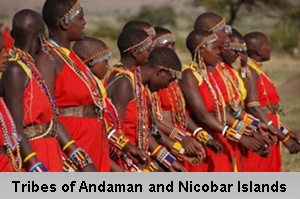
Earlier people in Andaman and Nicobar Islands were seen wearing unusual attire inspired from tribes of forests such as coconut-leaf petticoats or clothes made from leaves and barks of trees. Few tribes, even today, walk nude such as the people from Sentinelese tribe and the Jarwas. The other tribal people from Shompen also walk almost nude except they wear clothes from their waist. Though now the people of Andaman Islands have taken to modern ways of lifestyle.

Women in Nicobar Islands are known for wearing a colorful wrap-around skirt in sarong style which they call ‘papoi’ or ‘pulvo.’This skirt is often paired with blouse. Men in Nicobar islands also wear a sarong like cloth to cover their lower body with their upper body remain bare. 


Costumes of Lakshadweep Islands

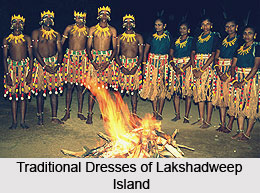
The traditional costume for men and women in Lakshadweep Islands are heavily influenced by the dressing style of Kerala, the nearest state of India with this archipelago of islands. The people in Lakshadweep are seen in colourful attires. The women in Lakshadweep wear "Kanchi", which is worn from waist and is a rectangular piece of cloth. Its borders are black and the colour of the skirt is either white or black. Men, on the other hand wear a "Lungi" which is coloured and is fixed with a silver thread from front.


Costumes of Daman and Diu

Daman and Diu is located in close proximity to the state of Gujarat. The traditional clothing style of the people of Damana and Diu is a blend of Gujarati, Marathi, and Portuguese influences. The clothes are marked by vibrant colours and lightweight fabrics suitable for coastal climate. Men in Daman and Diu usually wear Pathani suits, Kurta-Pajamas and Dhotis. Women wear Nauvari saree, Kashti, Pano Bhaju and other such traditional outfits.  The Garba-popularized ghaghra-choli is also common among women.


Costumes of Jammu and Kashmir

The traditional costume of men and women in Jammu and Kashmir is influenced by the region’s cold climate and cultural influences. Pheran, a long, loose woollen gown often serve as the most prominent attire for both men and women. It is commonly paired with salwar, Pashmina shawls, and traditional headgear such as the Kasaba worn by Muslim women Hindu women wear the same long pheran with a cloth tied at the waist called lungi. This dress is often teamed with Taranga on special occasions. Taranga is the traditional headgear. Men wear the Pheran paired with a pajama, while in the Jammu region, they wear a Dogri kurta with a churidar pajama.


Share this Article:

More Articles in Costumes in India


Traditional Dresses of Jammu and Kashmir
The Traditional dresses of Jammu and Kashmir have historical significance to them and reflect the very rich cultural heritage of the state.
Traditional Dresses of Arunachal Pradesh
Traditional Dresses of Arunachal Pradesh reflect the ethnicity of the tribal population of the state. With 26 distinct tribes and over 100 sub-tribes, different tribes of this state wear different types of costumes.
Traditional Dresses of Assam
The traditional dress of Assam portrays the culture and essence of the state. People proudly follow the legacy left behind by their ancestors in the form of beautiful and exquisite pieces of traditional clothing worn during indigenous festivals and celebrations.
Traditional Dresses of Himachal Pradesh
Traditional Dresses of Himachal Pradesh are colourful and they vary from region to region, community to community, as well as from tribe to tribe.
Traditional Dresses of Madhya Pradesh
Traditional Dresses of Madhya Pradesh execute diversity in various aspects. Handicrafts and different textile techniques have given rise to a rich diversity of dresses of Madhya Pradesh.
Traditional Dresses of Meghalaya
The authentic and traditional dresses of Meghalaya reflect the cultural and social life of the tribal population of the state. The Khasi, Jaintias and Garos are the predominant tribes of Meghalaya region.
Traditional Dresses of Nagaland
Traditional Dresses of Nagaland mainly comprise shawls which are an extensively used item of the state. It is the most significant item used by the Naga people. The traditional dresses of Nagaland are worn mostly during the festivals.
Traditional Dresses of West Bengal
Traditional Dresses of West Bengal, with their exquisite design and traditional outlook, are appealing. The men’s and women’s wear have their own identity and characteristic features.
Traditional Dresses of Uttar Pradesh
Costumes of Uttar Pradesh are simple yet elegant. The people of Uttar Pradesh wear a variety of native and Western style dresses. They have separate category of costumes for daily wear and occasional wear as well.
Traditional Dresses of Manipur
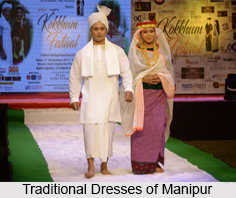
Traditional Dresses of Manipur are simple and easy to wear. The patterns and designs on the costumes are very unique and colourful. Manipuris are setting new trends with their ancient and original attires.
Costumes of Punjab
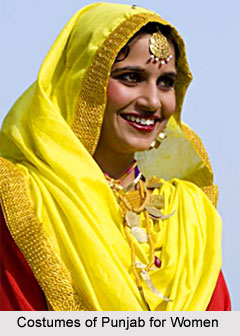
Costumes of Punjab breathe vibrancy. Tradition marks the dress of the women:; colourful Salwar Kameez while Kurta-Pyjama or Lungi is worn by men.
Costumes of Bihar
Costumes of Bihar embody the rich cultural heritage of the state. Men don traditional outfits such as the Dhoti Mirjai, Kurta and Pajama, and Sherwani, while women grace themselves with elegant sarees and embellished lehengas.
Traditional Dresses of Jharkhand
Traditional Dresses of Jharkhand embody the simplicity and elegance of its inhabitants. From the one-piece Bhagwan worn by men to the sarees and Tussar silk sarees adorned by women, these costumes reflect the rich tribal heritage and cultural traditions of the region.
Costumes of Sikkim
Costumes and dresses of Sikkim reflect the youth and the zest that is integral to the people of this state. There are differences in clothing among the three communities of this state namely Lepchas, Bhutias and Nepalis.
Traditional Dresses of Tripura
Traditional Dresses of Tripura have their own traditional ethnicity. The traditional costumes of Tripura, such as Risa, Rignai, and Rikutu Gamcha, reflect the unique cultural heritage of the state. Skilled weavers create exquisite fabrics with intricate designs and motifs inspired by nature and tribal traditions.
Costumes of Uttarakhand
The costumes of Uttarakhand, a culturally diverse region in the Himalayas, showcase the rich heritage and traditions of its various communities. From the vibrant sarees and traditional jewelry of Garhwali and Kumaoni women to the colorful attires and unique accessories of tribal groups like Jaunsarees and Bhotias, the costumes of Uttarakhand reflect the cultural diversity, distinct identities of its people, and a trend which is suitable to the climate of the region.
Costumes of Andaman and Nicobar Islands
The costumes of Andaman and Nicobar Islands showcase a fascinating blend of indigenous tribal traditions and influences from modern settlers. While the compulsion of wearing costume for decency has not yet touched the tribes of Andaman and Nicobar islands, modern clothing adopted by certain communities reflects the diverse cultural fabric of the islands
Costumes of Lakshadweep
Costumes of Lakshadweep reflect a blend of tradition and cultural identity. Women typically wear the Kachi with a Thattam and embroidered jacket, while men don lungis. These garments, often made of silk or cotton, are now evolving with modern fabrics and styles, balancing heritage with contemporary influences.
Costumes of Chandigarh
Costumes of Chandigarh uphold a pleasing medley of rich heritage complemented with stylish modernity. The costumes of Chandigarh also showcase the city`s diverse cultural heritage and the unique beauty of enthnicity.
Traditional Dresses of Dadra and Nagar Haveli
The traditional dresses of Dadra and Nagar Haveli reflect the region’s tribal heritage. Women often wear saris, chaniyas (skirts) with blouses, or drape a turban in Maharashtrian style, while men prefer simple dhotis or loincloths. Adorned with jewelry and vibrant fabrics, these attires showcase cultural identity and community pride.
Costumes of Delhi
Costumes of Delhi embody the rich cultural heritage of the city while showcasing a unique fusion of traditional elements and modern trends. From the popular salwar kameez and sarees for women to the timeless kurta pyjamas and sherwanis for men, Delhi`s costumes make a vibrant and stylish fashion statement, reflecting the cosmopolitan nature of the city.
Traditional Dresses of Odisha
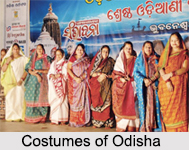
Traditional Dresses of Odisha reflects the unique culture of the state. Odisha has an ancient culture and popular for classical dance. It is also home to more than 60 tribal communities. Together, these factors have contributed to its diverse and unique traditional culture, reflected through dresses.