Costumes of Delhi
Costumes of Delhi embody the rich cultural heritage of the city while showcasing a unique fusion of traditional elements and modern trends. From the popular salwar kameez and sarees for women to the timeless kurta pyjamas and sherwanis for men, Delhi`s costumes make a vibrant and stylish fashion statement, reflecting the cosmopolitan nature of the city.

Share this Article:

Introduction

Delhi, the capital city of India, is renowned for its rich cultural heritage and diverse population. With people from various regions of the country calling Delhi their home, the city has become a mini-world, a melting pot of traditions and cultures. The costumes of Delhi beautifully reflect this unity in diversity, combining elements from South India, North India, and the Eastern states. The traditional costumes of Delhi with the influence of modern trends and the unique fusion of old and new designs, makes Delhi`s costumes truly exceptional.


Costume for Women in Delhi

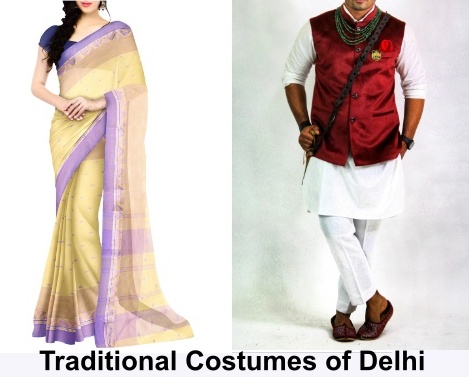
Delhi’s traditional costumes for women primarily consist of the salwar, kameez and saree.  Today, the salwar kameez in Delhi showcases modern innovations, such as sequined embroidery, mirror work, ari work, cut-work, and hand-painted designs. Renowned dress-designers like Ritu Kumar, Neeta Lulla, and Sabyasachi Mukherjee have added their magic touch, incorporating “Zardozi embroidery,” a Persian form of embroidery using gold or silver thread. This exquisite embroidery enhances the allure of costumes like sarees, salwar kameez, ghagra lehenga cholis, and kurta-pajamas. 

Salwar Kameez: The salwar kameez, a dress comprising baggy trousers and a long tunic, is adorned with a cloth-piece called a dupatta, which covers the front upper portion. This costume, widely popular among girls, was introduced to India during the Turko-Iranian rule of the Delhi Sultanate. 

Anarkali Suit: Delhi’s Mughal history has greatly influenced its traditional clothing, with the Anarkali suit serving as a classic example. The Anarkali is a long, flowing dress styled after royal court attire and is often decorated with embroidery and embellishments. Travelers attending cultural performances or weddings in Delhi frequently notice women wearing Anarkali suits, especially in Old Delhi and other heritage areas. These outfits become particularly popular during festivals such as Eid, Diwali, and wedding celebrations. 

Sarees: The Saree remains a beloved garment for women across India, especially during occasions and festivals. In Delhi and the surrounding regions, well-known varieties include Chikankari sarees, recognized for their elegant white embroidery, and Zardozi sarees, which feature heavy embellishment and are particularly popular for weddings. 

Chikankari sarees showcase detailed designs such as floral patterns, paisley motifs, and delicate embroidery. Their off-white and white threadwork is widely admired for its refined elegance, and the beautifully decorated pallus further enhance their artistic appeal. These sarees are considered a notable traditional attire for women in Delhi. 

Zardozi sarees trace their origins to Persia and represent one of the oldest forms of hand embroidery used on sarees. They are often worn by newly married brides, adding to their elegance and beauty. This intricate handwork typically incorporates mirror detailing along with gold and silver thread designs. The embroidery is usually done on fabrics such as crepe, chiffon, georgette, and silk, which complement the rich craftsmanship and give the sarees their striking appearance.
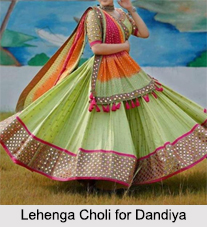
 

Ghagra or Lehenga-Choli: This is among the most striking traditional dresses worn by women in Delhi and also across northern India. Travelers often encounter Lehenga at festivals and cultural events, although it is most commonly associated with weddings. Delhi is also known for its bridal lehengas featuring intricate Zardozi, Gotapatti, and sequin work. 

Kurti: The Kurti reflects how Delhi blends tradition with modern living. Kurtis are commonly paired with jeans, palazzos, or leggings and are especially popular among young women. Light, breathable, and stylish, they serve as ideal everyday wear, even in Delhi’s humid climate. They are available in countless designs inspired by traditional techniques such as Block printing and embroidery.

Delhi's women are not confined to traditional attire alone. Their wardrobes also feature Western garments like jeans, tops, shirts, T-shirts, and skirts, reflecting the city`s fashion-conscious youth. Additionally, semi-precious jewelry, including Kundan work crafted by skilled artisans from Jaipur and Rajasthan, has become a passion for women in Delhi.

Costume for Men in Delhi

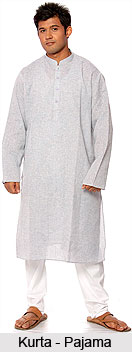
Men in Delhi prefer traditional costumes such as kurta pyjamas and sherwanis. The older generation proudly dons attire like dhotis, kurtas, sherwani-salwars, and kurta-pajamas, which not only preserve their cultural heritage but also communicate their Indian identity and values. An iconic example is Jawaharlal Nehru, India`s first Prime Minister, who popularized the Nehru collar and cap, which emphasized his role as a national leader.

On the other hand, the younger generation in Delhi leans toward formal shirts, trousers, jeans, and T-shirts as their daily attire, including in the workplace. However, on ceremonial occasions, they embrace ornate sherwani-churidarsdhoti-kurtas, or kurta-pajamas, often opting for designer or boutique collections. Men also accentuate their style with accessories like bangles, wristbands, and stylish wristwatches. Traditional shoes like Nagra shoes are worn with sherwanis to achieve a regal appearance on special occasions. 

Sherwani: Among men, the Sherwani is considered one of the most classic traditional outfits in Delhi. With origins in Mughal culture and Persian culture, sherwanis are typically worn during weddings and major festivals. At Indian weddings and cultural events in Delhi, grooms are often seen wearing richly embroidered sherwanis paired with turbans and Mojari footwear. 

Pathani Suit: The Pathani suit is another traditional outfit worn by men in Delhi, particularly in Old Delhi. It consists of a long kurta paired with salwar-style trousers and reflects influences from North Indian culture and Mughal culture.


Kurta-Pajama: A Kurta is essentially a long shirt worn with loose trousers known as Pyjama. It is a common form of everyday clothing for many men in India, especially in Delhi. It is particularly worn by older men and also by young men during traditional events.

Dhoti-Kurta: A Dhoti is a long piece of cloth tied around the waist and is typically paired with a Kurta. It is commonly worn by older men or during religious functions.


Modern Influence on Costumes of Delhi

Contemporary costumes in Delhi have witnessed the influence of modern trends, resulting in a fusion of old and new. The city`s costume-lovers are drawn to the expanding range of patterns and designs available, making Delhi a dream-destination for fashion enthusiasts. Fashion Designers have played a significant role in redefining Delhi`s costumes, incorporating contemporary elements while maintaining the essence of traditional attire.

Apart from the traditional costumes, Delhi’s markets, shops, and malls offer a wide variety of modern-styled attire. Dilli Haat is another destination known for its traditional garments, and regional specialties from different parts of India. Chandni Chowk, with its bustling lanes and narrow alleys, is famous for its traditional fabrics, embroidered garments, and bridal attire. Sarojini Nagar and Lajpat Nagar are known for their affordable yet trendy fashion options, attracting a young and fashion-conscious crowd. Shankar Market is renowned for its exquisite fabrics, including silk and brocade, while offering a variety of traditional and contemporary costumes.

The blend of contemporary fashion with traditional elements has become the hallmark of Delhi’s costumes. The amalgamation of cultures, tastes, and preferences in Delhi has resulted in the emergence of a cosmopolitan and diverse wardrobe. The city`s costumes serve as a style statement and set the standard for the clothing industry across the nation. The costumes of Delhi showcase a manifold of cultural and ethnic identities, despite their primarily global look. The costumes not only reflect the fashion consciousness of the city`s youth but also represent the values and traditions of its residents.


Share this Article:

More Articles in Costumes in India


Traditional Dresses of Jammu and Kashmir
The Traditional dresses of Jammu and Kashmir have historical significance to them and reflect the very rich cultural heritage of the state.
Traditional Dresses of Arunachal Pradesh
Traditional Dresses of Arunachal Pradesh reflect the ethnicity of the tribal population of the state. With 26 distinct tribes and over 100 sub-tribes, different tribes of this state wear different types of costumes.
Traditional Dresses of Assam
The traditional dress of Assam portrays the culture and essence of the state. People proudly follow the legacy left behind by their ancestors in the form of beautiful and exquisite pieces of traditional clothing worn during indigenous festivals and celebrations.
Traditional Dresses of Himachal Pradesh
Traditional Dresses of Himachal Pradesh are colourful and they vary from region to region, community to community, as well as from tribe to tribe.
Traditional Dresses of Madhya Pradesh
Traditional Dresses of Madhya Pradesh execute diversity in various aspects. Handicrafts and different textile techniques have given rise to a rich diversity of dresses of Madhya Pradesh.
Traditional Dresses of Meghalaya
The authentic and traditional dresses of Meghalaya reflect the cultural and social life of the tribal population of the state. The Khasi, Jaintias and Garos are the predominant tribes of Meghalaya region.
Traditional Dresses of Nagaland
Traditional Dresses of Nagaland mainly comprise shawls which are an extensively used item of the state. It is the most significant item used by the Naga people. The traditional dresses of Nagaland are worn mostly during the festivals.
Traditional Dresses of West Bengal
Traditional Dresses of West Bengal, with their exquisite design and traditional outlook, are appealing. The men’s and women’s wear have their own identity and characteristic features.
Traditional Dresses of Uttar Pradesh
Costumes of Uttar Pradesh are simple yet elegant. The people of Uttar Pradesh wear a variety of native and Western style dresses. They have separate category of costumes for daily wear and occasional wear as well.
Traditional Dresses of Manipur
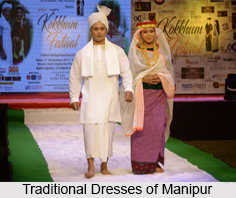
Traditional Dresses of Manipur are simple and easy to wear. The patterns and designs on the costumes are very unique and colourful. Manipuris are setting new trends with their ancient and original attires.
Costumes of Punjab
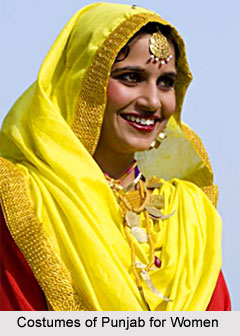
Costumes of Punjab breathe vibrancy. Tradition marks the dress of the women:; colourful Salwar Kameez while Kurta-Pyjama or Lungi is worn by men.
Costumes of Bihar
Costumes of Bihar embody the rich cultural heritage of the state. Men don traditional outfits such as the Dhoti Mirjai, Kurta and Pajama, and Sherwani, while women grace themselves with elegant sarees and embellished lehengas.
Traditional Dresses of Jharkhand
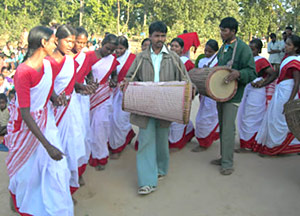
Traditional Dresses of Jharkhand embody the simplicity and elegance of its inhabitants. From the one-piece Bhagwan worn by men to the sarees and Tussar silk sarees adorned by women, these costumes reflect the rich tribal heritage and cultural traditions of the region.
Costumes of Sikkim
Costumes and dresses of Sikkim reflect the youth and the zest that is integral to the people of this state. There are differences in clothing among the three communities of this state namely Lepchas, Bhutias and Nepalis.
Traditional Dresses of Tripura
Traditional Dresses of Tripura have their own traditional ethnicity. The traditional costumes of Tripura, such as Risa, Rignai, and Rikutu Gamcha, reflect the unique cultural heritage of the state. Skilled weavers create exquisite fabrics with intricate designs and motifs inspired by nature and tribal traditions.
Costumes of Uttarakhand
The costumes of Uttarakhand, a culturally diverse region in the Himalayas, showcase the rich heritage and traditions of its various communities. From the vibrant sarees and traditional jewelry of Garhwali and Kumaoni women to the colorful attires and unique accessories of tribal groups like Jaunsarees and Bhotias, the costumes of Uttarakhand reflect the cultural diversity, distinct identities of its people, and a trend which is suitable to the climate of the region.
Costumes of Andaman and Nicobar Islands
The costumes of Andaman and Nicobar Islands showcase a fascinating blend of indigenous tribal traditions and influences from modern settlers. While the compulsion of wearing costume for decency has not yet touched the tribes of Andaman and Nicobar islands, modern clothing adopted by certain communities reflects the diverse cultural fabric of the islands
Costumes of Lakshadweep
Costumes of Lakshadweep reflect a blend of tradition and cultural identity. Women typically wear the Kachi with a Thattam and embroidered jacket, while men don lungis. These garments, often made of silk or cotton, are now evolving with modern fabrics and styles, balancing heritage with contemporary influences.
Costumes of Chandigarh
Costumes of Chandigarh uphold a pleasing medley of rich heritage complemented with stylish modernity. The costumes of Chandigarh also showcase the city`s diverse cultural heritage and the unique beauty of enthnicity.
Traditional Dresses of Dadra and Nagar Haveli
The traditional dresses of Dadra and Nagar Haveli reflect the region’s tribal heritage. Women often wear saris, chaniyas (skirts) with blouses, or drape a turban in Maharashtrian style, while men prefer simple dhotis or loincloths. Adorned with jewelry and vibrant fabrics, these attires showcase cultural identity and community pride.
Costumes of Delhi
Costumes of Delhi embody the rich cultural heritage of the city while showcasing a unique fusion of traditional elements and modern trends. From the popular salwar kameez and sarees for women to the timeless kurta pyjamas and sherwanis for men, Delhi`s costumes make a vibrant and stylish fashion statement, reflecting the cosmopolitan nature of the city.
Traditional Dresses of Odisha
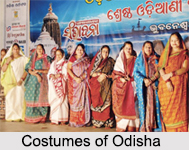
Traditional Dresses of Odisha reflects the unique culture of the state. Odisha has an ancient culture and popular for classical dance. It is also home to more than 60 tribal communities. Together, these factors have contributed to its diverse and unique traditional culture, reflected through dresses.