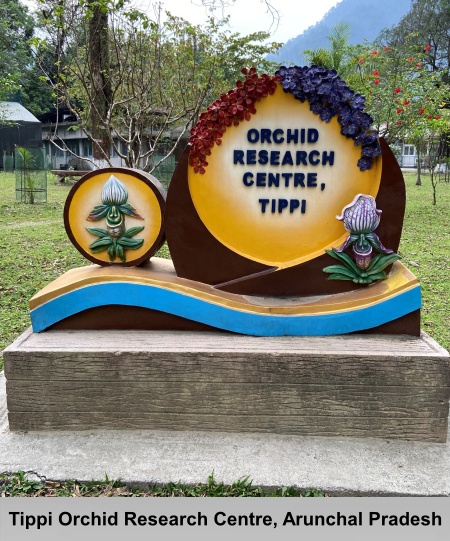
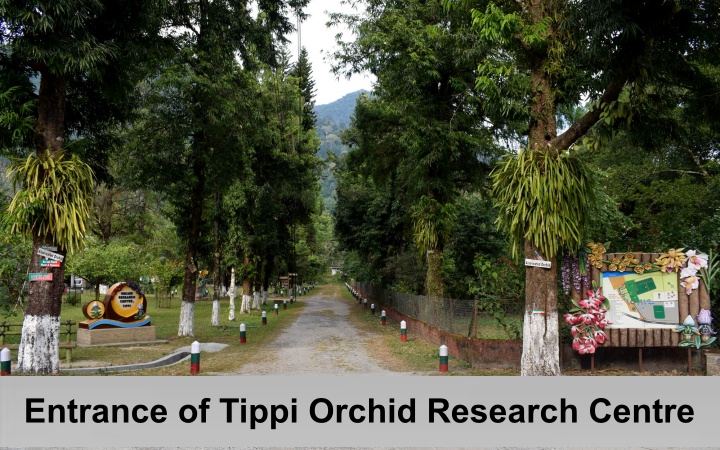
The Tippi Orchid Research Centre is home to nearly 20
endangered orchid species. It has gained recognition as the “Temple of Orchids”
for its remarkable efforts in orchid conservation and preservation. The
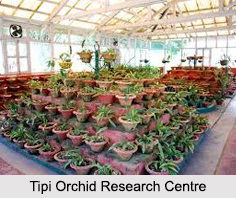
centre’s renowned Orchid Glass House features an extraordinary collection of
nearly 50,000 exotic orchid varieties, making it one of the most significant
orchid repositories in the region. The collection includes both naturally found
Himalayan orchids as well as a few local hybrid species, owing to the micropropagation
and development facility of this research centre.
Some of the species of orchids found in Tipi are cattleya,
dendrobium, vanda and paphiopedilum. It is the biggest orchidarium of Asia with
7500 varieties of native, rare and endangered species of orchids.
Some of the popular types of natural orchids here are:
Vanda Orchid: Vanda is a prominent genus within the
orchid family, Orchidaceae, comprising around 90 species. Renowned for their
striking flowers and vibrant colors, Vanda orchids are highly valued by horticulturists.
These orchids are extensively cultivated and traded in the global floral
marketplace.
Coelogyne orchids: Coelogyne is a diverse genus of
orchids belonging to the Orchidaceae family, comprising approximately 600
species of sympodial epiphytes. Widely distributed across India, these orchids
thrive in a variety of habitats, ranging from tropical lowland forests to montane rainforests.
Dendrobium Devonianum Orchids: Dendrobium devonianum,
commonly known as Devon's dendrobium, is a species of orchid native to the
eastern Himalayan
region and the northern parts of Indochina. This orchid grows as an
epiphyte, thriving on the trunks and branches of trees in mountain forests.
Slipper Orchids: Cypripedium is a genus comprising 58
species and nothospecies of hardy orchids and is one of the five genera that
collectively form the subfamily of lady's slipper orchids. These distinctive
orchids are best known for their unique, slipper-shaped flowers, which have
earned them the common names like slipper orchids, lady's slipper orchids, and
ladyslippers.
Cymbidium orchids or Boat Orchid: Cymbidium, commonly
known as the boat orchid, is a genus of evergreen
flowering plants belonging to the orchid family, Orchidaceae. The
orchids within this genus exhibit remarkable diversity in their growth habits
and may be found as epiphytes growing on trees, lithophytes growing on rocks,
terrestrial plants rooted in soil, or, in rare cases, as leafless saprophytic
herbs. Most species possess pseudobulbs that help them store water and
nutrients. The genus comprises approximately 55 species, along with 16
naturally occurring hybrids, many of which thrive in tropical and subtropical
forests.
Corsage Orchid: The term "corsage orchid"
is most commonly associated with the Cattleya orchid, a species widely
celebrated for its beauty and elegance. Often referred to as the "Queen of
Orchids," Cattleya is renowned for its large, vibrant, and fragrant blooms
that make it one of the most admired orchids in the world.
Agrostophyllum Flavidum: Agrostophyllum flavidum is a
species belonging to the genus Agrostophyllum, a group of orchids that
comprises approximately ninety species within the orchid family. Members of
this genus are primarily epiphytic in nature and are commonly found in tropical
lowland forests. They typically grow on the trunks and branches of trees, where
they derive support while obtaining moisture and nutrients from their
surrounding environment.
Neottia Listeroides: Neottia is a genus of orchids
that includes the plants formerly classified under the genus Listera. These
orchids are commonly known as twayblades, a name derived from their
characteristic pair of opposite leaves located at the base of the flowering
stem. The genus is naturally distributed across temperate, subarctic, and
arctic regions.
Hemipilia Calcicole: Hemipilia calcicola, formerly
known as Neottianthe calcicola, is a rare terrestrial orchid species that
inhabits high-altitude regions of the Himalayas. Its
natural distribution extends across Arunachal Pradesh and Uttarakhand in India,
as well as Nepal, Tibet, and parts of China. This tuberous geophyte is
specially adapted to mountainous environments and is commonly found growing in
alpine meadows and karst forest ecosystems.
Some of the popular types of Local Hybrid Orchids are
Renades Arunoday
Paphiopedilum Captain Spender Clay
Paphiopedilum Niobe
Cymbidium Sessa Green Beauty
Cymbidium Toni Benton
Vanda Tippi Blue Boy
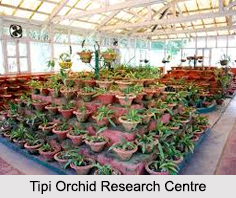
The greenhouses within the centre shelter a wide range of
orchid species, creating a serene and refreshing environment for visitors. The
beautifully maintained spaces provide an ideal setting for leisurely walks
while offering an opportunity to closely observe the intricate beauty and
diversity of these rare blooms.