
 Literature is a part of the heritage of India. Indian literature exists in varied languages. Various Indians skilled in writing have contributed in creating this part of India"s heritage in the form of stories, novels, prose, essays, etc. A noteworthy aspect of this literature is poetry written by eminent poets. Some of the Indian poets and their works are given below.
Indian Poets
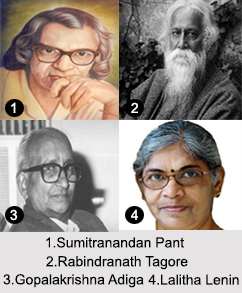
The names of some of the Indian Poets are Sumitranandan Pant, Rabindranath Tagore, Ramanuja Kavirayar, Gopalakrishna Adiga, Lalitha Lenin and Niranjan Bhagat.
Introduction
Literature is a part of the heritage of India. Indian literature exists in varied languages. Various Indians skilled in writing have contributed in creating this part of India"s heritage in the form of stories, novels, prose, essays, etc. A noteworthy aspect of this literature is poetry written by eminent poets. Some of the Indian poets and their works are given below.Poets in Sangam Age
Poets in Sangam Age were mainly Dravidian Tamil poets who created several poetic works during that period. The poets included both men and women, who belonged to different professions and came from various classes of society. Tamil literature created during 600 BCE to 300 CE is usually referred to as Sangam literature. The overall collection of Sangam literature consists of 2381 poems that were written by 473 poets and authors. Amongst the authors of these poems, the names of around 102 poets remain anonymous. Kapilar, one of the most renowned poets had written almost 235 poems in the Sangam classics. There are 4 other well known poets who contributed much to the Sangam literary classics like, Amrnuvanar wrote 127 poems; Orampokiyar wrote 110 poems; Peyanar wrote 105 poems and Otalantaiyar who wrote 103 poems.
Some of the poets in Sangam age came from urban areas and cities, while most of the authors and poets were mainly from the rural areas and villages. The poets and authors hailed from several professions like soldiers, bullion dealers, blacksmiths, goldsmiths, carpenters, cloth merchants, dispensers, astrologers, teachers, ministers and minstrels. Not just men, but women also became well known as authors and poets during the Sangam era. Few noted poets belonging to the royal lineage also composed famous poems in that period. Some of the distinguished royal kings who became poets in Sangam age were Colan Nalankilli, Killivalavan, Pandyan Netunceliyan and Kopperun-colan.
Relationship of Poets with Kings : The Tamil nation was ruled by the Chera, the Chola and the Pandya dynasty and their feudatories. The popular Indian epics, the Ramayana and the Mahabharata, contain several references regarding them. Vanci, Uraiyur and Madurai were the capitals of Vanci, Uraiyur and Madurai rulers respectively and these 3 urban areas were developed as a centre for learning and practicing fine arts and education. The rule of theses 3 royal dynasties was enthusiastically accepted by all classes of people. There was much tension and conflict amongst these three rulers that resulted in various battles and wars. Consequently there was conflict amongst the vassals as well. In such a scenario, the posts in Sangam age played a significant role by intervening and mediating for an agreeable settlement. The Purananuru contains many references that support this analysis.
When the citizens revolted against Kopperuncolan, the Chola King, another poet named poet Pullarrur Eyirriyanar prevented a probable Civil War. Killivalavan, a Chola King, paid a radiant tribute by means of a poem to the munificence of a philanthropist of the time named Pannan. Several poems in the Purananuru anthology disclose the respected position the poets held in the lives of the rulers of that period. The fact that the rulers remembered the poets even before embarking to the battleground proves high respect for the poets.
The poets were also much respected by the common people as well, such as Kuttar (dancer and actor), Panar (minstrels), Porunar (war-bard who traveled with warriors), Viraliyar (female dancer and singer).
Royal Poets in Sangam Age : Many poems in the Purananuru were written by various Kings of the Tamil land. Netunceliyan, a Pandya ruler, composed a verse celebrating the blessing of good education. Kopperuncolan, the Chola King, also wrote many poems before he died that exude a feeling of tenderness, sympathy and pity. One of the poems was dedicated to his poet friend named Picirantaiyar. The poems of Pottiyar and Picirantaiyar are comprised in the Purananuru. Irumporai, a Chera ruler, revealed his sense of honour through his poems.
In another poem which is included in Purananuru, Picirantaiyar adviced Arivutainampi who was a Pandya ruler. The poem is rich with ideas and views applicable to the rulers of contemporary democracy. The poem suggests the king about the principles related to collection of the annual tax from his subjects. Another poem by Punkunranar revealed similar thoughts. The indispensable theme of this poem is but a essence of the poet`s experience in life. Many rulers of Tamil Nadu during the Sangam age were expert in their mother language. They wrote poems exemplifying noble views. Nallurtittiran, the Chola kings, explains his noble aim and paid tribute to men of great deeds through his poems.
Purananuru contains poems on several themes composed by people belonging to different class and professions.
Some of the poets in Sangam age came from urban areas and cities, while most of the authors and poets were mainly from the rural areas and villages. The poets and authors hailed from several professions like soldiers, bullion dealers, blacksmiths, goldsmiths, carpenters, cloth merchants, dispensers, astrologers, teachers, ministers and minstrels. Not just men, but women also became well known as authors and poets during the Sangam era. Few noted poets belonging to the royal lineage also composed famous poems in that period. Some of the distinguished royal kings who became poets in Sangam age were Colan Nalankilli, Killivalavan, Pandyan Netunceliyan and Kopperun-colan.
Relationship of Poets with Kings : The Tamil nation was ruled by the Chera, the Chola and the Pandya dynasty and their feudatories. The popular Indian epics, the Ramayana and the Mahabharata, contain several references regarding them. Vanci, Uraiyur and Madurai were the capitals of Vanci, Uraiyur and Madurai rulers respectively and these 3 urban areas were developed as a centre for learning and practicing fine arts and education. The rule of theses 3 royal dynasties was enthusiastically accepted by all classes of people. There was much tension and conflict amongst these three rulers that resulted in various battles and wars. Consequently there was conflict amongst the vassals as well. In such a scenario, the posts in Sangam age played a significant role by intervening and mediating for an agreeable settlement. The Purananuru contains many references that support this analysis.
When the citizens revolted against Kopperuncolan, the Chola King, another poet named poet Pullarrur Eyirriyanar prevented a probable Civil War. Killivalavan, a Chola King, paid a radiant tribute by means of a poem to the munificence of a philanthropist of the time named Pannan. Several poems in the Purananuru anthology disclose the respected position the poets held in the lives of the rulers of that period. The fact that the rulers remembered the poets even before embarking to the battleground proves high respect for the poets.
The poets were also much respected by the common people as well, such as Kuttar (dancer and actor), Panar (minstrels), Porunar (war-bard who traveled with warriors), Viraliyar (female dancer and singer).
Royal Poets in Sangam Age : Many poems in the Purananuru were written by various Kings of the Tamil land. Netunceliyan, a Pandya ruler, composed a verse celebrating the blessing of good education. Kopperuncolan, the Chola King, also wrote many poems before he died that exude a feeling of tenderness, sympathy and pity. One of the poems was dedicated to his poet friend named Picirantaiyar. The poems of Pottiyar and Picirantaiyar are comprised in the Purananuru. Irumporai, a Chera ruler, revealed his sense of honour through his poems.
In another poem which is included in Purananuru, Picirantaiyar adviced Arivutainampi who was a Pandya ruler. The poem is rich with ideas and views applicable to the rulers of contemporary democracy. The poem suggests the king about the principles related to collection of the annual tax from his subjects. Another poem by Punkunranar revealed similar thoughts. The indispensable theme of this poem is but a essence of the poet`s experience in life. Many rulers of Tamil Nadu during the Sangam age were expert in their mother language. They wrote poems exemplifying noble views. Nallurtittiran, the Chola kings, explains his noble aim and paid tribute to men of great deeds through his poems.
Purananuru contains poems on several themes composed by people belonging to different class and professions.
Sanskrit Poets
 Literature is a part of the heritage of India. Indian literature exists in varied languages. Various Indians skilled in writing have contributed in creating this part of India"s heritage in the form of stories, novels, prose, essays, etc. Sanskrit language literature is no exception in this regard. A noteworthy aspect of this literature is poetry written by eminent poets. Some of these poets and their works are given below.
Bharavi : Bharavi is recognized as a Sanskrit poet whose name has been found written in a Chalukya stone inscription dated 634 C.E. His popularity is associated with his works called Mahakavya and Kiratarjuniya (Arjuna and the Mountain Man) in 18 cantos based on an episode from the Mahabharata. The noteworthy aspects of his poetry are intricate styles and ethereal expressions.
Devarshi Ramanath Shastri :
 Devarshi Ramanath Shastri is recognized as a Sanskrit poet, scholar and commentator. He has written in Hindi, Sanskrit and Brajbhasha languages. His works in Sanskrit are "Stuti "Parijaatam", "Darshanadarshah" and "Chhandogyopanishad Bhashyam". Some of his other notable works are Raslila Virodh Parihar, Pushtimargiya Nityasewa Smaran, Anugrah Marg, Shuddhadvait Darshan and Shuddhadvait Darshan.
Jayadeva : Jayadeva was a Sanskrit poet during the reign of Lakshman Sen, the 12th century king of Bengal. Two hymns of Jayadeva, which have been included in the Guru Granth Sahib are written in a mixture of Sanskrit and eastern Apabhramsa. He is known to play a pivatol role in popularizing the Dasavatara, the ten incarnations of Vishnu in another composition, Dasakritikrite. The classic Tribhangi (threefold) posture of Krishna playing the flute owes it"s popularity to Jayadeva.
Srinivas Rath : Srinivas Rath is recognized as a Sanskrit poet who is popular for a collection of poems entitled "tad eva gaganam saiva dhara," published by the Rashtriya Sanskrit Sansthan in the 1990s. The noteworthy aspects of his poems are lucid style and lyrical excellence. The poet has focused upon deterioration of human value and ethical importance in the modern age of scientific progress.
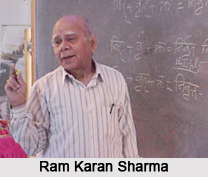
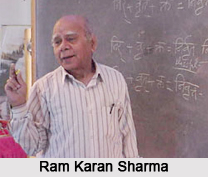
Ram Karan Sharma : Ram Karan Sharma is recognized as a Sanskrit poet and scholar. He has contributed as a writer in both Sanskrit and English languages. The names of his poetry in Sanskrit are Sandhya, Patheyasatakam, Vina, Kavita and Sarvamsaha. Apart from his poetic works, Sharma is also noted for his translations and book editing on Indian medicine, epics and Puranas. Research papers in various seminars, journals and books in the field of Indology further give insight into his versatility.
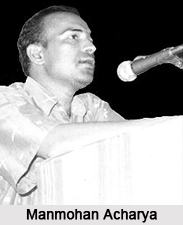
Other Sanskrit Poets in India : The names of some of the other Sanskrit Poets are Mithila Prasad Tripathi, Manmohan Acharya and Vishakhadatta.
Indian English Poets
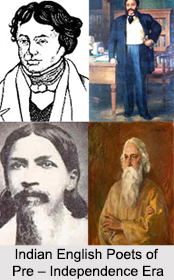 Indian English poetry has been one of the oldest parts of Indian English Literature and it represents the various developmental phases of multitudinous culture and society. The conflict between tradition and modernity at various levels like social, cultural, familiar, national and cosmopolitan is well marked in the works of these Indian English poets. The works of the Indian English poets can be divided into two phases, the pre - Independence era and the post - Independence era.
Indian English Poets of the Pre - Independence Era : The poems in the pre - Independence era were written in two parts, the first phase of the Indian poetry was the period of literary renaissance in India. Indian English poets like Henry Louis Vivian Derozio`s poems, Kasiprasad Ghose`s "The Shair or Minstrel and Other Poems", Michael Madhusudan Dutt`s "The Captive Lady", Manmohan Ghose`s "Love Songs and Elegies" are a testimony to the creative upsurge occasioned by the romantic spirit kindled by the literary renaissance. In this first phase, Toru Dutt alone among these romantic poets puts an emphasis on India and her heritage by putting into verse a large number of Indian legends.
These poets successfully gave a new direction to Indian poetry in English by writing on Indian history, myths and legends. The poets of 1850 to 1900 were trying to establish the imitative part of poetry, which followed the British Romantics and Victorian poets.
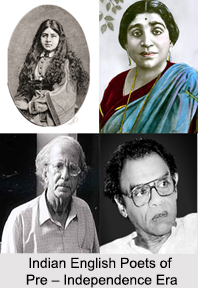 In the second phase of the Indian poetry, the works of the Indian English poets was fraught with nationalism, spirituality and mysticism. Poets like Swami Vivekananda, Swami Ramtirtha, Swami Yogananda, Sri Aurbindo Ghosh and Rabindranath Tagore left a body of poetry which is glorious summation of India"s cultural spiritual and methodological heritage which dates back to the Vedas and the Upanishads. In their poetry they endeavoured to nativize English language in order to make it a befitting instrument for the expression of Indian sensibility. Female poets like Sarojini Naidu and Toru Dutt constitute a kind of watershed between these two phases, in that they share their predecessor"s individual nostalgia as well as their successor"s sense of crisis and quest of identity.
Indian English Poets of the Post - Independence Era Different from the first two phases of the pre - Independence era, the ethos of the post - Independence era is radically different. In the post - Independence era, the works of the Indian English poets reflected perspective and milieu. During this period, poets like Nissim Ezekiel, aptly known as the father of modern Indian poetry in English, P. Lal, Dom Moraes, A.K. Ramanujan, Pritish Nandy and Arun Kolatkar, among others came into the scene.
The poetry from this phase gradually transformed into the contemporary style of poetry which talked about the inner conflict, alienation, failure, frustration, loneliness, one"s relations with themselves and others, etc. It was from the 50s that the true sense of Indian poetry started to appear. It was in 1958 that P. Lal and his associates founded the Writers Workshop in Kolkata which became an effective forum for modernist poetry. The first modernist anthology was "Modern Indo-Anglian Poetry" (1958) edited by P. Lal and K. Raghavendra Rao.
The works of the Indian English poets are realistic and the poets are intellectually critical in the expression of their individualized experience.
Indian Male Poets
Sumitranandan Pant : Sumitranandan Pant is the recipient of Padma Bhushan (the third-highest civilian award in the Republic of India) and Padma Vibhushan (the second-highest civilian award in the Republic of India). This progressive left-wing 20th century poet of Hindi language added the flavor of romanticism to his poems which was inspired by nature, people and beauty within. Some of his famous poems are Angoothita, Bharatmata Gramvasini, Main sabse chhoti hun and Maun Nimantran.
Rabindranath Tagore : Rabindranath Tagore, also known as Ravindranatha Thakura is a renowned figure of Indian literary world. Tagore is known mostly for his poetry. In writing poetry, he was influenced by the atavistic mysticism of Vyasa and other rishi-authors of the Upanishads, the Bhakti-Sufi mystic Kabir and Ramprasad Sen. Gitanjali is considered to be his best-known collection of poetry. Apart from poetry, Tagore had shown his versatility in writing novels, essays, short stories, travelogues, dramas, thousands of songs and autobiographies.
Ramanuja Kavirayar : Ramanuja Kavirayar is recognized as a Tamil savant and poet. Three of his noted devotional poems are Thiruvengadavar Anubhuthi on Lord Venkatesa of Tirupati, Parthasarathy Padampunai Pamalai on God Parthasarathy of Triplicane and Varadarajar Padirrupa-Thanthadi one the Lord of the famous temple of Kanchipuram. Pancharatnamala on Pachaiyappa Mudaliar, the great philanthropist is recognized as the stray poem of Kavirayar.
Gopalakrishna Adiga : Gopalakrishna Adiga is considered to be a significant part of the modern Kannada poetry. Modern Indian literature over five decades received influential contributions of Adiga in terms of essays, translations and poems. Adiga, the pioneer of new style poetry has a collection of poems called Samagra Kavya and Idanna Bayasiralilla as significant part of his literary works. Some of his other contributions are a book of essays called Mannina Vasane, a novel called Ananthe and a magazine called Sakshi.
Other Indian Male Poets : Some of the other Indian Poets are Niranjan Bhagat, Namdeo Dhasal, Kusumagraj and Brajanath Ratha.
Rabindranath Tagore : Rabindranath Tagore, also known as Ravindranatha Thakura is a renowned figure of Indian literary world. Tagore is known mostly for his poetry. In writing poetry, he was influenced by the atavistic mysticism of Vyasa and other rishi-authors of the Upanishads, the Bhakti-Sufi mystic Kabir and Ramprasad Sen. Gitanjali is considered to be his best-known collection of poetry. Apart from poetry, Tagore had shown his versatility in writing novels, essays, short stories, travelogues, dramas, thousands of songs and autobiographies.
Ramanuja Kavirayar : Ramanuja Kavirayar is recognized as a Tamil savant and poet. Three of his noted devotional poems are Thiruvengadavar Anubhuthi on Lord Venkatesa of Tirupati, Parthasarathy Padampunai Pamalai on God Parthasarathy of Triplicane and Varadarajar Padirrupa-Thanthadi one the Lord of the famous temple of Kanchipuram. Pancharatnamala on Pachaiyappa Mudaliar, the great philanthropist is recognized as the stray poem of Kavirayar.
Gopalakrishna Adiga : Gopalakrishna Adiga is considered to be a significant part of the modern Kannada poetry. Modern Indian literature over five decades received influential contributions of Adiga in terms of essays, translations and poems. Adiga, the pioneer of new style poetry has a collection of poems called Samagra Kavya and Idanna Bayasiralilla as significant part of his literary works. Some of his other contributions are a book of essays called Mannina Vasane, a novel called Ananthe and a magazine called Sakshi.
Other Indian Male Poets : Some of the other Indian Poets are Niranjan Bhagat, Namdeo Dhasal, Kusumagraj and Brajanath Ratha.
 Female Poets in India broke the form and raged a path, leaving a permanent mark on Indian literature. Since earlier time, India has been a dissolving pot of creative people like writers, poets, artists, sculptors, musicians, etc., who have formed our history and culture. Many diverse Indian women poets are probing the role of form in existing poetry.
Female Poets in India left an indelible mark on literature in general and Indian literature in particular. Following are the popular Female Poets in India:
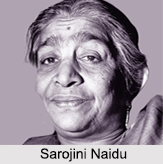
Sarojini Naidu: Sarojini Naidu is known as the "nightingale of India." She began to write poetry at the age of 12, and her first collection of poems is "The Golden Threshold". She was a part of India"s freedom fight and a foremost figure in the Quit India Movement.
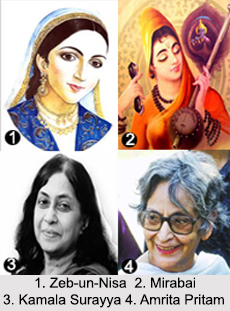
Zeb-un-Nisa: Princess Zeb-un-Nisa is known as the “Ornament of Womankindâ€. She was the eldest child of Emperor Aurangzeb and Princess Dilras Banu Begum. She began writing poetry at the age of 14 choosing her pen name as "Makhfi", or The Hidden One. She wrote a collection of poetry called "Diwan" which contains 5,000 verses, and also wrote three other books of poetry as well as 15,000 verses.
Lalitha Lenin : Lalitha Lenin is recognized as a Malayalam poet. She has contributed poems, short-stories and articles to mainstream periodicals. The names of her poetries are Karingili, Karkidavaavu, Namukku, Praarthikkaam and Kadal. The novel which she has written for children is called Minnu. She has also worked as a translator.
Kamala Surayya: Kamala Das or Kamala Surayya is known as "the mother of modern English Indian poetry". She began writing poetry as a kid. She wrote numerous short stories and poems. Her first book of poetry was the "Summer in Calcutta". She was often compared to Marguerite Duras and Sylvia Plath. Kamala Surayya was shortlisted for the Nobel Prize for Literature in 1984 and was awarded with the Sahitya Akademi Award in 1985.
Toru Dutt: She is frequently referred to as the Keats of Indo-English literature. Her works include "Le Journal de Mademoiselle d"Arvers", the first novel to be written in French by an Indian writer, and another novel, "Bianca" stayed incomplete. Her poetry collection "A Sheaf Gleaned in French Fields" was published in 1876, and "Ancient Ballads" and "Legends of Hindustan" was published in 1882.
Amrita Pritam: She was intensely influenced by India"s freedom struggle. She was the first Punjabi woman poet, novelist and essayist, and wrote in both Punjabi and Hindi. Her career spanned six decades and she wrote over 100 books of poetry, fiction, essays, biographies, anthologies and an autobiography. Her work has been translated into a number of languages around the world. She was the first woman to win the Sahitya Akademi Award for her magnum opus, a long poem entitled "Sunehade" (Messages).
 Mahadevi Varma: Mahadevi Varma was one of India"s most prolific women poets, freedom-fighters, educationists and activists. She was one of four founders of the "Chhayavaad" movement, a different wave of romanticism in Hindi poetry. She was the first woman to be granted India"s highest literary award for lifetime achievement, the Sahitya Akademi Fellowship, in 1979. She was also honoured with the Padma Bhushan in 1956.
Subhadra Kumari Chauhan: She is perhaps the best known exponent of the "Veer Ras" sub genre. Mainly writing on themes of patriotism and nationalism, her most famous verses include "Jhansi ki Rani" and "Veeron Ka Kaisa Ho Basant".
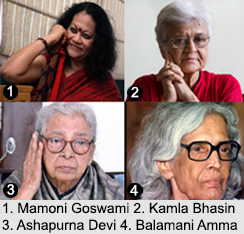
Balamani Amma: Balamani Amma wrote in Malayalam and was known as the "poetess of motherhood." She was the receiver of a number of celebrated awards and recognitions inclusive of the Sahitya Akademi Fellowship. Some of her famous works are "Amma", "Muthassi" and "Mazhuvinte Katha".
Mirabai: She was a 16th-century Hindu spiritualist poet and follower of Krishna. She is a celebrated "Bhakti" saint, particularly in the North Indian Hindu tradition. Her poems are lyrical "padas". There are no existing manuscripts of her poetry from her century. The largest collection of poems credited to her are in 19th-century manuscripts. Her method combines emotional mood, boldness, desire, hope, joy and happiness of union, always centred on Krishna.
Eunice de Souza: She was an Indian English language poet, literary critic and novelist. Among her famous books of poetry is "Women in Dutch painting" (1988). "Ways of Belonging" and "Selected and New Poems" are some of her famous works.
Akka Mahadevi: She was one of the early female poets of the Kannada language and a famous personality in the "Veerashaiva Bhakti" movement of the 12th century. Her 430 existing "Vachana" poems and the two short writings called "Mantrogopya" and the "Yogangatrividhi" are considered her most remarkable part to Kannada literature.
 Lalleshwari: She is locally known as Lal Ded. She was an originator of the spiritualist poetry called "vatsun" or "vakhs", literally meaning "speech". Her verses are the earliest compositions in the Kashmiri language and are an imperative part in history of contemporary Kashmiri literature.
Kamini Roy: She was a leading Bengali poet, social worker and feminist in British India. She was the first woman honours graduate in British India. She published her first collection of verses "Alo Chhaya" in 1889. Amongst her famous literary contributions were –"Mahasweta", "Pundorik", "Pouraniki", "Dwip O Dhup", "Jibon Pathey", "Nirmalya", "Malya O Nirmalya", and "Ashok Sangeet". She wrote "Gunjan" for children and a book of essays "Balika Sikkhar Adarsha".
Ashapurna Devi: She was a famous Bengali novelist and poet. She was awarded with Jnanpith Award and the Padma Shri by the Government of India. Her novel "Baluchori" was adapted as a Television serial in Deepto, named Aparajita. Her magnum composition, the "trilogy Pratham Pratishruti" (1964), "Subarnolata" (1967) and "Bakul Katha" (1974), symbolises a continual struggle for women to attain equal rights.
Mamoni Raisom Goswami: Indira Goswami is known by her pen name Mamoni Raisom Goswami. She was an Assamese editor, poet, professor, scholar and writer. She was the winner of the Sahitya Akademi Award, the Jnanpith Award, and Principal Prince Claus Laureate. Countless of her works have been translated into English from her local Assamese which include "The Moth Eaten Howdah of the Tusker", "Pages Stained With Blood" and "The Man from Chinnamasta".
Sugathakumari: She is an Indian poet and activist. She has won numerous awards and recognitions including Kerala Sahitya Akademi Award. She was honoured with Padma Shri. "Mutthuchippi", "Devadasi", "Kurinjippookkal†are some of her works.
Shanta Janardan Shelke: She was a Marathi poet and writer of Marathi language. Her work included song compositions, stories, translations and literature for children. She led over many literary gatherings. Her pen name is Vasant Avsare. Some of her compositions became eternal in the form of songs sung by Marathi greats like Lata Mangeshkar, Asha Bhosale and Kishori Amonkar, to name a few.
Kamla Bhasin: She is an Indian developmental feminist activist, poet, author and social scientist. She is best known for her poem "Kyunki main ladki hoon", "mujhe padhna hai".
Nalini Bala Devi: She was a noted Indian writer and poet of Assamese literature, known for nationalistic as well as spiritual poetry. She was awarded with the Padma Shri. She is famous for her poetry collection "Alakananda".
Female poets in India in multiple ways shaped the field of Indian poetry establishing the relatively curious and contested surroundings of Women poets in India.
Recently updated articles in Indian Literature
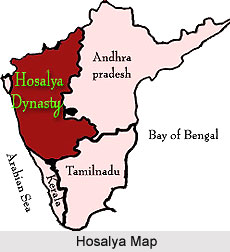
Gadyakarnamrita
Gadyakarnamrita is a 13th-century Sanskrit literary work written mainly in prose. It describes the ninety-day battle at Srirangam between the Hoysala...
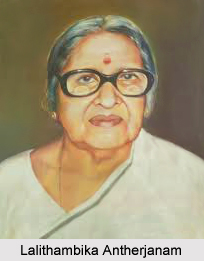
Women Writers in Malayalam Literature
Women writers in Malayalam literature have worked incessantly to make a place for their literary works. In the earlier periods, they were completely o...
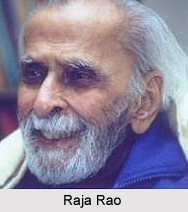
Comrade Kirillov, Novel by Raja Rao
Comrade Kirillov, a distinctive creation of Raja Rao, is presented as a brief yet incisive novelette that offers an ironic portrayal of the self-contr...
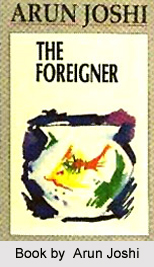
The Foreigner, Novel by Arun Joshi
“The Foreigner” is a book authored by Arun Joshi and published by Vision. It is an illustrious creation in the entire career of Arun Joshi, the famous...
Short Story in Telugu Literature
Short Story in twentieth century Telugu Literature was extremely popular and growing in and developing in a major way. Their popularity was greatly fa...
Related articles in Indian Literature
Mythological Themes in Indian Literature
Mythological themes in Indian literature have been integral to every ancient and contemporary writer and their path to f
Literature During Gupta Age
It is during the Gupta Age literature in the form of poetry, epos and drama gained a colossal importance.
Literature of Aravidu Dynasty
Sanskrit and Telugu were the popular literary medium of communication during Aravidu dynasty.
Munshi Premchand
Munshi Premchand was a legendary Indian writer notable for his modern Hindustani literature. A writer of a very high caliber, Premchand`s writings hav...
Sanskrit Poets
The names of some of the Sanskrit Poets are Bharavi, Devarshi Ramanath Shastri, Jayadeva and Srinivas Rath.