
Mahakavya Kiratarjuniya a splendid work of poetry was authored by the very versatile poet Bharavi. She lived around 575-600 A.D. and was patronized by king Simhavishnu of Kanchi. Kiratarjuniya is a poem in 18 cantos and describes the obtaining of the Pasupatastra by Arjuna.
Filled with spirit and wisdom Bharavi`s style of writing is outpour of perceptional thoughts. It would be an ideal example of the definition of slesa or double entendre. Bharavi exhibits his skill very well in the use of the rules of grammar. The discussions on political issues in which Yudhistira, Bhima and Draupadi participate are noted for their vigor and depth of expression. In the 15th canto, Bharavi displays his dexterity in playing with words. There are stanzas with single or double consonants reading the same when taken from both ends of the line. There are many general statements in his poem, all didactic in nature. The famous commentator Mallinatha considers Bharavi`s words a hard nut to crack.
Bharavi Poet
Bharavi was great Sanskrit poet of the Pallava age who has contributed a magnificent poetry.
About Bharavi Poet
Bharavi Sanskrit poet
According to various historical sources Bharavi can be placed as early as 500 A.D. Kiratarjunya was based on an episode from the epic Mahabharata. In Mahabharata when Pandavas are sent to forest as a part of their exile it is Draupadi who urges them to break the pledge. Thereafter a council is held. It has been decide that Arjuna needs to obtain divine weapons of Lord Shiva. Arjuna obeying the order practices in the Himalayas. Here he struggles with a Kirata which is Shiva himself. Lord Shiva grants the boon. Based on this theme Bharavi has penned the epic poem.
The opening shows the skill of the poet. Bharavi begins with the return of a spy whom Yudhisthir has sent to report on the deeds of Duryodhana. Draupadi becomes anxious and urges swift battle. Bhima offers his support. The poet`s imagination is proved by the introduction of Shiva`s host; struggles under Skanda`s leadership with the hero and the chapter of the contest with magic weapons. However it is made necessary to duplicate the episode of the force of the penance that causes fear and evokes divine intervention. In the first two Cantos the political principles of the day have been a major influence.
His style has a calm dignity which is attractive, while he stands outs in the observation and record of the beauties of nature. The very first line strikes the true note of high policy. His one verse has the first and third, second and fourth lines identical. In another all four are alike. He eschews long compounds though it is not essentially obscure. However he sets a bad example by showing his fondness in grammar. He in many ways is the beginner of mannerisms for the later poets. He takes utmost care in the use of the narrative tenses. In metrical form Bharavi is developed as he is in the use of the figures of speech.
Recently updated articles in Indian Literature
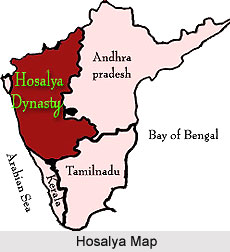
Gadyakarnamrita
Gadyakarnamrita is a 13th-century Sanskrit literary work written mainly in prose. It describes the ninety-day battle at Srirangam between the Hoysala...
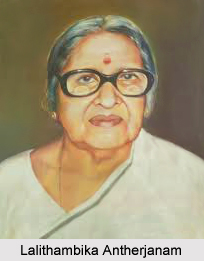
Women Writers in Malayalam Literature
Women writers in Malayalam literature have worked incessantly to make a place for their literary works. In the earlier periods, they were completely o...
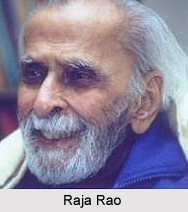
Comrade Kirillov, Novel by Raja Rao
Comrade Kirillov, a distinctive creation of Raja Rao, is presented as a brief yet incisive novelette that offers an ironic portrayal of the self-contr...
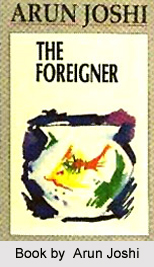
The Foreigner, Novel by Arun Joshi
“The Foreigner” is a book authored by Arun Joshi and published by Vision. It is an illustrious creation in the entire career of Arun Joshi, the famous...
Short Story in Telugu Literature
Short Story in twentieth century Telugu Literature was extremely popular and growing in and developing in a major way. Their popularity was greatly fa...
Related articles in Indian Literature
Mythological Themes in Indian Literature
Mythological themes in Indian literature have been integral to every ancient and contemporary writer and their path to f
Literature During Gupta Age
It is during the Gupta Age literature in the form of poetry, epos and drama gained a colossal importance.
Literature of Aravidu Dynasty
Sanskrit and Telugu were the popular literary medium of communication during Aravidu dynasty.
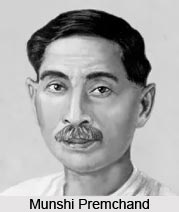
Munshi Premchand
Munshi Premchand was a legendary Indian writer notable for his modern Hindustani literature. A writer of a very high caliber, Premchand`s writings hav...
Sanskrit Poets
The names of some of the Sanskrit Poets are Bharavi, Devarshi Ramanath Shastri, Jayadeva and Srinivas Rath.