Introduction
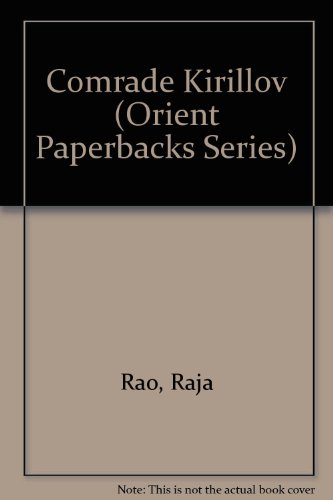
“Comrade Kirillov” by Raja Rao is a famous novel. The title of the story reflects the name of central character of the story. The story is on the version of this person. The name aptly depicts the title of the story. The novel was first published in 1966 in French under the title “Le Comrade Kirillov.” It was only a decade later, in 1976, that the English version entered literary circles which was published by Ind-us publication. Notably, Raja Rao is reported to have acknowledged that the work was originally written in English before its initial publication in French.

Synopsis of Comrade Kirillov
“Comrade Kirillov” is a sketch of a South Indian man named Padmanabha Iyer. The book is an exploration of his manifestation of a modern man. An Indian who ventured abroad when still young, Kirillov went to England in 1928 and settled there. He is a seeker, and taken from the first by Marxism, a certainty that was way beyond the Indian tradition back then. The rising popularity of Hitler, his house painter humbug in the novel, and the weakness Kirillov feels both in India and even in England eventually leads him to the only alternative he deems feasible.
Kirillov can excuse and justify the show-trials, while at the same time unfairly criticizing and demeaning the efforts of Mahatma Gandhi in freeing India from British rule. The novella covers the time of 1930s and 1940s, and extends up to the independence of India and beyond. As the narrator recognizes, Kirillov is constantly is torn between the Indian tradition that remains a part of him and the newfound ideology that he has embraced. Indeed, even as he claims to be what amounts to the Soviet ideal, he sounds nothing like so much as the ascetics of his homeland.
Kirillov eventually returns to India. After India achieves independence, he somewhere becomes hopeful about the political scenario of the country but his inner self failed to reconcile between the two parts of himself. At the end, the author offers a third-hand narrative of Kirillov’s life offers a chunk of Kirillov`s wife, Irene, before the conclusion. It is the next generation, Kirillov’s son Kamal, that is then the focus at the end, the author giving up on Kirillov. Kamal, soon immersed in his past, offers hope for the future, while Kirillov is lost down this path he cannot escape from, obsessed like the religious fanatic.
“Comrade Kirillov” reflects the excellence skills of character portrayal of Raja. This story of Rao offers a feel of life and ideology in quick, fine brushstrokes. The narrative is a convincing reflection of Kirillov’s own torn personality and his own uncertainty. The tug of war between India and Communism has been effectively conveyed in the novel. It is also an interesting novel of the Indian expatriate experience in the 1930s where it gives the reader a general viewpoint about the whole backdrop of the country during that time.

Narrative of Comrade Kirillov
The narrator is presented as the intellectual anti-thesis of Kirillov, firmly aligned with the philosophy of Advaita Vedanta. Throughout the narrative, the text engages in a series of compelling discussions on Communism, enhancing its significance as a social document that vividly captures the life of an Indian expatriate intellectual in the period between 1920 and 1950.
Kirillov’s relationship with Irene forms another important
strand of the narrative and bears notable resemblance to Rama’s relationship
with Madeleine. Despite these similarities, this union proves to be more
enduring. The marriage survives and results in the birth of a child, Kamal.
However, tragedy soon intervenes following Kirillov’s return from India, when
Irene dies during childbirth, along with her newborn daughter. In the
aftermath, Kirillov departs for Moscow and is eventually last heard of in
Peking. The novel concludes with the narrator, now in India, taking
responsibility for Kamal and accompanying the child to Kanyakumari,
bringing the narrative to a reflective close.
Political Element in Comrade Kirillov
In political terms, “Comrade Kirillov” is portrayed as an
exploration of the encounter between East and West. The communist principle
that “repression leads to resistance, and resistance to rebellion” becomes
deeply internalized within the consciousness of the central character, Comrade
Kirillov, also known as Padmanabha Iyer. This internal struggle manifests as a
threefold ideological conflict between tradition and modernity, between the
colonial subject and the colonizer, and between the spiritual influence of the
Mahatma and the materialist philosophy of Marx.
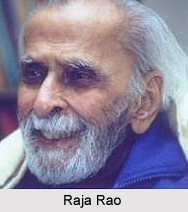
About Raja Rao
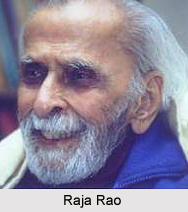
The famous Indian writer Raja Rao used to believe in Gandhian policies. Rao returned to the theme of Gandhism in one of his short story collections. In 1998 he published Gandhi`s biography in his language. After the war, Rao spent much of his time in France and travelling throughout the world. He visited America in 1950 and later spent some more time living in an ashram. As he was divorced in 1965 he married an actress, Katherine Jones. From 1965 to 1983 Rao lectured on Indian philosophy at the University of Texas at Austin. He retired from that institution in 1980. His second marriage ended in divorce and after that he married Susan Vaught in 1986. In 1988 he received the prestigious Neustadt International Prize for Literature. In 1997 he received the Sahitya Akademi fellowship, India’s highest literacy award. He was attached to India and though he was settled in Austin he made it a point to come back to India and go to the Himalaya. He had connectivity with spirituality in his real life as well as fiction-life. As a whole Raja Rao was a person with excellent writing power and lots of humour lying in him.
Character Portrayal by Raja Rao: Across works ranging from “Kanthapura” to “Comrade Kirillov,” Rao’s protagonists are portrayed as being united by a common set of philosophical concerns. They are consistently engaged with fundamental questions such as the nature of Truth and the means by which it may be attained. While their approaches differ and so do the outcomes they arrive at, but their shared preoccupation with this search remains central. Consequently, the novels unfold as chronicles of an enduring, archetypal quest.
The narrative structure in Rao’s fiction does not follow a straightforward, linear progression. Instead, it assumes a circular form, drawing heavily from the Puranic tradition of storytelling. Adapting this style to the framework of the Western novel, Rao incorporates digressions, embedded tales, songs, philosophical reflections, debates, and essay-like passages. This layered narrative technique enriches the texture of the storytelling while reinforcing its thematic depth.
Characters within these works are often rendered as symbolic
figures, embodying ideas that extend beyond their immediate roles. As a result,
their motivations may at times appear ambiguous or insufficient when viewed
through a purely realist lens. Moreover, the subjectivity of the narration
shapes the language itself, which frequently mirrors the narrator’s distinct
social, regional, and philosophical background, lending each narrative voice a
unique and individualized character.