 Indian Novels have been presented flawlessly and eternally in diverse languages, themes and other particulars. The first traces of writings in Indian literature were done in the Sanskrit language and it was indeed the Sanskrit literary wonders that one gets to discover the very first traces of Indian novels and novel writing in Indian context.
British supremacy upon India effected the society which paved way for the upcoming `Indian novels in English`, a phrase, which has attained much different a context in contemporary times in Indian literature.
History of Indian Novels
The history of Indian novels has much to speak and state about an all-encompassing genre, which can of course not be free from any controversies or its debatable arena. Authors and legendary sages have been recognised to have devoted volumes of paper, pen and ink in priceless poetry or drama, dedicating each meticulous thought to penning down immortal creations that still arrests attention. However, it was only in the later Vedic Age that one got to witness the foremost and initial stages of Indian novel writing under the masters sages like Valmiki or Vyasa.
The most distinguishing factor that surfaces to the tip of the iceberg is the role of Indian novelists and their novels in booming and testing times of India under the British Raj. Beginning from dramatisation or penning down thoughts in the poetical format, it was in fact the `enslaved Indian novels` that had soared in every Indian morning, the outcry coming from every Indian language - modernistic, chic or inert in the tribal format.
Development of Indian Novels
During the Vedic Period, Hinduism was in its most supreme state with the caste system. At first, Indian novels were written in Sanskrit only, and literary body was divided into - Vedic Sanskrit, Epic Sanskrit and Classical Sanskrit literatures. The Indian Independence Movement was the most prolific and opportune a time, when Bengali and Hindi novelistic tradition was at its helm. Indian literary personalities have penned down successive historical events in their novels, sometimes depicting the societal structure, answerable as they are to the reading as well the pan-Indian non-reading populace, with what they have created.
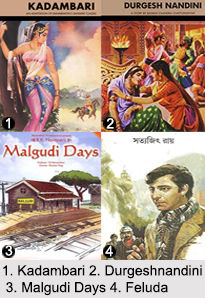
 Gradually Indian English novel witnessed the evolution as a subaltern consciousness, with a reaction to break away from the colonial literary overshadowing. The series of "Malgudi Days" marked a special format of Indian novels. Satyajit Ray reached out to every kind of reading generations in every possible language on earth, besides of course, Bengali, with his adventurous and exhilarating "Feluda" and "Professor Shonku". It was Satyajit Ray who brought the international adventure to the genre of children"s thriller novels. Lately, a new pattern of Indian novels were into the markets, identified as "Graphic Novels", a type of comic book, mostly with a lengthy and complex storyline similar to those of novels. These novels are imbibed with life through both speech and images.
Famous Indian Novels The contemporary Indian novels are widely sold and flying off the racks in overseas countries. Some of the famous Indian Novels are:
•"Kadambari" written by Banabhatta,
•"Anandamath", "Durgeshnandini" and "Kapalkundala" by Bankim Chandra Chattopadhyay,
•"Marthandavarma" by C. V. Raman Pillai,
•"Second Thoughts", "Socialite Evenings" and "Starry Nights" by Shobhaa De,
•"The Guide", "The Man-Eater of Malgudi", "Waiting for the Mahatma" by R. K. Narayan,
•"Shesher Kabita", "Noukadubi", "Chaturanga" by Rabindranath Tagore,
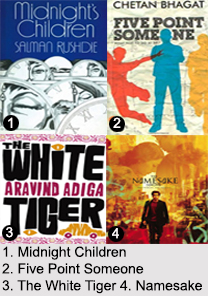
•"Midnight Children" by Salman Rushdie,
•"Train To Pakistan" by Khushwant Singh,
•"Five Point Someone" by Chetan Bhagat,
•"The God Of Small Things" by Arundhati Roy
•"The Great Indian Novel" and "Show Business" by Shashi Tharoor,
•"Verukal" by Malayattoor Ramakrishnan,
•"The Golden Gate" by Vikram Seth,
•"The White Tiger" by Aravind Adiga,
•"The Man from Chinnamasta" by Indira Goswami,
•"Satyanweshi" by Sharadindu Bandyopadhyay,
•"Mahashweta" by Sudha Murthy,
•"Pinjar" by Amrita Pritam,
•"Maramar Deuta" by Dr. Bhabendra Nath Saikia,
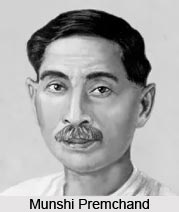
•"Godan" by Munshi Premchand ,
•"Namesake" by Jhumpa Lahiri etc.
Novelists like Rohinton Mistry, Sarojini Sahoo, Jhumpa Lahiri, Anita Desai, Altaf Fatima and others have earned international acclamation for their works. Indian novelists are the creative masterminds behind such impeccable story plots and continuous meshes in language. Indian novels have reached a notable status not only in Indian book market, but also globally.