Gadyakarnamrita
Gadyakarnamrita is a 13th-century Sanskrit literary work written mainly in prose. It describes the ninety-day battle at Srirangam between the Hoysala ruler Narasimha II and the allied forces of the Pandyas and Pallavas.

Share this Article:

Introduction

“Gadyakarnamrita” is a notable Sanskrit court literary work composed in the early 13th century. Written primarily in prose (gadya), it described the war between the Hoysala king Vira Narasimha II and the Pandyas. The text served as an important example of Sanskrit court literature and reflected the cultural and literary patronage extended by the Hoysala rulers. It is a priceless text with a lot of unswerving historical content of South India.


Significance of Gadyakarnamrita

“Gadyakarnamrita” has been utilized by historians in reconstructing the history of South India during the 13th-14th centuries A.D. It was written by a Sanskrit Litterateur named Sakala Vidya Chakravartin. It deals mainly with the political panorama of the ancient Tamil-Karnataka regions and the turbulent situation of that time. The author enjoyed the patronage of the Hoysala rulers who were the prominent rulers in those days. The text also narrates about some of the minor powers of the Tamil-speaking regions that was mainly used by Banas at the time, who were one of the well-known feudatory dynasties.


Content of Gadyakarnamrita

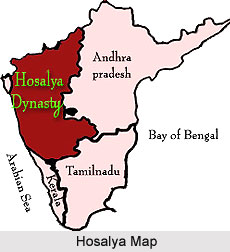
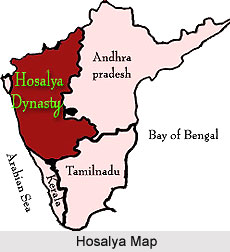
“Gadyakarnamrita,” a 13th-century literary work, described the ninety-day battle fought at Srirangam between Narasimha II, the son of Tribhuvanemalla Viraballala of the Hoysala dynasty, and the combined forces of the Pandyas, the Pallavas, and their allies. 

The “Gadyakarnamrita” mentions that the later Chola ruler Rajaraja III, in the second half of the 13th century A.D., requested the help of the Hoysala king Narasimha II and thus the later came with his army to the Chola empire. Apart from this, the book also records all the political events of that time with minute precision in addition to data about the royal court, ministers, and a grand description of the Hoysala capital city, Dvarasamudra (present-day Halebid in Karnataka).
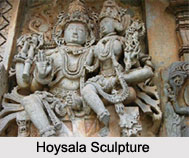
Numerous facts about the social and cultural conditions prevailing during that period are also mentioned in the text. Written in stylish prose, this historical piece gives a clear account of the activities of the common people like their festivities and celebrations. Special occasion, drinking parties, spring festivities that are celebrated by throwing colour and fragrant powder on people, gymnastics, and other form of exercises are also recorded in “Gadyakarnamrita.”

The “Gadyakarnamrita” is a boon to historians as it a reliable and authentic source to learn about the political, social, economic, religious and cultural conditions of South India in the 13th and 14th centuries A.D and which, corroborated with other historical and archaeological sources, have helped in the writings of scholarly times on the history of this region.


About Author Sakala Vidya Chakravartin

Sakala Vidya Chakravartin, the author of “Gadyakarnamrita” hailed from a family of great poets, many of whom held the title Vidya Chakravartin (emperor among poets). The author’s familiarity with the “Natya Shastra” by Bharata Muni is clearly seen in this work. The grandson of Sakala Vidya Chakravartin, who also carried the same title, served in the court of King Veera Ballala III. He composed a poetic work titled “Rukminikalyana,” which was divided into 16 kandas (chapters). In addition, he wrote commentaries on poetics for works such as “Alankarasarvasva” and “Kavyaprakasa.” 

Literary developments during the Hoysala period significantly influenced Kannada literature in the centuries that followed. These developments encouraged the popularity of folk metres and gradually shifted literary emphasis toward desi (native or folk) forms of literature.


Share this Article:

More Articles in Indian Literature


Mythological Themes in Indian Literature
Mythological themes in Indian literature have been integral to every ancient and contemporary writer and their path to f
Literature under Delhi Sultanate
Literature during the period of Delhi Sultanate was produced not only in Persian and Sanskrit but also in other regional languages.
Epics in Tamil Literature
Epics in Tamil Literature refer to the Five Great Epics namely Cilappatikaram, Manimekalai, Valayapathi, Civaka Cintamani and Kundalakesi. There are also the Five Lesser Epics in Tamil Literature.
Literature During Gupta Age
It is during the Gupta Age literature in the form of poetry, epos and drama gained a colossal importance.
Post-Sangam Age in Tamil literature
Post-Sangam age in Tamil literature basically saw the tremendous rise of Hindu saintly literary treatises in two sects.
Epics in Sanskrit Literature
Epics in Sanskrit Literature are the store house of historical knowledge and the providers of knowledge about Indian philosophies and thought.
Literature of Aravidu Dynasty
Sanskrit and Telugu were the popular literary medium of communication during Aravidu dynasty.
Indian Literature in archaic Indian Language
Indian Literature, accredited as one of the antique literature of the world is the confluence of different beiefs .
Renaissance in Bengali Literature
Renaissance in Bengali literature was the first structured gestation of the modern trends in Bengali literature.
Renaissance in Indian Literature
Renaissance in Indian Literature has brought and culminated towards several significant changes in the overall writing styles and patterns. With the renaissance in Indian literature, readership has enlarged with a literary and education explosion.
Renaissance in Hindi Literature
The renaissance in Hindi literature crafted a whole fresh diction to the Hindi literary works with its poise and rhythm.
Indian Literature in Modern Age
Indian Literature in Modern Age is the literary insurgency that is marked by several idealistic revolutions and the effect of globalization, and socio-economic as well as cultural changes.
Playwrights in Tamil Literature
Playwrights in Tamil Literature such as Cankaratas Cuvamikal, Ilatcumana Pillai and Pammal Campanta Mudaliar have written several works for the development Tamil plays and drama.
Rabindranath Tagore
Rabindranath Tagore, a renowned poet, was honoured the Nobel Prize for Literature for the famous ‘Gitanjali’ and wrote the national anthem.
Munshi Premchand
Munshi Premchand was a legendary Indian writer notable for his modern Hindustani literature. A writer of a very high caliber, Premchand`s writings have a very long lasting impression on the reader’s minds.
Sanskrit Poets
The names of some of the Sanskrit Poets are Bharavi, Devarshi Ramanath Shastri, Jayadeva and Srinivas Rath.
Ashapurna Devi
Ashapurna Devi was a Bengali novelist who through her works portrayed the struggles of the lives of the women in the 20th century.
Bengali Literature
The Bengali script has been derived from the Brahmi alphabet of the Ashokan inscriptions. Bengali or Bangla, is essentially a member of the Indo-European family of languages.
History of Tamil Literature
History of Tamil Literature has a rich literary tradition spanning more than 2000 years. It encompasses ancient Sangam literature, which includes classic works like Silappatikaram and Manimekalai, and later periods marked by religious and philosophical texts. Tamil literature has evolved through various genres, reflecting the cultural, social, and linguistic heritage of the Tamil people.
Indian English Literature
Indian English Literature includes the works of Indian writers writing in English. Indian English Literature developed during a time when the country was looking forward in creating its own identity in English writing.