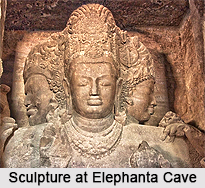
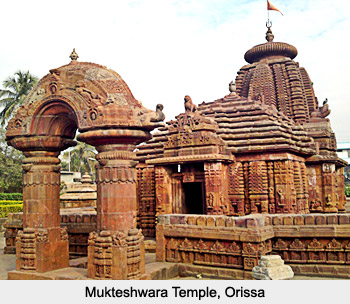
Indian Sculptors during Modern Age have in actuality been the precursors to the contemporary Sculptors in India. Sculpture stamped its feet on Indian plebeian land with the on mark of civilization itself i.e. Indus Valley Civilization. As time rolled on sculpture too evolved and oriental sculpture and architecture has metamorphosed. However they never stayed back with traditional innuendos rather welcomed the vintages of time and space. The
Indian sculptors have lucratively singled out up these changes and offered Indian sculpture wrapped in contemporary taste. In an attempt to trace the history of sculpture and sculptors one needs to rediscover the alleys of
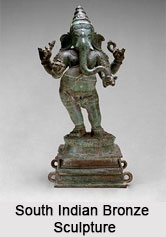
Harappan civilisation. This was more an urban set up where the cities were well planned and simple. But it was the pottery, sculptural relief`s, seals and other handiworks. The bronze sculptures from
Indus Valley Civilisation were as impressive as their well laid out cities.
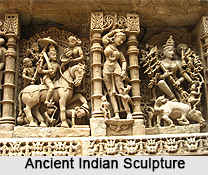
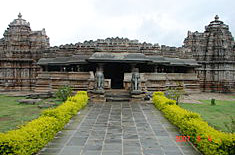
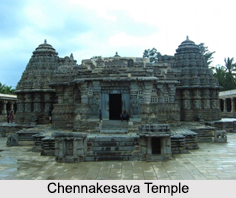
As temples confiscated the religion culture in India, the sculptors fashioned beautiful relief works in order to bedeck the temples. However the identities of the Sculptors remained veiled in a placid veneer of smoky smog. It was in some of the
Pattadakal temples that one comes across the names of the artists. One such name that appears in the
Virupaksha Temple is that of Gundan Anivaritachari. In ancient India this was a rare phenomenon. However with time notions like individuality sprang up. With it came the art of signing a particular work of art. It was done to provide recognition to the sculptors and other artisans.
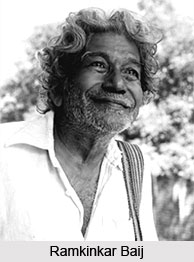
Ram Kinker Baij
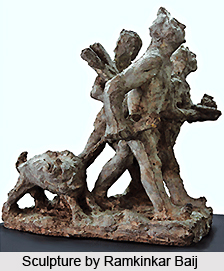
Ram Kinker Baij was one of the former Indian artists who had in actuality understood the importance and the language of Western art amidst global scenario and even understand the language of modern Western art and incorporated the same in his work. It is due to this reason that he is regarded as the father of modernism in art in India. When he appeared in the sculptural field the genre was marked by an age of transition from traditional art to modern art. His work proved to be decisive to Indian art history. Initially Ramkinkar used to paint portraits of
Indian freedom fighters involved in the
Non Cooperation Movement against the
British rulers of India. He took a great interest in human figures, body language and in the general human drama. Modern Western art and pre and post-classical Indian art were his main point of reference. He used local material advantageously and worked combining the skills of a modeller and a carver. The earliest Indian artist to experiment with abstract sculptural forms his sculptures are filled with force and vitality. His oil on canvas paintings have a singular quality - unregimented by dogmas and diligently creative. His work has tremendous energy; joy and reaches out to light. It is earthy and dynamic while showing a growth. His sand and pebble sculptures are noted for a typical, lyrical, metrical sensuality which has an amazing oneness with nature. Indian sculpture was transformed by this artist. He incorporated elements of
Santhal tribal art and life into his own work and enhanced them by an understanding of Western expressionism. Both his sculpture and his paintings are unprompted and bold.
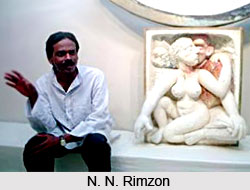 N.N.Rimzon
N.N.Rimzon
N.N.Rimzon is another modern sculptor who was highly predisposed by the leftist background in
Kerala and the socio- political strife at the time of the emergency. Major inspiration of Ramkinker Baij fell on him. The sculptures he conjures by the dint of his genius artistry are trim in an installation-like space and enthused by discontinuities, suggestiveness and contradictions of size, colour, setting. As he directs the viewer to a catered plate of assorted complexities, of his imagination mingled with that of the artist. He relies on indigenous classic art forms of aesthetic, emotive, symbolic, personal, contemporary and utilitarian ones. His approach is post-modernist as well as essentially Indian at a time of cultural and social transition. Rimzon`s later work was rooted in specific classic forms and has a greater simplicity and immediate power. Society fragmentation, individual alienation and archetypal depictions of the human experience dominate his work. His metal, fibreglass and stone sculptures have won him international acclaim. Rimzon`s solo shows were held at Art Heritage, New
Delhi 1991, 93, School`s Gallery, Amsterdam 1994. The main participation`s are: Seven Young Sculptures,
New Delhi 1985, 100 years of Indian Art, National Gallery of Modem Art, New Delhi 1994, Art and Nature, New Delhi 1995, The Other Self, New York and Stadelijk Museum, Amsterdam 1995,2ndAsia Pacific Triennale, Brisbane, Fire and Life, New Delhi 1996.
The artistic vocabulary of the Rimzon is rooted in symbols which are derived from the rural landscape of southern India: the village compound, the palm tree, the temple, the forest pathway and the handmade canoe. The personal language is his weapon, to construct works along with a narrative suggestion. The metaphors are used by him with dexterity to comment on important social issues. Although figures are devoid in Rimzon`s works, there is a suggestion of human involvement.
 Mrinalini Mukherjee
Mrinalini Mukherjee
Mrinalini Mukherjee is another sculptor whose works are enthused by nature the energies of the natural resources. Her crafted sculptures encompass the history of the divine icon with its origin in the organic world and the human body which is symbolic of continuous movement and evolution, possessing a quality of living plants that emerge and stir and burst into flowers. These pieces are an extension of Mukherjee`s iconic early work with natural fibres like hemp, and her ceramic goddesses-blossoms series. Nature was the nourishing factor of her art. She tries to interweave nature with human sculptures. The sculptures knotted painstakingly with hemp ropes in earthy or glowing colours evoke a rich world of growing life, lush vegetation and iconic figures. The strong note of sexuality is manifest in the mysterious folds and the intricate curves and drapes. There is a sensuous quality in her work.
Meera Mukherjee
Meera Mukherjee had worked under the noted Indonesian painter Effendi who was living and working in
Shantiniketan. For her sculptures she used the lost wax process. Her works depict that she had been deeply influenced by the
Dhokra sculptors of
Bastar in
Madhya Pradesh. They arranged wax threads over the core wax before covering the wax model with two layers of clay.
The first layer was in fine clay while the other was coarse and fired hard. The cast bronze would then have a rich and ornamental surface of curves, spirals lines of bronze threads. Meera spent many years staying with them and acquired the basic knowledge of their technique which she put to use in a creative way in her sculptures. She perfected a technique in bronze that was her own. She evolved a unique iconography too. Many of her works show the use of Bengali calligraphy on the surface. Her work documents the life of the common people - fishermen, weavers, women stitching Kantha, commuters in a crowded bus, labourers laying cables and carrying mud. Many of her sculptures are related to music and dance. The sense of movement is seen in her sculptures where a river is visualized as the universe. Celebration of humanism and a yearning for reaching beyond the ordinary and rejoicing in freedom and liberation are the elements that mark the spirit of Mukherjee`s work.

 Indian sculptors have absorbed the various types of metamorphosis of the art of carving out sculptures, presenting Indian sculptures which are wrapped in contemporary taste. The origin of Indian sculpture dates back to the ancient Indus Valley Civilisation. In an attempt to trace the history of sculpture and sculptors one needs to go back to the Harappan civilisation. This was more an urban set up where the cities were well planned and simple. But it was the pottery, sculptural relief, seals and other handiworks. The bronze sculptures from Indus Valley Civilization were as impressive as their well laid out cities.
 Contemporary Indian Sculptors are choral about the Indian identity. Contemporary Indian Sculptors have added weights and volumes of work to the domain of
  Trupti Patel:
 Anish Kapoor
 Chintamoni Kar