Impact of British Rule in India
Impact of British Rule in India was virtually unprecedented, as it has affected the economic, socio-cultural, religious and political state of the country.

Share this Article:

Introduction

Impact of British Rule in IndiaImpact of British rule in India had been widespread throughout the country and affected the cultural, technological, religious, social, political and economic state of India. India had persistently tolerated the British rule for 190 prolonged years, with their everlasting impression been forever etched upon the succeeding Indian citizens.

Impact of British rule in India, in this context, is one that had perhaps emerged forth right from the 16th century, when British missionaries had sailed to eastern soil to spread Christianity, much before the British East India Company. The negative impact of British rule in India was mostly visible in the economic aspect which occurred as a result of de-industrialization and destruction of rural economy. Impact of British rule upon India and Indians both constitutes superior and appalling elements that still in use in present times.


Initial Impact of British Rule in India

British invasion on India was not the first of its kind; India has prior to British arrival, been host to pellets of ruthless foreign invasions. The British, in this regard, were the last to arrive in India. However, when it came to the power game, it undoubtedly was the British and the British East India Company, who completely captured Indian power and people. They covertly and efficiently expanded their empire with the competent aid of Indian soldiers.

Indian soldiers had joined the East India Company army solely for the reason that they received salary on the first day of every month, very much unlike the Indian emperors and their system of reign. As such, impact of British rule in India already had begun to have its impact, with the very first Christian missionaries arriving to India, with the intention to turn a majority of population into Christians. They tried to cast Christianity in the light of a better religion and with economic inducements convinced the poor Indians into Christianity.


Religious Impact of British Rule in India

The very foremost impact of British rule on India was the religious impact, as was established by the missionaries and their establishment of churches in every possible corner of the country. In this regard, the port cities like Kolkata, Mumbai and Chennai gained enough importance, due to their accessibility for navigational purposes. They were later turned into the 3 cardinal presidency towns.

The keen attempt of British Christians to turn several bunches of Indians into a complete unfamiliar religion was successful, though only in parts. Some had gladly accepted it, in fear of inviting the rage of the company, while others had turned hostile, in turn giving rise to collisions and difference of opinion.


Socio Cultural Impact Under The British Rule

Socio Cultural Impact Under The British RuleThe British era is considered one of the most eventful eras in the history of India. The era brought about a lot of changes in almost every aspect of the Indian society. The socio cultural impact under the British rule was probably the most prominent one amongst them. The rational and scientific outlook of the British way of life influenced the Indian society from the very beginning of the British imperialism. The art, architecture, painting, literature, poetry, drama, novels and even Indian religion and philosophy were greatly influenced by the western thoughts. However, most of the changes were not brought about by the British people. The English educated Indian people like the journalists, teachers, lawyers, doctors, etc. took the responsibility of leading movements for making the significant socio cultural changes.

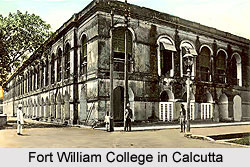
The socio cultural impact under the British rule started with the establishment of various English schools in different cities of India. The British rulers first studied the Indian languages, literature, religion and social structure and then educated the Indians in English to establish a new administrative structure. The British Governor, Warren Hastings (1772-85) was a supporter of `Orientalism` and during his tenure, the British rulers demonstrated linguistic proficiency, a deep understanding of India and a sense of benevolent responsibility in regard to the Indian people. He established the Calcutta Madrassah for the Muslim officials of the East Company and the students were taught in Persian in this institution. The Orientalist dream of Hastings was taken forward by Lord Wellesley, who established the Fort William College to train the civil servants.

The scholars at the Fort William College in Calcutta started to translate the ancient texts, write grammars, compile dictionaries and collect manuscripts to research further on India. On the other hand, the Baptist missionaries in Serampore became successful to print works in the Indian vernacular languages like Bengali, Urdu, Oriya, Tamil, Telugu, Kanarese and Marathi. Many individuals and organisations also started to study literature in both classical and vernacular languages during that period. As a result, the importance of the vernacular languages increased. The demand for the use of English as the language of administration and education was also increased during that time. The scenario was similar in Bombay, Gujarat, Tamil Nadu and other parts of India.

During the first half of the nineteenth century, the British rulers decided to make English as the primary medium of education in India. They also envisioned the creation of a class of people in India that would act as a link between the rulers and ruled. The class would also become a source of inexpensive manpower for the lower levels of the administration. With the efforts made by the British, knowledge in English soon became a key to get government services for the Indians. It also became a key to make successful careers in the fields like law, medicine, teaching, business, journalism, etc. The Indian people started to learn English to get advantage in professional and other fields. With the establishment of various educational institutions, the number of English educated Indians increased significantly.

Indian response to new opportunities created by the British was determined largely by their place in pre-British society. At the height of the Orientalist period, scholars of Sanskrit, Arabic, Persian, and of South Asian learning were hired by such Indian educational institutes. With the shift to English education those castes that were already literate became students to master this new language; in practice this meant primarily Bengali Hindus of the Brahman, Baidya, and Kayastha castes. Earlier individuals from these groups learnt Persian to gain employment under the Mughal and post-Empire Muslim rulers. With the influence of the British on the mode of education they switched to English.

By the late nineteenth century, new anglicized elite began to establish institutions to serve their own interests. For instance in 1816, the Hindu College in Kolkata was founded. On the other hand in 1825 the Elphinstone Institute was established in Bombay (Mumbai). These educational institutes were primarily responsible for producing the core of English educated elite. A trend toward English education and the acceptance of western knowledge appeared in Poona. In 1832, the government founded an English high school. To counter this socio-cultural impact of the British ways several associations were formed across India to revive the ancient Indian traditions.

Besides education western models and English pattern were followed in the social etiquette, dress, eating habits, dwelling units, awareness in the public and hygiene, new modes of entertainment etc were penetrated deep into the Indian way of life and society. Although the traditional Indian habits were dominating in the countryside, the western outlook influenced the inhabitants of the urban India. With the arrival of the British people in India, the rapid changes took place in the mainstream of Indian society. The international currents influenced the Indian pattern of social outlook, dress, food habits and even fashion with the British rule in India.

The British rulers built town hall after the Renaissance palazzi style, railway stations in the Gothic cathedral style, government building and secretariat offices in the western style blended with the traditional Mughal style. However, the socio cultural impact under the British rule was more prominent in the urban areas rather than the rural areas, where the traditional Indian habits were in dominance. The socio-cultural influence was prominent in the field of painting as well. The eminent Indian painters like Ravi Verma, Abanindranath Thakur, Jamini Roy, etc were greatly influenced by the Western style. Apart from them, the great literary figures like Rabindranath Tagore, Aurobindo Ghosh, Sarojini Naidu, Mulk Raj Anand, R.K. Narayanan, etc. were also influenced by the English pattern and the spirit of Renaissance.

With the course of time, the way of learning in India was also influenced by the English style and the English words and idioms were penetrated into the vernacular languages. As a result, even the illiterate rural people in India were acquainted with the English terms and idioms. In this way, the socio cultural impact under the British rule completely spread through the Indian society and changed the courses of Indian pattern of socio-cultural life.

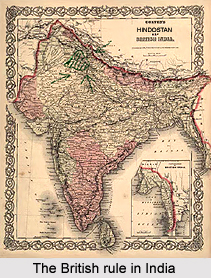
Economic impact of the British rule in India

Economic impact of the British rule in India was really vast. The chief motive of the British to establish political control in India was mainly associated with the exploitation of economic and commercial conditions of the country. They wanted to establish a colonial market in this country for the British goods. British impact on the economic conditions of India was really devastating and harmful. Britain used the most complicated methods to exploit India`s vast rich economic reserves of India. After a control of two hundred years the British completely shattered the economic set up of India. As a result, after the independence, the scenario of the country was that of an economically underdeveloped nation prevailing with hunger, poverty, low national income, etc.

Economic Impact of British rule on Agriculture and Land Revenue : Indian agricultures received major attention under the East India Company. It was mainly because of the fact that the chief source of the state income was land revenue. Moreover, the British government mainly wanted to establish their agricultural base in this country. So that the agricultural produces in India could provide cheap raw materials to industries in England. Further, East India Company tried various experiments to maximize the land revenue by resort to the method of oppression and repression to the peasants. The system of farming of land revenue became outdated. Lord Cornwallis introduced `Permanent Settlement` or a system of Land Revenue in Bengal, Bihar and Orissa, in the year 1793, through which the Zamindars gained permanent ownership over the land.

Subsequent administrators introduced the Ryotwari system in the Bombay Presidency and most of the parts of the Madras Presidency. The British administrators decided and set the revenue with the farmers directly, which was pretty high in most regions. The Mahalwari system proved extremely devastating in parts of Punjab, Uttar Pradesh and some regions of Central India. The Zamindary system encouraged absentee landlordism. It eventually created a host of intermediaries between the state and the cultivator. This complicated system of land revenue created a group of moneylender, who otherwise oppressed the poor peasants by lending them at high interests. The poor cultivators could not repay those high interests and ultimately submitted to those moneylenders. As a result famine was the regular feature of the time. The commercialisation of agriculture had severely affected the rural economy. The existing structure of agriculture was already destabilized, but it was further wrecked by the cultivation of crops and food grains for the market rather than for consumption. This further diminished the economic conditions of the peasants.

Economic impact of British rule on Industry : Indian industries suffered massively under the British domination. The superiority and extensive sale of the Indian handicraft in Europe was directed to the commercial interests of the East India Company. The governments in the early years of the 18th century imposed heavy duties on Indian textile imports in Britain. After the Napoleonic wars the Indian markets were made open to the British for free trades. The same British government now permitted British machine made goods to be poured in India duty free or at nominal cost only. The policy of one-way free trade, introduced in India made the Indian handicrafts losing its market. This caused a great misery to a major section of Indian population.

The impact of British rule resulted in capitalism and bourgeoisie commerce to attain a flourishing prosperity. The capitalist mode of production and bourgeoisie trends in the commercial transaction destroyed the handicraft industries in the European countries too. The British government also wrecked the Indian cottage industries, which served as one of the major sources of trade. Industries such as pottery, tanning, woollen and silk textile, metal and paper were adversely affected, resulting in weakening of the rural economy. The evil impacts of the industrial revolution in England also affected India. The process of industrial regeneration did not start in India, because of British imperialism. Hence India was subjected in an ongoing economic stagnation.

The imperial rulers were far from planning in the industrial developments in India; rather they planned to de-industrialise India. Britain`s chief interest was to constitute India as an agricultural farm for industrialised Britain. However several Indians industries were cropped up from the situation created by the World War I. The economic depression of 1930s suffered from finances disability, which was generally controlled by the British finance and capital. Due to the development of industries like iron and steel, heavy industries, metallurgical etc, traditional industries like textile, cement, jute, paper, sugar, pig iron etc suffered a great deal.

Thus, it is quite clear that the sole mission of the European in India was the economic exploitation. The burden of the Europeans was carried on through the economic exploitation in India. The British rulers created new economic structure that solely belonged to the colonial institutions. The British established a colonial economy, colonial society and even colonial ideology. The institution of landlordism infested with narrow political consideration, communalism, regionalism etc were the immediate results of the British economic policy. Moreover `distorted modernization` created new problems. In 1947, India represented a ruined economy, a devastated society and evil effects of neo-colonialism.

Thus, it can be said that commercialisation of agriculture, increase of agricultural labourers, growth of money lending class, excessive drain of wealth and demolition of handicrafts and cottage industries from the country are some of the major impacts on Indian economy by the British rule.


British Rule Impact On Social Groups

The peasants, artisans, craftsmen and plantation workers all were victims of British imperialism. The workers in modern industries had a new social outlook. They were concentrated in factories and cities. They lived and worked under highly unsatisfactory conditions. The average worker lived below the margin of existence while conditions in the tea and coffee plantations were also worse. The planters kept the workers on the plantations as virtual slaves. The Government gave them full help to enable them to keep the plantation workers under oppressive subjugation. The planters also frequently tortured them physically.

In course of time the working class joined the peasants, the craftsmen and the artisans in the struggle against imperialist exploitation. The status of the middle and the lower middle-classes were also miserable. In the first half of the 19th century the British government recruited a large number of educated Indians as petty government servants. Later some more found employment in schools and law courts. The number of merchants increased along with the trade expansion. But by the end of the 19th century even those few who were educated could not find employment. All these who constituted the middle and lower-middle classes of society realized that only a country that was economically developing and culturally and socially modern could provide them economic and cultural opportunities to lead a worthwhile and meaningful life.

The Indian industrial capitalist class, which developed after 1858, had to face the competition of the British capitalists. It realized that the official trade, tariff, transport and financial policies of the Government checked its growth. After 1918 the giant British industrial corporations began to invest in Indian industries in order to take advantage of the tariff protection. This was granted during 1920`s and 1930`s. Thus the Indian capitalists realized that they needed a government favorable to them. This could be only a national government.


Constructive Impact of British Rule in India

Amidst all these alarming states and conditions, the imperial rule were compassionate enough to introduce European education in India. This ground-breaking impact of British rule in India truly has benefited India in the long run, carving out a prestigious position of India in the world map. Knowledge of English was essential to earn a job in the British bureaucracy, in the British trading firms and of course in the British Army in the officer`s level. Many dignified concepts like parliamentary democracy, the European scientific ideas, industrialisation and liberal human philosophy permeated into the Indian brain.

The British had introduced the system of Railways (From Mumbai to Thane at First) in a chain method, with the whole of the country staying witness to placing of railways tracks, railway platforms and railway carriages. Indeed India`s railways, postal services, legal and judicial systems and other government-based services have all been derived primarily from the British administration.

British rule in India virtually had helped unify India, which till then was quite fragmentary. The in-built inferiority complex was the characteristic trademark of the mass of the native population, till Mahatma Gandhi and many other nationalist leaders like Netaji Subhash Chandra Bose, Jawaharlal Nehru arrived onto the scene. The bulk of Indian students who set sail to England for higher studies were at first profoundly shocked in seeing white men and women performing lowly jobs in England.

Even though the impact of British rule upon India has mostly been adverse and affected the country negatively, there was still a feeble attempt to maintain equilibrium in Indian society and the country as a whole.


Share this Article:

Related Articles

More Articles in History of India


History of Uttar Pradesh
The state was the heart of Mahabharata war and the history of Uttar Pradesh is very much the history of India. The place finds its mentions in Hindu epics Ramayana and Mahabharata.
History Of Archaeology In India
History of archaeology in India contributes a lot to define the past history and the social life of India.
Mughal Architecture during Babur
Mughal architecture during Babur marked the foundation of a new architectural era in India, blending Timurid, Persian, and local influences. His reign emphasized garden design, notably the Charbagh layout, and modest yet elegant structures. As the first Mughal emperor in India who introduced this architecture during 16th century Babur’s creations reflected symmetry, functionality, and a deep appreciation for nature.
Princely State of Patdi
The Princely State of Patdi was one of the many princely states under the British Raj, ruled by local Kadva Patidar leaders under indirect British control. Known for its strategic location near the Little Rann of Kutch, Patdi played an important role in salt production and regional trade. Princely State of Patdi or Patri was incorporated as a part of the Baroda Agency, which was a sub division of Western India States Agency.
Architecture during Sayyid and Lodi Dynasty
Architectures during the Sayyid and Lodi dynasty were mainly the tombs and monuments for the dead rulers. It were carefully designed and meticulously constructed.
Brahmanical Sources of Ancient History
Brahmanical Sources of ancient history are contained in the Vedas and they constitute one of the most important literary sources of information about ancient India.
Female Education In British India
The over brimming enthusiasm among zealous Hindu reformers welcomed female education in British India.
Revenue System of Mauryan Empire
Revenue system of Mauryan Empire can be divided into eight categories. The principal revenue of the state was the land revenue, taxes from traders, artisans and professional taxes were also collected.
Mughal Architecture During Jahangir
Mughal architecture during Jahangir`s period was relative dull in comparison to that of Akbar dynasty.
Princely State of Satlasna
Princely State of Satlasna was amongst the former native states of India that was appointed as one of the Indian princely states during the early 19th century.
Coins of Chola Empire
Coins of Chola Empire were issued in gold, silver and copper and carried the Chola emblem.
Social Life during the Pala Period
Religious toleration and simple living were the characteristics of social life during the Pala period.
Coins of the Chalukya Dynasty
Coins of the Chalukya Dynasty was reintroduced in the South India after a brief break of coinage less period of nearly three century. Chalukyas issued coins only in gold and they exhibit a brilliant artistic skill of the engraver.
Costumes of Indus Valley Civilisation
Costumes of Indus valley Civilization have been considered as the basis for Indian clothes. Sophisticated ornaments and make up were used during that age.
Development of Science under Gupta Empire
Development of Science under Gupta Empire was progressive and it had attained considerable perfection. Mathematics, astronomy, medicine, chemistry, physics and metallurgy were the most prominent of the sciences at that time.
Culture under Delhi Sultanate
Culture under Delhi Sultanate had enduring aspects to it. It included the society, the religious condition, literature and art and architecture of that period.
Princely State of Hapa
Princely State of Hapa was incorporated as a part of the Baroda Agency, which was under the administrative control of the Western India States Agency.
Economy Under Chola Dynasty
Economy under Chola dynasty was strong and well developed. The economic life of the people of the Chola Kingdom was well balanced with their social life.
Coins of Khilji Dynasty
Coins of Khilji Dynasty had an influential feature that was followed by the other dynasties.
Religion During Mauryan Dynasty
Religion during Mauryan dynasty became a considerable episode in Indian history with an esteemed lineage of rulers.