
Indian Saints embody the highest ideals and are credited for demonstrating the reality of spiritual awareness. India is known to be the land of Saints and Gods. They help people to attain positive actions, devotion, spiritual practice and mental discipline by providing appropriate conditions and knowledge. It is the legacy of Indian Saints that represents the true identity of Indian ideology. Since time immemorial, India has been the seat of several religions. Numerous Indian saints took up the responsibility of popularising the postulates of various sects.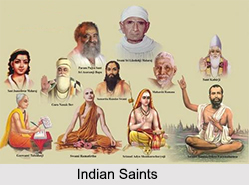
Indian Saints are considered to be the manifestations of God. They have set themselves as role models for the masses to follow. Whether it was Ramakrishna, Shankaracharya or Khwaja Muinud-din Chishti, all of them have guided their followers to achieve peace of mind through spirituality. Indian saints have adopted simple measures to explain the religious philosophies. Most of them adopted the method of narrating tales to educate the masses. Some of the Indian saints, however, propagated renunciation of the worldly affairs to achieve salvation.
Indian Saints
Indian Saints have contributed greatly in the social reformations. They have revived spirituality in the subcontinent through their deep understanding of religion and life. They are believed to be the manifestations of God.
Introduction
Hindu Saints of India
Hindu Saints are the revered personalities associated with Hinduism in India. Over years, through their wisdom and teachings, they have reached the status of saints with a plethora of people who follow the path illuminated by them. Some of them have also gained God-like status and are considered to be reincarnations of deities. Mostly these saints are known to have renounced the world and are also recognized as swamis, rishis, sadhus and gurus. Ramakrishna Paramahansa, Swami Vivekananda, Swami Ramanand, Adi Shankara, Chaitanya Mahaprabhu, Dayananda Saraswati are some of the famous Hindu Saints of India.
Christian Saints of India
Christian Saints of India have been considered as religious heroes by the people belonging to the Christian community and are believed to have a special association with the sacred and moral perfection. They have exceptional teaching abilities and have gained repute in both ancient and contemporary eras. Although there was no mention of saints during the time of Jesus Christ and his disciples, during 1st to 4th centuries, the Christians started worshiping the martyrs as saints. The belief gradually gained prominence over time. Famed Christian Saints of India include Saint Geevarghese Mar Dionysius of Vattasseril, Parumala Thirumeni, and many others.
Muslim Saints in India
Saints in Islam
The concept of Saints in Islam holds that a reputation as a saint may be gained in many ways. A man may become renowned as a saint by means of miracles, ecstasy, hereditary holiness, charity, asceticism, mendicancy, the foundation of a dervish order, or even lunacy. Saints receive their power from God and do not acquire it by their own merits. The hierarchy of the saints is much the same as that of the mystics- some are revered throughout the world, while others are local. The power of a saint is called Baraka, blessing, and this is imagined as almost tangible. By kissing the saint`s hand or tomb, this power passes to the worshipper, who will be helped by it. Like all holy things, it may be dangerous to those who would misuse it. Orthodoxy recognises saints who work wonders, but these are not called miracles but charismatic gifts. It is not the man who works but God who works through him. A common form of praise is "his prayers were answered", in other words, he could be relied on to get from God what he asked. Sainthood is earned after death, so worship at shrines became popular.
It is believed that since no one dares to violate the sanctity of a saint`s tomb, anything left under his protection is safe. The peasant leaves his plough there, secure that none will touch it. Usually, a saint has an annual festival. There may be a procession, prayers in the mosque, and a fair. All tastes are catered for, and all enjoy themselves.
Closely connected with saints are the Sayyids and Sharifs. It is usually said that a Sayyid is a descendant of Hasan and a Sharif a descendant of Husain, the two grandsons of the Prophet Muhammad. However, this is not always right. In South Arabia, Sharif is the feminine of Sayyid. In South Arabia the Sayyids do not carry arms (there are exceptions) and hold a position above the warring tribes which enables them to act as arbitrators and peacemakers. In Morocco some of them, like the Sharif of Wazzan, are saints and are almost worshipped. There are also whole tribes of Sharifs, real and so-called. In South Arabia, there are persons and clans called Mashaikh (the plural of shaikh) who are usually descendants of local saints and so are natives of the country as opposed to the Sharifs who, if genuine, must be immigrants. The holiness of their ancestor still clings to them and gives them great religious influence. In India Khadir is connected with water and is invoked when there is too much or too little, in drought and flood. He rides on a fish which became the arms of the rulers of Oudh. He has no shrines but it is customary to make little rafts carrying a lamp, flowers and sweetmeats and set them adrift on the river at the end of the rains.
Sikh Saints of India
Sikh Saints of India have played a crucial role in establishing the budding religion of Sikhism in the country. Their contribution towards the religion has been reckoned as immensely significant. Be it Bhai Mardana, the first disciple and lifelong companion of Guru Nanak, Baba Buddha who served under the first six Gurus or Bhai Nand Lal, a great poet and a close associate of Guru Gobind Singh; the Sikh saints have played a vital role in elucidating the spiritual concepts of Sikhism and teaching the followers the right path. Baba Deep Singh, Banda Singh Bahadur, Bhai Mani Singh and Bhai Gurdas were other prominent Sikh saints.
Besides the religion, several Indian saints have worked for social reformation. Through education, they have spread awareness and thus, helped the masses to unchain themselves from several social evils, such as untouchability, superstition, discrimination and others. Along with these, Indian saints have also been instrumental in upholding Indian culture and its glorious past.
Indian Bhakti Saints
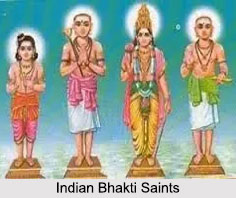 Indian Bhakti Saints are the teachers who strongly preach the need for tolerance among humans and religions. They belonged to various backgrounds, but mainly from the lower castes. The Bhakti Movement was the outcome of rigidity in religion and the objects of worship.
Indian Bhakti Saints largely rejected the hereditary caste system and its emphasis on prescribed ritual, stressing instead the need for morality, purity of heart, and an attitude of selfless service. They expressed their sentiments through song, poetry, and music, often attracting thousands of followers. They believed in the unity of God, and they regarded true devotion, "Bhakti," as a means of attaining God; denounced the caste system, idol worship, and pilgrimages; and they brought about socio-religious reforms in Hindu society.
The following are the popular Saints of Bhakti Movement. They are:
Ramanujacharya: Sri Ramanuja Acharya was an Indian philosopher and is recognized as the most important saint of Vaishnavism. His most outstanding contribution is the abolition of distinctions of caste among his followers.
Nimbarka: Sri Nimbarka was the embodiment of mercy, piety, love, kindness, liberality, and other divine qualities. He did rigorous austerities at Neemgram and had Darshan of Lord Krishna in that place. He is believed to be the incarnation of the Sudarshana Chakra of Lord Vishnu.
 Madhvacharya: Madhvacharya was a great religious reformer and an orthodox commentator on the Brahma Sutras and the 10 Upanishads. He propounded the philosophy of Dvaita or Dualism. He declared that the path to salvation was open to all and was not limited by birth.
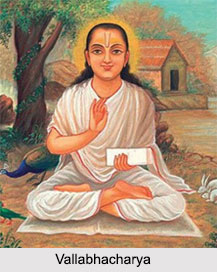
Vallabhacharya (1481-1533): A Telugu Brahmin, he founded the Pushti-Marg (path of nourishment), which affirms the role of grace in reaching salvation. He taught that Sannyasa is not possible in the current age.
Ramananda: The leader of the Bhakti movement focusing on the Lord as Rama was Ramananda. He taught that Lord Rama is the supreme Lord, and that salvation could be attained only through love for and devotion to him, and through the repetition of his sacred name.
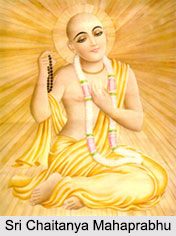
Sri Chaitanya (1486-1534): Founder of Bengali Vaishnavism, Sri Chaitanya Mahaprabhu was an ascetic Hindu monk and social reformer in 16th century Bengal. A great proponent of love and devotion for God, Bhakti yoga, Chaitanya worshiped the Lord in the form of Krishna.
Kabir (1440-1518): He is famous for his songs and poems used by Hindus, Sikhs, and Muslims alike. His followers are called the Kabir Panthis. He made the most earnest efforts to create a spirit of harmony between Hindus and Muslims.
Guru Nanak: Guru Nanak, the first Sikh Guru and founder of Sikhism, too, was a Nirguna Bhakti Saint and social reformer. He was opposed to all distinctions of caste as well as the religious rivalries and rituals. He preached the unity of God and condemned the formalism and ritualism of both Islam and Hinduism.
Dadu Dayal (1554-1603): Dadu Dayal was a religious reformer, a poet-mystic, and a spiritual Master of Nirguna Bhakti from Rajasthan. Despite the fact that hailing from the lower rungs of society like Kabir, he was persuasive in making a more prominent effect upon the general public.
 Mira Bai (1547-1614): Possibly the most famous woman saint within Hinduism. She was a Rajasthani princess who considered Krishna her real husband and was consequently persecuted by her own family. Her songs and poems are still recited by Krishna devotees.
Tulsidas (1511-1637): He wrote the popular version of the Ramayana known as the "Rama Charita Manas," perhaps the most popular book of North India.
Tukaram (1608-1649): A saint from Western India who worshipped the famous deity of Vishnu known as Vithala or Vithoba in Pandharpur, Maharashtra. He was part of an important Vaishnava tradition known as Dasa Kuta.
Vaishnava Saints of India
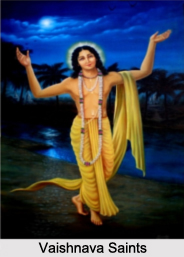 Vaishnavism is the branch of Hinduism in which Lord Vishnu or one of his incarnations is worshipped as the supreme God. Members of Vaishnavism are called Vaishnavites or Vaishnavas. Brief biographical information about the Vaishnava saints is listed below:
Abhirama Thakura
He was one of the most vigorous preachers among the associates of Lord Nityananda Prabhu.
Advaita Acharya
He was an intimate associate of Sri Chaitanya Mahaprabhu and is considered an incarnation of Sadashiva and Mahavishnu. It was in response to His calls that Sri Chaitanya Mahaprabhu descended to this world.
Baladeva Vidyabhusana
He is the author of Govinda Bhasya, the first Gaudiya commentary on the Vedanta-sutras, appeared in Remuna, Odisha, in the late 1600s. He also wrote commentaries on the Upanishads and the Bhagavad Gita.
A.C. Bhaktivedanta Swami Prabhupada
He was the Founder Acharya of the International Society for Krishna Consciousness. It was he who brought the teachings of Lord Chaitanya out of India and spread them all over the world.
Bhugarbha Goswami
He along with his intimate friend Lokenath Goswami, located lost sacred places in Vrindavana by the order of Sri Chaitanya Mahaprabhu. To avoid material distractions, Bhugarbha Goswami would perform his worship to Lord Krishna in a cave.
Devananda Pandita
He was a professional reciter of Srimad Bhagvatam who turned to pure devotional servant during the time of Lord Chaitanya. Devananda Pandita used to explain Srimad Bhagvatam through impersonalistic interpretations.
Dhananjaya Pandita
He took part in many of Lord Chaitanya"s Kirtana pastimes in Navadvipa. On the order of Lord Chaitanya, he travelled widely and preached Krishna consciousness.
Gadadhara Pandita
He is among the group known as the Panchatattva, consisting of Lord Chaitanya Mahaprabhu and four of his closest associates. Gadadhara Pandita spent most of his life in Puri and is considered an incarnation of Sri Radharani, the eternal consort of Sri Krishna.
Gangamata Goswamini
She was the daughter of King Naresa Narayana of Bengal. From childhood she showed deep devotion to Krishna. Refusing to marry and renouncing her kingdom, she went in search of a bona fide guru. In Vrindavana she accepted Haridasa Pandita as her guru and took instructions from him. Performing severe austerities, she wore only rags and begged food door to door.
Gopala Bhatta Goswami
He was one of the 6 Goswamis of Vrindavana. As a young boy, he received the mercy of Lord Chaitanya. While touring south India, Lord Chaitanya stayed four months at Gopala Bhatta"s house. Gopala Bhatta Goswami later joined Lord Chaitanya"s Sankirtan movement.
Gour Govinda Swami Maharaja
 He is a disciple of his divine grace A.C. Bhaktivedanta Swami Prabhupada who spread Krishna consciousness throughout Odisha. He translated many of Srila Prabhupada"s books into Oriya, worked to establish a large ISKCON temple in Bhubaneswar, travelled and taught Krishna consciousness throughout the world, and brought many people to the lotus feet of Srila Prabhupada and Krishna.
Govinda Ghosh
He is an intimate associate of Lord Chaitanya and was known for his sweet Kirtana at the annual Jagannatha Puri Ratha Yatra festival. Lord Chaitanya would at once begin to dance whenever Govinda Ghosh would sing.
Haridasa Thakura
He is considered the namacharya, the spiritual master in chanting the holy name of Krishna. He would not eat or sleep until he finished his daily quota of chanting the name of Krishna 300,000 times. Along with Lord Nityananda, Haridasa Thakura spread the chanting of Krishna"s name throughout Bengal.
Jagadisa Pandita
He lived near Jagannatha Misra, the father of Lord Chaitanya, in Sridhama Mayapur. Jagadisa Pandita assisted Lord Chaitanya in spreading the sankirtana movement in Jagannatha Puri.
Jagannatha Dasa Babaji Maharaja
He is the spiritual master of Srila Bhaktivinoda Thakura who confirmed Srila Bhaktivinoda Thakura"s discovery of the birthplace of Lord Chaitanya.
Jagannatha Misra
He appeared as the father of Lord Chaitanya Mahaprabhu.
Jahnava Mata
She was the wife of Lord Nityananda Prabhu. Especially after the disappearance of Lord Chaitanya and Lord Nityananda, she became a leading figure in the sankirtana movement.
Jayadeva Goswami
He is the author of the Gitagovinda, a poem about the pastimes of Sri Radha Krishna. He appeared 300 years before the advent of Lord Chaitanya.
Jiva Goswami
He is the nephew and disciple of Rupa Goswami, was one of the six Goswamis of Vrindavana. Jiva Goswami was the greatest and most prolific scholar of his time.
Lokenath Goswami
He was a personal associate of Lord Chaitanya. Lord Chaitanya ordered him and Bhugarbha Goswami to find the lost holy places of Vrindavana.
Madhavendra Puri
He was the spiritual master of the spiritual master of Lord Chaitanya Mahaprabhu. Madhavendra Puri established the worship of the Gopala Deity, who is today worshiped as Srinathji.
Madhvacharya
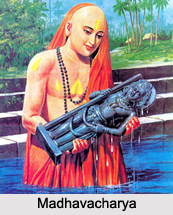
He is the principal Acharya, or spiritual teacher, in the Brahma Sampradaya, the Vaishnava disciple"s line from which the Gaudiya Sampradaya descends. Madhvacharya studied the Vedas under the compiler of the Vedas, Vyasadeva, in the Himalayas.
Lord Nityananda Prabhu
He appeared as Lord Chaitanya"s principal associate for spreading the congregational chanting of the holy names of the Lord. He especially spread the holy name of the Lord throughout Bengal. He is considered an incarnation of Lord Balarama.
Paramesvari Dasa Thakura
Also known as Paramesvara Thakura, he was an intimate associate of Lord Nityananda Prabhu.
Pundarika Vidyanidhi
He was a disciple of Madhavendra Puri and was the guru of Sri Gadadhara Pandita. In Krishna"s pastimes he was Vrisha Bhanu, the father of Srimati Radharani.
Ramanujacharya
He was the principal Acharya in the Sri Sampradaya, one of the four main lines of Vaishnava teachers and disciples. A staunch proponent of the philosophy of personalism, he taught that although the Supreme Lord and the individual souls are qualitatively one, there is still a difference between them, for the Lord is infinite and the living entities are infinitesimal.
Srivasa Thakura
He was a member of the Panchatattva, consisting of Lord Chaitanya Mahaprabhu and his 4 immediate expansions and energies. Srivasa Pandita never made any effort to support himself or his dependents and because of his full dedication to Lord Chaitanya and his mission, Lord Chaitanya provided for all his needs.
Svarupa Damodara Goswami
He was the personal secretary of Sri Chaitanya Mahaprabhu. He is said to have been like a second Mahaprabhu because he deeply understood the Lord"s conclusions on Krishna Bhakti, devotional service to Krishna. He was a great scholar as well as an expert musician.
Women Saints of Tamil Nadu
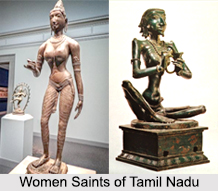 Women Saints of Tamil Nadu are many in numbers and most of them have expressly shunned any kind of publicity. The lives of devout women illustrates, how God entered their lives and how they sublimated their lives into one of service and dedication. Among these were saints in Shaivism and Vaishnavism, some are reputed poets, some were crowned queens and a few others had been celebrated in literature and folklore. The famous women saints of Tamil Nadu are as follows:
Vasuki (1st century A.D.) - wife of Tiruvalluvar, the author of Tirukkural, was the blossom of Indian womanhood and a model for all women. God came to her in the form of her husband and by serving him; she has become immortalized in legend and literature.
Punitavati - Punitavati was the saint of Karaikal, also called the "Mother", a canonized Shaiva saint of the 5th Century. She has immortalized her experiences in 143 beautiful songs which are included in Shaivite hymn books. The songs are supremely inspired, being the natural and soulful outpourings of an extremely joyous yet simple being, who had a blissful experience of divine manifestation.
Tadagai - Tadagai from Tiruppandal in Thanjavur who visited the temple with her father every day and continued to do so even after she became a beautiful young damsel. Lord Shiva in the form of a Shivalinga here is said to have bent his head forward to help the girl place the garland of flowers around his head and the idol remained in that inclined position.
 Tilakavati (7th century A.D.) - Tilakavati was the firstborn child in a farmer`s family. She had a little brother and lost her parents when her brother was very young. She was engaged to Kalippahai who was killed in a battle even before they were married. She decided to live for her brother and lived a life of self-imposed widowhood, austerity and penance. Tilakavati lived on through devotion to God and through love for her brother, which was sublimated into love for all life.
Queen Mangaiyarkkarasi - Model of womanhood, a political diplomat with religious freedom Queen Mangaiyarkkarasi (7th century) was the queen of the Pandya kingdom in South India who had the highest dedication to god and above all, modesty and duty to the home.
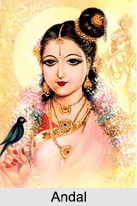
Andal (8th century A.D.) - Andal was the adopted daughter of Periya Alvar and was also called "Goda". Being an "incarnation of Bhudevi", her love spontaneously flowed towards Vishnu. She has sung more than a hundred songs on the theme of her love for the Lord and they are known as her tirumozhi or sacred words.
Awai (8th century) - Awai was a very popular bard who went about the courts of local chieftains singing their praises and befriending them. Early upbringing by a wandering minstrel seems to have given her the wanderlust and made her a singer and a poet. Her words were pearls of wisdom and godliness, helping the people towards a higher spiritual life.
Vandi (9th century) - Vandi was a woman of Madurai. She was a very pious woman, always keeping her mind on Lord Shiva in the Madurai temple. Her story is one of the most cherished legends of Shaivites and it is also called one of the 64 spots of Lord Shiva in the city of Madurai.
Queen Sembiyan Madevi (920-1001 A.D.) - Queen Sembiyan Madevi was the queen of Gandaraditya, the Chola ruler of Kaveri delta in 950-957 AD. The queen sublimated her devotion for her husband into a love for God after his death and succeeded in converting the vast Tamil nation into a nation dedicated to the service of God.
Alagi - Alagi of Thanjavur (11th century) an old woman of Thanjavur whose devotion to God was made known to the public by the Lord himself. The place where she lived has come to be known as "Alagi Gardens" and a small tank in the front of her hut have come to be known as the "Alagi Tank".
Athuloi (11th century) - Athuloi was the daughter of Periyanambi, one of the spiritual preceptors of Ramanuja, the founder of Vaishnavism. The devotion and filial affection of this little girl opened up a new chapter in Vaishnava history, namely the recognition of a casteless society among the followers.
Recently updated articles in Religion in India
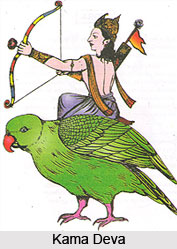
Kusumayudha
Kusumayudha is a name of Kamadeva, the Hindu God of Love. Depicted with a sugarcane bow and flower-tipped arrows, he represents attraction and longing...
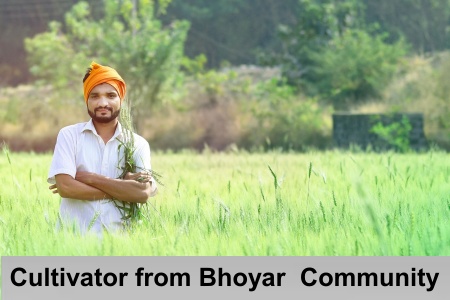
Bhoyar Caste
Bhoyar Caste is largely found in the Central Provinces of the country. Traditional occupation of Bhoyars is agriculture. They are good cultivators and...
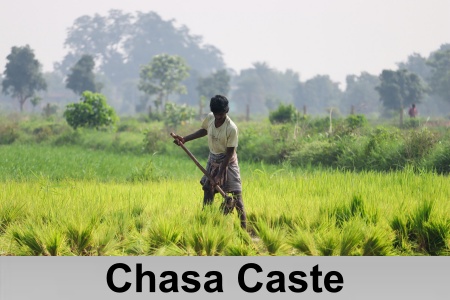
Chasa Caste
Chasa caste is a prominent agrarian community native to Odisha. Traditionally associated with cultivation and farming, Chasas have historically played...
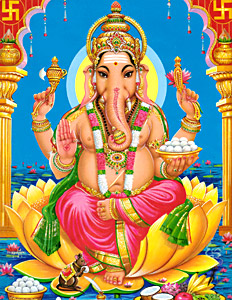
Vigneswara, A Form of Lord Ganesha
Lord Vigneswara is another form of Lord Ganesha or Vinayaka, prominently worshipped as the God of intelligence and good luck in the Indian subcontinen...
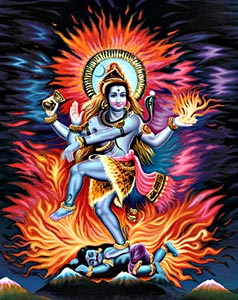
Maheswara
Maheswara, meaning “the Great Lord,” is a revered name of Lord Shiva in Hindu tradition. It represents Shiva’s supreme authority over creation, preser...
Related articles in Religion in India
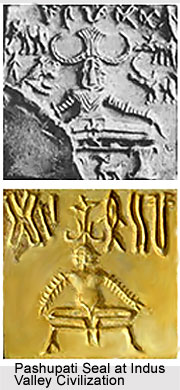
Religion in Indus Valley Civilization
Religion in Indus Valley Civilisation included Hinduism, Buddhism and Jainism. Details about the religion in Indus Valley Civilization have been gathe...
Iyer Brahmin
Iyer Brahmins are originally from Tamil Nadu of South India. They are known for their adherence to Advaita philosophy and Smarta traditions. Tradition...
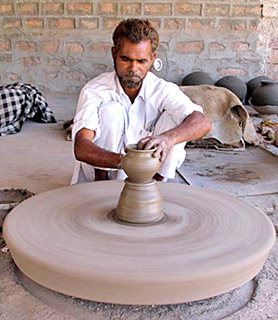
Kumbhakar / Kumhar Caste
Kumbhakar or Kumhar caste is a traditional artisan community in India known for pottery making. Derived from Sanskrit word Kumbhakar, meaning potter,...

Gujjars in Mughal Era
Gujjars in the Mughal era enjoyed great power. Further their power increased with the decline of Aurangzeb, Mughal emperor.
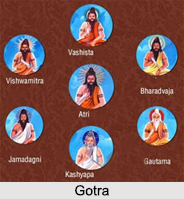
Gotra in Hinduism
In Hinduism, gotra refers to a lineage system tracing descent from ancient sages, primarily through the paternal line. Originating from Vedic traditio...