Nimbarka

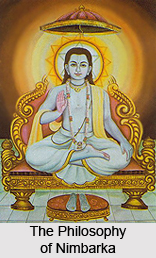
Nimbarka was a great saint who lived in the 13th century and propagated the Vaishnava theology of Dvaitadvaita which means duality in unity.

Introduction

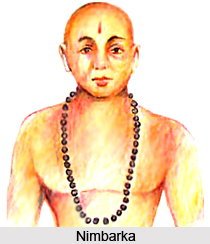
Nimbarka, Indian saintNimbarka was one of the popular Vaishnava philosopher and mystics in India. He was one of the five principal commentators on Badarayana"s Brahma Sutra. Nimbarka was also the first Vedantic saint who became successful to systematically propound the five main schools of Vedanta.

Nimbarka was born in a Telugu Brahmin family in the 11th century A.D. There is a popular myth that Sri Nimbarkacharya is actually an incarnation of Lord Hari"s most important weapon, named the "Sudarshana Chakra" or discuss.

Philosophy of Nimbarka

His philosophy is known as Dvaitadvaita (duality and nonduality simultaneously). According to him, there are three categories of existence chit, achit and Ishwara. According to Nimbarka, the relation between Brahman and the souls and universe is a relation of natural difference-non-difference. There are three equally real and co-eternal realities: Brahman, the chit and the achit. Brahman is considered as the Controller, the chit is believed to be the enjoyer and the achit is the object enjoyed.

Nimabarka refers to five types of Sadhanas:
1. Karma (ritual action): Karma is performed in a proper spirit thus giving rise to knowledge which is a means to salvation.
2. Vidya (knowledge): Vidya is not a subordinate factor of karma. However it is not an independent means for everyone. It is only for those inclined to spending vast lengths of time in scriptural study.
3. Upasana or dhyana (meditation): There are three types of meditation: meditation on the Lord as one`s self, meditation on the Lord as the Inner Controller and lastly is the meditation on Lord Himself.
4. Prapatti (Surrender to the Lord/Devotion): Prapatti is the devotion and self surrender to God. This contains elements of all the other means and is available to all.
5. Gurupasatti: This is devotion and self surrender to guru. It is realised as a part in Prapatti, and not as an independent means.

Teachings of Nimbarka

Teachings of NimbarkaThe teachings of  Nimbarka preach the six forms of surrender practice the nine limbs of Bhakti as well as believe in the dasa mula or the ten cardinal points of Gaudiya philosophy. The followers of Nimbarka also worship Radha and Krishna in Vrindavan. Nimbarkacharya came up with the theory of Dvaitya Advaitya that laid the foundation of Nimbarka Sampradaya. Dvaitya refers to duality and Advaitya means unified. All animate and inanimate objects are part of God and all souls are part of Supreme Soul.

The essence of Nimbarka philosophy helps to realize the importance of universal goodwill, world peace and humanity. According to Nimbarka Philosophy, Jiva is a part of God. The relation of difference in identity exists between the individual soul and God. They are identical. Nimbarka also maintains that Jiva is pure knowledge. Jiva has limited power. Jiva is considered as a power of God and Supreme self. The universe is part of God.

Liberation is the exalted human attainment through which the soul attains its highest enlightenment. It is a spiritual union between individual soul and the supreme soul. Nimbarka maintains that the ignorance belongs to the individual soul. Even in liberation the individual soul remains subordinate to God. The liberated soul acquires divine powers but he does not become almighty. He is not endowed with the power of creation, preservation and destruction which are prerogatives of God.
Teachings of NimbarkaAccording to Nimbarka there are two types of reality: Independent and Dependent reality. God is considered as the only independent entity. Again there are two types of dependent realities: conscious and non-conscious. Jiva is the only conscious entity. There are three non-conscious entities- Aprakrta, Kala or Time and Prakrti or Primordial Nature. There seems to be no clear distinction between the Svarupa and Svabhaava of Isvara. In general Nimbarka`s system recognises Isvara as the substrate of all positive attributes. The eternal form of God is Radha Krishna. While all pervading Lord is present in this eternal divine abode

Brahman has several other forms in his creative manifestation. These are the Vyuhas and the Avataras. There are four Vyuhas-Vasudeva, Sankarsana, Pradyumna, and Aniruddha. For the protection of Dharma and blessing of devotees, he manifests Himself as Incarnations. There are three types of incarnations: Gunayataras are his manifestations assuming Gunas of Prakrti-Sattva, Rajas and Tamas-for creation, preservation and dissolution of the manifested universe. Purusayatara is the manifestation for controlling the evolution of Prakriti. 3) Lilavataras has several other variations.

According to Nimbarka, God is essentially with a form and the substrate of all auspicious attributes. When the Upanishads speak of him as `Nirguna`, it means only that he is not subject to the Gunas. Nirvisesa means he is without attributes. His form and auspicious attributes do not impair his all-pervasiveness.

Concept of Jiva, Nimbarka

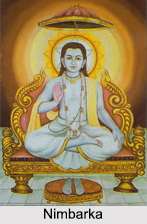
Concept of Jiva, Teachings of NimbarkaConcept of Jiva according to Nimbarka Dvaitadvaita doctrine is that jiva is a part of the qualified and determinate being of God to whom it is secondary and pronominal in a prime sense. The Jiva is different from Him, as he is created and dependent and controlled by him. As the Jiva is inseparable, the Jiva is also non-different from him.

Jiva is described as it is neither born nor dies. He is eternal and is self-conscious. He is a knower and actor. He pervades the whole body and gets experiences through it Consciousness is the substrate and the attribute of the Jiva. Jiva is a free agent and that freedom is subject to the will of Isvara. God impels jiva to act or abstain from acting according to the tendencies and merits and demerits acquired by the Jiva by his past actions. Avidya in this system is the accumulating load of Karma and not a special category. Though atomic, the Jiva pervades by his attributive knowledge that is capable of expansion like the light of a lamp. The Jiva is atomic not in the sense of its dimension but to show that he is a monad with a self-identity. The Jiva is an Amsa, potency, of Isvara and so he retains his essential nature. When liberated, he realizes himself in his true relationship with the Lord.

Kinds of Jivas in Nimbarka`s Philosophy : Nimbarka`s system recognizes a kind of Taratamya among the Jivas. Some of these Jivas are eternally tree and they are never in any repression. They are occupied in heavenly service. Muktas are the other kind of Jivas. They have been liberated by grace of Lord. Some jives seek the bliss of serving the Lord while others are satisfied with their inherent bliss as Atman. Again there are souls who have bindings. Some souls are seekers after liberation and keep striving for consummation. There are Jivas who are unaware to spiritual values and are over-sentimental in worldliness. These souls are bound eternally. The Jivas are bound by the cycle of births and deaths by Avidya which according to Nimbarka`s system is the load of beginning less Karma.

In case of Nitya baddhas, they are by nature prone to do evil and have no ethical standard in life. They are subject to what the Gita describes as demoniac nature. Three gateways are open to them and they are: sexuality, anger and greed. As they have lost the opportunity for higher evolution possible in human birth, they suffer in heaven then come back to this world and get incarnations in animal bodies. Those souls who accept spiritual values and strive for liberation from Samsara evolve to higher levels of spiritual development through several births on earth and in heavens according to their actions until the grace of the Lord releases them.

Those jivas who have done good deeds but yet not eligible for release go by the Dhumadi-marga, the Path of Smoke. Several deities take the Jivas to the Lunar Sphere where they enjoy the fruits of their good deeds. The Jivas who have attained Bhakti as well as eligible for liberation through the Lord`s grace, go by the Arciradi-marga, the Path of Light.

In Nimbarka`s system of realism there is no Jivan-mukti. Mukti is attained only after Prarabdha Karma is exhausted on the death of the present body. What the Jiva realizes in liberation is `non-difference in difference` with the Paramatman.

Recently updated articles in Religion in India

Anganyasa and Karanyasa
Anganyasa and Karanyasa Thumbnail

Anganyasa and Karanyasa

Anganyasa and Karanyasa are preparatory rituals in Hindu worship that sanctify the body and hands through the recitation of sacred mantras and symboli...

Kumbhakar / Kumhar Caste
Kumbhakar / Kumhar Caste Thumbnail

Kumbhakar / Kumhar Caste

Kumbhakar or Kumhar caste is a traditional artisan community in India known for pottery making. Derived from Sanskrit word Kumbhakar, meaning potter,...

Dhimar Caste
Dhimar Caste Thumbnail

Dhimar Caste

The Dhimar caste, predominantly residing in the Central Provinces of India, is a distinct Hindu community with a rich heritage and diverse occupationa...

Barhai Caste
Barhai Caste Thumbnail

Barhai Caste

Barhai Caste is a traditional Hindu artisan community historically associated with carpentry in India. Known for their craftsmanship, Barhais contribu...

Chadar Caste
Chadar Caste Thumbnail

Chadar Caste

Chadar Caste is a Hindu caste principally found in the Central region of India. Chadar Caste members are mostly employed as village watchmen, weavers,...