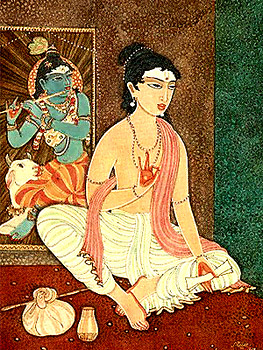
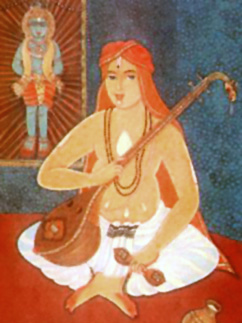
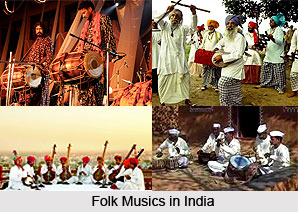
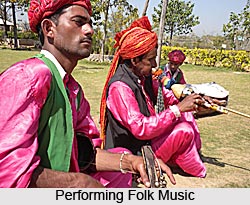
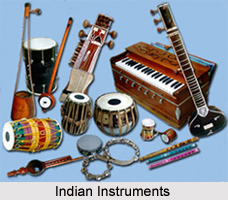
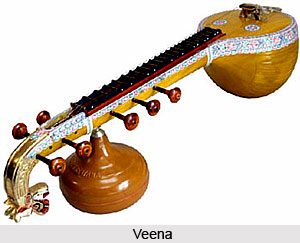
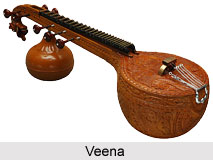
 Indian musical instrument is as old as its musical tradition and culture. This fascination is passionately encased into the poetic and mythic imagination of the Indians and is reverberated amidst the fervour of folktales, fables, myths and legends. Indian musical instruments thus have a rich timeline. In fact when Lord Shiva as the epitome of the creator, destroyer and sustainers danced the Tandava then each pounding beat of his Damaru (the small drum Lord Shiva holds in His hand) alternated the forces of darkness and light. The terrible yet awe-inspiring, passionate yet fierce sound of the Damaru is said to be the origin of the concept of the musical instrument. Mythology asserts that Lord Shiva, the lord of dance, gifted humanity four instruments; the Veena, the Venu, the Damaru and the Mridanga. This indeed connotes that these might have been the primordial parent instruments. That was just the beginning of the journey of musical instruments in India as a devotional offering and accompaniment of music.
Realistically a number of ancient Indian mural paintings, sculptures, literal and ancient theoretical works hold reference of the presence of the four primordial instruments like the Veena, Venu Mridanga and Damaru. With the passage of time, these Indian musical instruments underwent a thousand transformation and mutations and diversified into numerous other instruments. Regional as well as the geographical factors indeed contributed to the diversity of the tonal quality and in the variations in the designs of the Indian musical instruments. Many of the musical instruments seen today evolved in the medieval India owing to contacts with the Persian and Middle Eastern cultures. A number of musical instruments germinated as a result of the cultural fusion with the Islamic invasion in India. Rubab is one such musical instrument which came to India from Persia via Afghanistan during the time of early Islamic invasion and was indeed a part of the musical ensemble of the Mughal era.
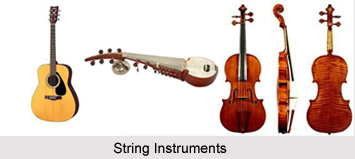
With the advent of the colonial era, Indian musical instruments underwent a sea change. Instruments like the violin, the guitar, the mandolin, the clarinet and the saxophone were imported from the West and were largely absorbed in the philosophy of Indian music.
 Whatever be the origin, however deep may be the influence of society, culture, more and tradition in delineating the tone, form and designs of Indian musical instruments, in broader aspect Indian musical instruments can be classified into four main heads depending upon the sound they produce. Bharata muni in his Natyashastra also classified Indian musical instruments into four broad categories namely, the stringed instruments (tat or Tantra Vadya), the wind instruments (Sushira Vadya), the Ghana Vadya and the percussion instruments (Avanaddha Vadya). This mode of classification even survives today despite the introduction of newer musical instruments into the field.
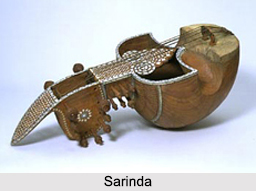
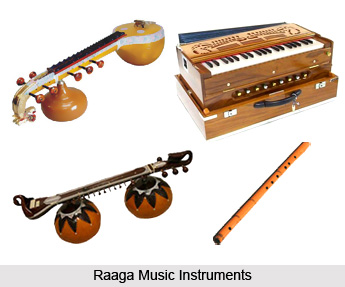
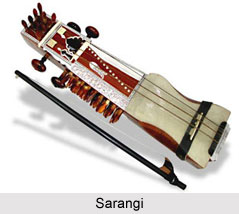
The string instruments are those which produce sounds when the strings are plucked with a finger or strapped, slapped or strummed. Indian musical instruments like the Rudra Veena, sitar, sarod and even Surbahar fall in this category. There is another category of stringed instrument like the violin, esraj, dilruba and the tar Shehnai, which make use of a bow to produce an uninterrupted series of notes.
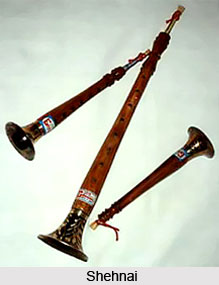
Wind instruments on the other hand produce music when an unbroken stream of air is blown through them. The wind instruments like the flute, shehnai and the clarinet generate a sound when a column of air is made to vibrate inside them. The frequency of the wave generated is related to the length of the column of air and the shape of the instrument, while the tone quality of the sound generated is affected by the construction of the instrument and method of tone production.
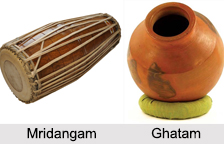
The Ghana Vadya is the Indian musical instruments which produce music when the strings are struck with strikers made of wood or metal. Instruments like santoor, jaltarang falls in this category. The percussion instruments amongst wide variety of the Indian musical instruments are the ones which create sound with or without pitch when drummed. The North Indian Pakhvaj, the South Indian Mridanga, Dholak and tabla are the percussion instruments which are made of animal membranes and produce sound if and when drummed.
Indian musical instruments since ages with their timbre, style and form has silhouetted the Indian music to a great extent. The legacy of Indian musical instrument which started by the divinities and sub divinities by the musical orchestra in manning the "terrible sublime sound" of the Damaru of Lord Shiva is no more just a mythological concept but a concrete realism in shaping the musical tradition in India.
 Classification of Indian Musical Instruments can actually be traced back to rather ancient times. The classification of instruments as laid down by Bharata is in fact the most accepted one in
  The Tamil language word for instrument, the oldest in Dravidian terminology, as found in the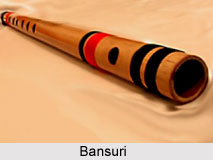
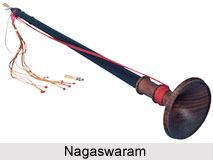 Nagaswaram
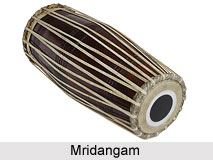 Mridangam
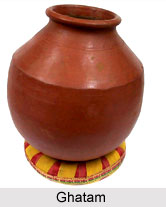
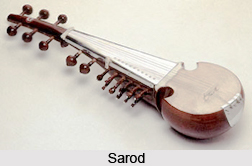
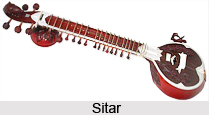
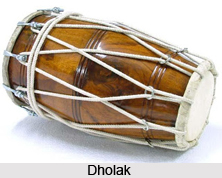
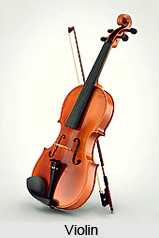 Musical Instruments of Modern India have developed over years to accompany different genres of music. Music is one of the finest forms of expressions and forms an inseparable part of the Indian culture. Musical instruments play a crucial role in enhancing the essence of music. Be it classical, folk or contemporary music, a number of musical instruments have developed which make any kind of music more enchanting.
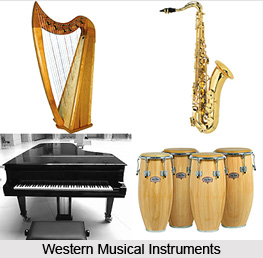 Piano is one of the most melodious musical instruments, which is played with the help of a keyboard. It is widely used along with Western music in solo as well as group performances. It is also useful in composing music and rehearsing them. Piano is a versatile instrument that is played along with a variety of music. Often it is categorized in both stringed and
 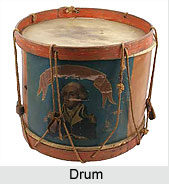 Usually, there is no direct relation between the wars and the musical instruments. The imagination of war during ancient and medieval India brings into mind the soldiers marching on foot, on horseback or elephant-back clutching various kinds of weapons. The war is also related with much killing, bloodshed, capture and torture.
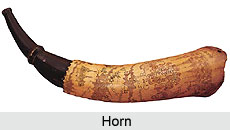 This tradition of martial music was quite well known by the ancient South Indian people. The references of the war musical instruments can be found in the ancient Tamil literature, especially of the Sangam age, such as the Purananuru. At that time, the conches, drums, trumpets, cymbals, horns, etc. were all used to create loud music. Some of the musical instruments used during war include the kodumparai, murasu, pandil, niduvayir, patuparai, karadikai and tudi.
 Musical Instruments of
  Musical Instruments of
  Musical Instruments of
 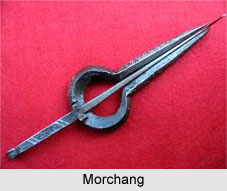 Musical Instruments of
 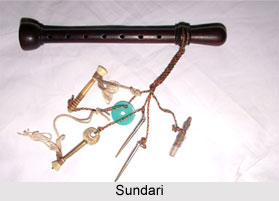 Musical Instruments of Western India form an indispensable part of Indian music. Since time immemorial, they have played a vital role in augmenting the charm of different genres of music. Over years, different states of western India have developed a variety of musical instruments belonging to different categories like stringed instruments, percussion instruments, woodwind instruments etc. Earlier these instruments were manufacture with wood, animal skin, bones and other natural substances but later combination of synthetic materials was also introduced to improve their sound and durability.
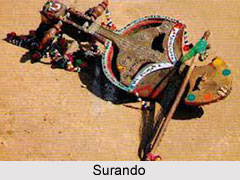 Musical Instruments of
 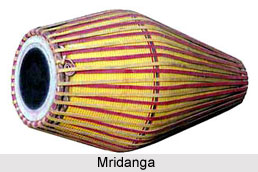 Musical Instruments of
  Musical Instruments of
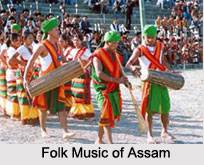
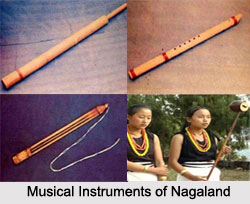
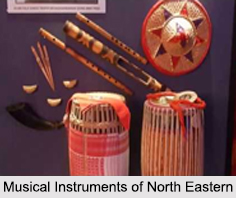 Musical Instruments of North-Eastern India are an integral part of the cultural heritage of the country. These instruments accompany the regional music of this region and add even more vigour to it. A variety of musical instruments are prevalent in
 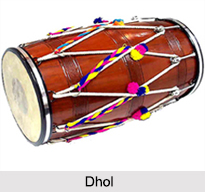 Musical Instruments of Tripura