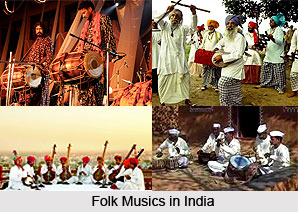
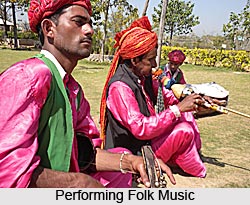
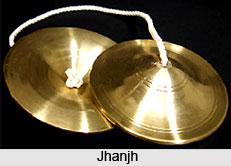
 The Jhanjh is a rhythmic instrument which falls in the group of metal clappers and it is made of brass or bronze metal. Jhanjh also known as "Manjira" or "Taal" is a simple side rhythm instrument normally used in accompaniment of Bhajans and other forms of devotional music. They often accompany folk or devotional music. It is used in various religious ceremonies of India, especially bhajans. The Jhanjh is an ancient instrument. Pictures of it have been found in temples dating back to the earliest times.
Structure of a Jhanjh
It is a pair of very large size disc with graded central depression. The diameter of the Jhanjh is usually 8 to 10 inches and sometimes it is 1 foot also. In short, it has the largest circumference. In the middle of the out side of the Jhanjh, there is a finger resting cord and while playing, it is firmly held by fingers and exclusively struck frontally.
How to Play a Jhanjh
The two discs are struck on each other rhythmically to play different patterns. The strokes have two main sounds - open and closed. The pitch of the Jhanjh sound is dependent upon its diameter, weight and the quality of brass.
Significance of a Jhanjh
Jhanjh has a significant importance in Gujarati and Marathi folk music, in Maharashtra it is known as Taal. Initially they were played in Aarti of God and Goddess. However, Jhanjh playing is not an easy task; it requires a lot of practice and deep knowledge of Sur and Taal. Unlike other musical instruments such as Tabla, Mrudang, Shehnai this instrument did not get much recognition and appraisal from listeners.
Variation of Jhanjh - Manjira
Manjira is the smallest in metal clapper"s series. It is a pair of small and deep metallic cymbals, which are made of bronze or brass metal. The middle part of the cymbals is like a cup shape. They are circular discs and connected by a cord or cotton thread passing through a hole in their centres. The Manjira is struck mainly on the edges and is held by the loop.