
 Princely State of Gwalior was reigned over by the Scindia Dynasty of Maratha clans and is situated in the central Indian state of Madhya Pradesh. This portion of the nation used to be entitled to as many as 21 Gun Salutes. Princely State of Gwalior is so named to commemorate Gwalior town, which was a significant region though it was never its capital. Gwalior was a significant place in Madhya Pradesh because of its location and is a commanding fort. Gwalior state was ruled by the Ranoji Sindhia, a part of the Maratha Confederacy, laid the foundation of this Indian kingdom in the early 18th century. During the reign of Mahadji Sindhia (1761-1794) the state became a powerful kingdom in North India. This State was soon annexed to the British Empire in India following the Anglo-Maratha Wars, and it became the biggest state under the leadership of a Resident at Gwalior, particularly in the Central India Agency.
Princely State of Gwalior
Princely State of Gwalior was ruled by the rulers of the Sindhia Dynasty whose foundation was laid in the early 18th century by Ranoji Sindhia.
Introduction
Princely State of Gwalior was reigned over by the Scindia Dynasty of Maratha clans and is situated in the central Indian state of Madhya Pradesh. This portion of the nation used to be entitled to as many as 21 Gun Salutes. Princely State of Gwalior is so named to commemorate Gwalior town, which was a significant region though it was never its capital. Gwalior was a significant place in Madhya Pradesh because of its location and is a commanding fort. Gwalior state was ruled by the Ranoji Sindhia, a part of the Maratha Confederacy, laid the foundation of this Indian kingdom in the early 18th century. During the reign of Mahadji Sindhia (1761-1794) the state became a powerful kingdom in North India. This State was soon annexed to the British Empire in India following the Anglo-Maratha Wars, and it became the biggest state under the leadership of a Resident at Gwalior, particularly in the Central India Agency.History of Princely State of Gwalior
It is believed that Gwalior State was born during the 10th century and was captured by the Delhi Sultanate, and Gwalior remained under their control till the year 1938. From 1528 till 1731, it again passed into the supervision of the Mughal Dynasty. Ranoji Scindia was the founder of Gwalior, who was a part of the Scindia house. Aurangzeb had granted a patent of rank to the head of the family and one of the daughters of the Mughal household was married off to Shahu, a Maratha chief. Ranoji Scindia and Malhar Rao Holkar were permitted to collect revenue or `chauth` which represents about 25 percent of the total revenue, apart from the `sardeshmukhi` which constitutes 10 percent over and above the chauth tax, from Malwa districts in 1726, by the Peshwa.
 The remaining amount of tax or `mokassa` could be retained by them. Jotiba, Jayappa and Dattaji were the legitimate sons of Ranoji Scindia, who had declared Ujjain as his official headquarters. Ranoji had died on 19th July, 1745. Eventually, Jayappa succeeded to the throne but was later assassinated during 1759 at Nagaur. His son Jankoji became the new ruler. However, he was captured as a prisoner and finally killed at the Third Battle of Panipat which had occurred in the year 1761. Mahadji was proclaimed as the next successor of Gwalior State. The residency of Gwalior was separated from the Central India Agency, in the year 1936 and they are answerable to the Governor General of India. Following the independence of India during 1947, the Sindhia kings became the rulers of the new Union of India and thereafter the Government of India declared Gwalior State as a portion of the state of Madhya Bharat.
The remaining amount of tax or `mokassa` could be retained by them. Jotiba, Jayappa and Dattaji were the legitimate sons of Ranoji Scindia, who had declared Ujjain as his official headquarters. Ranoji had died on 19th July, 1745. Eventually, Jayappa succeeded to the throne but was later assassinated during 1759 at Nagaur. His son Jankoji became the new ruler. However, he was captured as a prisoner and finally killed at the Third Battle of Panipat which had occurred in the year 1761. Mahadji was proclaimed as the next successor of Gwalior State. The residency of Gwalior was separated from the Central India Agency, in the year 1936 and they are answerable to the Governor General of India. Following the independence of India during 1947, the Sindhia kings became the rulers of the new Union of India and thereafter the Government of India declared Gwalior State as a portion of the state of Madhya Bharat.Geography of Princely State of Gwalior
The total area occupied by Gwalior State measures about 64, 856 square kilometers and was differentiated into two parts namely the Malwa section and Northern or Gwalior section. Gwalior was surrounded by Jhansi and Jalaun in United Provinces in British Raj, on the southern part by Rajgarh, Bhopal, Siroj Pargana of Tonk State and Khilchipur, on the north-east, north-west and north by Chambal River, towards the west by Kotah, Jhalawar and Tonk in the Rajputana Agency and Saugor District in the Central Provinces.
Administration of Princely State of Gwalior
Malwa and Northern Gwalior are the two sub divisions of the state of Gwalior. Seven districts or `zilas` make up Gwalior State and include Narwar, Isagarh, Tonwarghar, Bhind, Bhilsa, Sheopur and Gwalior Gird. Shajapur, Ujjain, Amjhera and Mandsaur are the four districts of the Malwa Prant. The districts are further subdivided into `parganas` and the group of villages is arranged in circles, each under the supervision of a `Patwari`. The Maharaja controlled the administration of the State and he was helped by the Sadr Board. Seven members compose this Board, of which the Maharaja is the president and various departments involved Post Office, Land Records and Settlement, Public Works, Customs, Revenue, Accounts and Forest etc.
District magistrates or `subahs` oversee the districts, especially in Northern Gwalior and they could be held responsible by the Sadr Board directly. A `Sar Subah` was entrusted the responsibility of supervising the Malwa prant in the region of Malwa, and he used to control the tasks of the four Malwa subahs. The regional rulers of this area administered the feudal estates which were under the control of Gwalior State and reigned by the local kings, and they were not included in the jurisdiction of the prants and zilas. The authority of Gwalior controlled the tiny estates or `diwans` or `thakurs` belonging to the Sangul Wardha Agra.
Ranoji Sindhia, the founder of the Sindhia kingdom was an ordinary attendant of Peshwa Balaji Baji Rao. With his courage and determination, he became a trusted member of the Marathas and was given the responsibility to collect chauth and sardeshmukhi in the Malwa districts. Gradually the Sindhia Empire developed with the headquarters in the ancient city of Ujjain. Sindhia died in 1745 and was succeeded by his son Jayapa. His son Jankoji who was put to death after he became a prisoner of war in the Third Battle of Panipat followed him. Mahadji Sindhia who ruled from 1761 to 1794 succeeded him. Mahadji left no successors and after him Daulat Rao, grandson of Mahadji`s brother Tukaji became the ruler of the kingdom. When Daulat Rao died in 1827, Jankojirao II Sindhia who was not his own son but a legitimate and distant member of the family succeeded him. Jankojirao died in 1843 and was succeeded by Jayajirao Sindhia. Jayajirao died in 1886 and was succeeded by his son Madhav Rao Sindhia. George Jivajirao Sindhia ruled the state of Gwalior for a short time after which India attained her independence.
The Maharaja who received the assistance of the Board controlled the total administration of the state. This Board comprised of seven members with the Maharaja being the President and the others were given the charge of various departments. The numerous local estates were kept outside the administration of the zilas and prants. Presently Gwalior is the capital city of Madhya Pradesh and is an important commercial hub of the state.
District magistrates or `subahs` oversee the districts, especially in Northern Gwalior and they could be held responsible by the Sadr Board directly. A `Sar Subah` was entrusted the responsibility of supervising the Malwa prant in the region of Malwa, and he used to control the tasks of the four Malwa subahs. The regional rulers of this area administered the feudal estates which were under the control of Gwalior State and reigned by the local kings, and they were not included in the jurisdiction of the prants and zilas. The authority of Gwalior controlled the tiny estates or `diwans` or `thakurs` belonging to the Sangul Wardha Agra.
Ranoji Sindhia, the founder of the Sindhia kingdom was an ordinary attendant of Peshwa Balaji Baji Rao. With his courage and determination, he became a trusted member of the Marathas and was given the responsibility to collect chauth and sardeshmukhi in the Malwa districts. Gradually the Sindhia Empire developed with the headquarters in the ancient city of Ujjain. Sindhia died in 1745 and was succeeded by his son Jayapa. His son Jankoji who was put to death after he became a prisoner of war in the Third Battle of Panipat followed him. Mahadji Sindhia who ruled from 1761 to 1794 succeeded him. Mahadji left no successors and after him Daulat Rao, grandson of Mahadji`s brother Tukaji became the ruler of the kingdom. When Daulat Rao died in 1827, Jankojirao II Sindhia who was not his own son but a legitimate and distant member of the family succeeded him. Jankojirao died in 1843 and was succeeded by Jayajirao Sindhia. Jayajirao died in 1886 and was succeeded by his son Madhav Rao Sindhia. George Jivajirao Sindhia ruled the state of Gwalior for a short time after which India attained her independence.
The Maharaja who received the assistance of the Board controlled the total administration of the state. This Board comprised of seven members with the Maharaja being the President and the others were given the charge of various departments. The numerous local estates were kept outside the administration of the zilas and prants. Presently Gwalior is the capital city of Madhya Pradesh and is an important commercial hub of the state.
Princes/ Maharajas of the Princely State of Gwalior
 During British rule in India (which covers both the British East India Company rule and later the British Raj), the princely state of Gwalior was ruled by different princes belonging to the Scindia Dynasty. It was the Anglo-Maratha Wars which caused the Gwalior State to come under British suzerainty. Given below are the rulers of Gwalior.
Jankojirao I Scindia
Jankojirao I Scindia, the 3rd Maharaja of Gwalior who ruled from 1755 to 1761. It has been documented in Indian history that Jankojirao I Scindia was made a prisoner in the Third Battle of Panipat against the Afghan forces of Ahmad Shah Abdali in 1761 and was put to death.
Madhavrao I Scindia
Madhavrao I Scindia, the 4th Maharaja of Gwalior ruled from 1761 to 1794. The battle at Panipat had left him severely wounded in the leg with a permanent limp, but Scindia managed to escape. The consequences of the battle at Panipat made Scindia to turn Gwalior into a chief military power in the Maratha Confederacy. More specifically, he created a well-trained modern army under the command of Benoît de Boigne.

Daulatrao Scindia
Daulatrao Scindia, the 5th Maharaja of Gwalior ruled from 1794 to 1827. He strongly desired to increase his dominions. This can be comprehended from the fact that Scindia had seized territory from the Maratha Puars of Dhar and Dewas.
Jankojirao II Scindia
Jankojirao II Scindia, the 6th Maharaja of Gwalior ruled from 1827 to 1843.
Jayajirao Scindia
Jayajirao Scindia, the 7th Maharaja of Gwalior ruled from 1843 to 1886. During the Mutiny of 1857, immense courage and loyalty was exhibited by Scindia. It was the time when he himself and his minister were forced to flee to Agra. On 19th of June, 1858, after being brought back to Gwalior by Sir Hugh Rose, he was honored with the right of adoption, numerous titles, extensive grants of additional territory and an increase in his army. He was Honorary General in the British army, a Knight Grand Cross of the Bath and a Knight Grand Commander of the Star of India.
Madhorao II Scindia
Madhorao II Scindia, the 8th Maharaja of Gwalior ruled from1886 to 1925.
Jivajirao Scindia
Jivajirao Scindia, the 9th Maharaja of Gwalior ruled from1925 to 1961. More specifically, Jivajirao Scindia occupied the throne from 27th of September, 1925, but got ruling powers on 2nd November 1936.
Post Indian Independence in 1947, the princely state of Gwalior was made a part of the new Union of India. It was merged with the state of Madhya Bharat.
Recently updated articles in History of India
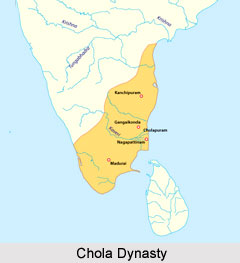
Chola Dynasty
Chola Dynasty is a Tamil dynasty and had longest duration of ruling in parts of South India. Chola dynasty had ruled South India successfully for a ex...
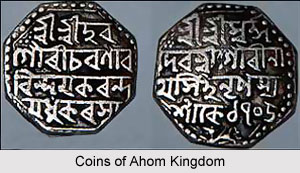
Suhungmung
Suhungmung was the fourteenth ruler of the Ahom dynasty who ruled from the period 1497 to 1539 AD. His reign was significant in terms of expansion of...
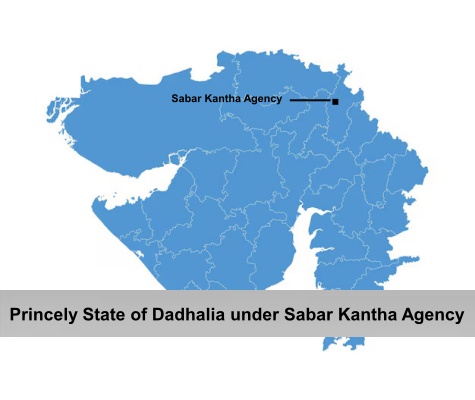
Princely State of Dadhalia
Princely State of Dadhalia was located in the present state of Gujarat. The state covered a total area of 28 sq miles and comprised of 15 villages. Th...
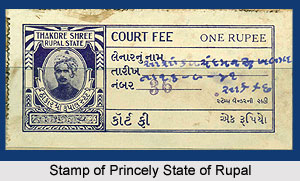
Princely State of Rupal
Princely State of Rupal was a part of the Baroda Agency, a sub division of Western India States Agency. It was under the administrative control of the...
Archaeological Sites of West Bengal
Archaeological sites of West Bengal reveal several aspects of ancient India. Excavations by the Archaeological Survey of India have furnished artefact...
Related articles in History of India

Mughal Architecture during Babur
Mughal architecture during Babur marked the foundation of a new architectural era in India, blending Timurid, Persian, and local influences. His reign...

Architecture during Sayyid and Lodi Dynasty
Architectures during the Sayyid and Lodi dynasty were mainly the tombs and monuments for the dead rulers. It were carefully designed and meticulously...

Brahmanical Sources of Ancient History
Brahmanical Sources of ancient history are contained in the Vedas and they constitute one of the most important literary sources of information about...

Coins of Chola Empire
Coins of Chola Empire were issued in gold, silver and copper and carried the Chola emblem.

Coins of Khilji Dynasty
Coins of Khilji Dynasty had an influential feature that was followed by the other dynasties.