
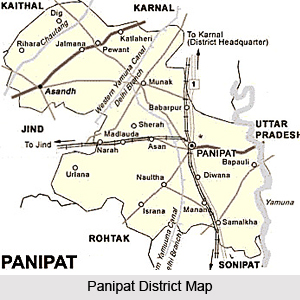
 Panipat District is a small compact district of Haryana. This administrative district has its headquarters located at the historical city of Panipat. It is also popular as the city of weavers or city of handloom. Panipat District came into existence in the year 1992. Panipat District is located in the central eastern part of the state. Panipat has an ideal location and is industrially forward. This district is spread over an area of 1300.38 sq kms.
Panipat District
Panipat District of Haryana has a significant place in international market for ‘Handloom Production’. Panipat city, district headquarters, is famous by the name of ‘City of Weavers’.
Introduction
Panipat District is a small compact district of Haryana. This administrative district has its headquarters located at the historical city of Panipat. It is also popular as the city of weavers or city of handloom. Panipat District came into existence in the year 1992. Panipat District is located in the central eastern part of the state. Panipat has an ideal location and is industrially forward. This district is spread over an area of 1300.38 sq kms.History of Panipat District
Panipat District has a very glorious place in the history of India. It is said that, at the time of battle of Mahabharata, the five villages which were demanded by the Pandavas from Duryodhana, `Panipat` was also one of those. It is a historic place as three major battles were fought here - first battle of Panipat, second battle of Panipat and the third battle of Panipat. Panipat was a part of Karnal District till 31st October, 1989, which was upgraded as a separate district, including Assandh Tehsil of district Karnal. When this district was reformed on 1st of January, 1992, Assandh Tehsil was excluded from this district.
Geography of Panipat District
 The three sides of Panipat District touches other districts of Haryana namely Karnal District in the north, Jind District in the west and Sonipat District in its south and in the east it touches Uttar Pradesh across Yamuna River. The only perennial river of Panipat District is Yamuna River. Panipat District has a moderate climate. The climate, being Gangetic type is hot in summer and cold in winter. The coldest month is January and hottest is June. Maximum temperature recorded in the district is around 42 degree Celsius and minimum temperature recorded is around 4.4 degree Celsius. About 80 percent of the annual rainfall is received in between July to September. Average annual rainfall is 500 mm to 1000 mm. The remaining months are almost dry except January, which occasionally receives light showers of winter rains. Panipat District is not rich in wild life. The main crops cultivated in the district are paddy, maize, wheat, gram and sugarcane. Panipat District is one of the fertile and industrially developed districts of the country.
Administration of Panipat District
Administration of Panipat District is headed by Deputy Commissioner. Panipat District has two Sub Divisions namely Panipat and Samalkha. Further, the administrative set-up of Panipat District has three tehsils - Panipat, Samalkha and Israna. The two Sub Tehsils of this district are Bapoli and Madlauda. There are five development blocks of Panipat District namely Panipat, Samalkha, Israna, Bapoli and Madlauda.
Monuments in Panipat
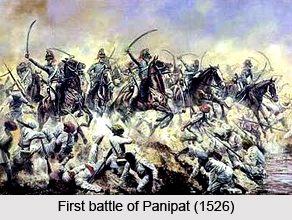
 This city is known for the three historic battles fought here that were the turning points of the historical destiny of India or in the establishment of Mughal supremacy. Panipat is a town of great antiquity. The First Battle of Panipat occurred on 21st of April, 1526 between the small expert army of Babur and the forces of Ibrahim Lodi, King of Delhi, at the head of 100,000 troops. Babur won the battle and the victorious Mughal army entered Delhi to establish the Mughal Dynasty.
The Second Battle of Panipat was fought 30 years later, on 5th of November, 1556. It was fought between Babur`s grandson Akbar and Himu, the Hindu general of the Afghan Sher Shah. This fundamental battle re-established the fortunes of the Mughal Dynasty, which had been challenged with sonic success by the Pathan Dynasty of Sher Shah. Almost two centuries later on 14th of January, 1761, the Third Battle of Panipat took place, which was equally as decisive like the previous ones. It shattered the unity of Maratha power and laid the Empire open to the Afghan conquerors. The battle was on an epic scale, with the combined Maratha forces, having been cut off from supplies from Delhi for many months, desperate to break through the smaller Afghan forces of Ahmad Shah Durani.
In Panipat, the main spots of attraction are Panipat Battles Museum, Samadhi-Sthal of Hemu, Kabuli Bagh, Salar Gunj Gate, the grave of Ibrahim Lodhi and the grave of Bu Ali Shah Qalandar, 13th century Sufi saint. Kala Amb is another popular monument and it was built in the memory of all those soldiers who died in the Third Battle of Panipat. It is now a striking sight of this city. In the year 1885, the British held manoeuvres on the plain of Panipat, suggesting the advance of an invading army on Delhi.
Panipat is one of the most significant historical places of India and this city and its soil narrates the deep symbolic history of the three vital battles that have been fought here.
Tourism in Panipat District
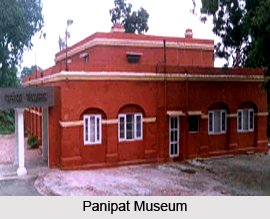 Tourism in Panipat District offers the travellers the opportunity to explore its rich historical past. It includes visits to several ancient temples, battle sites, mosques and tombs. One of the must visit site here is Panipat Museum. There are several historical places in Panipat. These tourist places attract people from all parts of the country.
Some of the major tourist spots of Panipat District are mentioned below -
Panipat Museum: Panipat Museum was established by `The Battle of Panipat Memorial Society` under the state government of Haryana. Panipat Museum has been established for disseminating information about archaeology, history, art and crafts of Haryana with special emphasis on the Battles of Panipat which marked the turning point in Indian history. The display of antiquities, inscription, sculptures, arms and armours, pottery, old and valuable documents, jewellery and art and craft objects, have been augmented by maps, write-ups, photographs, etc. The main idea behind setting-up of this Museum is to create awareness among the visitors about the three successive battles of Panipat which virtually changed the course of history of the country.
Panipat: Panipat is a historic city. Excavations have revealed the existence of early Aryan settlements at the place. Panipat was one of the five disputed `Prasthas` during the war of Mahabharata. Panipat has always been politically as well as administratively significant in the past. It strategic location has made Panipat the scene of some of the historical battles in Indian history.
 Under the patronage of the Muslim rulers, Panipat emerged as a centre of Sufi saints and Muslim scholars.
Grave of Ibrahim Lodhi: The tomb is situated at a short distance from Panipat. Ibrahim Lodhi fought with Babur, in First Battle of Panipat and was buried at this place. Much later, British rulers erected a plain platform over the place, with a short Urdu inscription on it.
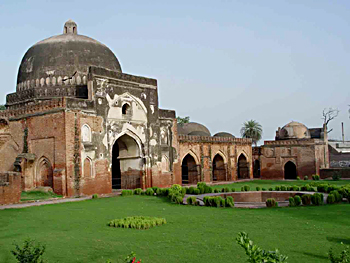
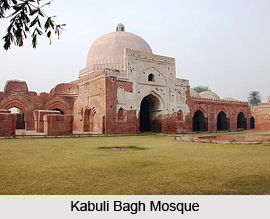
Kabuli Bagh Mosque: Kabuli Bagh Mosque and a tank were built by Babur after the first battle in order to commemorate his victory over Ibrahim Lodhi. Some years later when Humayun defeated Salem Shah near Panipat, he added a stone platform to it and called it `Chabutra Fateh Mubarak`. These building and the garden still exist under the name of Kabuli Bagh called so after Babur`s wife - Mussammat Kabuli Begum.
Devi Temple: A temple dedicated to local deity exists on the bank of a large tank. Moreover, a temple dedicated to Lord Shiva is believed to have been built by Maratha named Mangal Raghunath who had remained in Panipat after the battle, also exists besides it.
Salar Gunj Gate: This gate is situated in the middle of Panipat city. It has great historical importance.
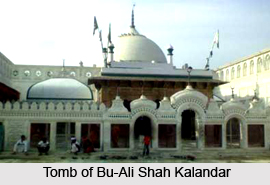
Tomb of Bu-Ali Shah Kalandar: Seven hundred years old this tomb is known as Dargah of Shah Kalandar Khizar Khan son of Ala-ud-din Khilji who got this tomb constructed. Moreover, there are tombs of Hakim Mukaram Khan and Khawaja Altaf Hussain Hali in the premises of this tomb. Hali was a great Urdu poet. A large number of people visit this site and offer prayers here on every Thursday.
Shri Ram Sharnam, Panipat: Shri Ram Sharnam is a religious centre that stands as an emblem of supreme devotion to Lord Rama. The grace and dignity of its congregation halls and its atmosphere suffused with devotion attract devotees in large numbers.
The country side is no less famous than the city of Panipat as it offers remnants of various buildings and structure of archaeological interest. All these sites are worth exploring.
Recently updated articles in States of India
Bandare Waterfalls, Meghalaya
Bandare Waterfalls in South Garo Hills, Meghalaya, is a secluded natural attraction surrounded by dense subtropical forests and rugged mountain terrai...
History of Thissur District
Early History of Thissur District explains flourishing of the port cities. Now these port cities are transformed into archaeological sites.
Tippi Orchid Research Centre, Arunachal Pradesh
Tippi Orchid Research Centre in Arunachal Pradesh is renowned for its rich collection of exotic and endangered orchids. Surrounded by lush rainforest...
Tourism in Nashik District
Pilgrimage tourism in Nashik district involves visiting the various places of Hindu and Jain worship located here. Some of the holiest sites for Hind...
Mangadu, Kerala
Mangadu in Kerala’s Kollam district is a significant megalithic site known for its urn burials, cist burials, menhirs, and stone circles. Excavations...
Related articles in States of India
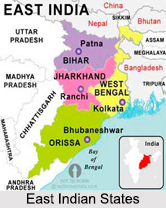
East Indian States
East Indian States comprises of Bihar, Jharkhand, West Bengal, Odisha and also the Union Territory of Andaman and Nicobar Islands. It defines the cult...
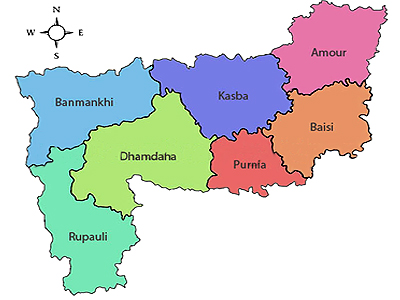
Purnia District in Bihar
Purnia District is located in Bihar and extends from River Ganga to Nepal. The district has a rich Hindu history and glorious past.
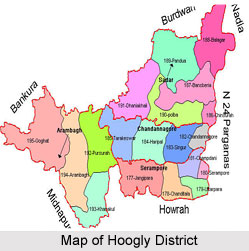
Hooghly district
Hooghly District along the bank of the river Hooghly is one of the principal trading ports of West Bengal.
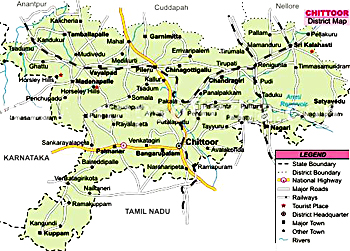
Geography Of Chittoor District
Geography of Chittoor district is spread along the topography of the land which is divided into two natural divisions; Chittoor has a dry and healthy...
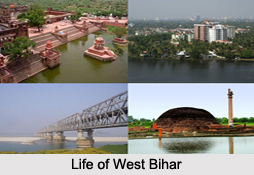
Districts of West Bihar
Districts of West Bihar is comprised of medieval monuments that were built by the different governors of Mughal era.