
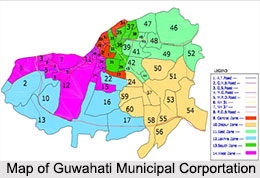
 Considered to be the "gateway to north east India", Guwahati in the Kamrup District is one of the largest cities of Assam and also the largest metropolis in the north east India. Located on the foothills of the Shillong plateau, the city lies on the south bank of the Brahmaputra River. Thus, it is a major riverside port and Assam"s principal commercial centre. Located in the circuit city region is Dispur, which is a part of Guwahati, it serves as the capital of Assam.
Guwahati
The Gateway to the North East, Guwahati is one of the largest and fastest growing metropolitan cities in the state with the scope for tourism, ecological regions and the industrial sectors.
Introduction
Considered to be the "gateway to north east India", Guwahati in the Kamrup District is one of the largest cities of Assam and also the largest metropolis in the north east India. Located on the foothills of the Shillong plateau, the city lies on the south bank of the Brahmaputra River. Thus, it is a major riverside port and Assam"s principal commercial centre. Located in the circuit city region is Dispur, which is a part of Guwahati, it serves as the capital of Assam.Etymology of Guwahati
Combining the ancient cities of Pragjyotishpura and Durjaya, Guwahati used to be the erstwhile capital of the Hindu kingdom of Kamarupa. Earlier known as Pragjyotishpura, which means the "Light of the East", the name Guwahati is derived from the Assamese words "Guwa" meaning areca nut and "Haat" meaning market.
History of Guwahati
 There have been mentions of the city of Guwahati in the sacred Hindu epics and religious texts like the Puranas. Over time, historians have assumed that Guwahati is one of the ancient cities of Asia. Considered to be the "gateway of the north east", the tales surrounding the city harks back to almost thousand years.
Ancient History of Guwahati : Rock inscriptions found in the Nilachal Hills dating back to the 5th century AD, makes Guwahati one of the earliest found in the north east India. As per the Hindu epic, Mahabharata, Guwahati was once the capital city of the demon kings, Narakasura and Bhagadatta of the Pragjyotisha Empire. History states that the city was once called "Pragjyotishapura", which means the "Light of the East".
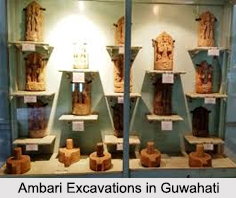
The Ambari excavations revealed that between the 2nd century BC and the 1st century AD, the city of Guwahati belonged to the Hindu kingdoms of Shunga and Kushana empires. Other information discovered from these excavations was that Guwahati was once of economic and strategic importance until the 9th to 11th century AD. The history of Guwahati also mentions that earlier to these, the city was the capital of Assam under the Kamarupa kingdom and under the reign of king Bhaskaravarman in the 7th century AD, Guwahati stretched for about 15 km.
Medieval History of Guwahati : In the medieval period, the city of Guwahati changed hands with the Kamata kingdom before the rise of the Ahom dynasty. Under the Ahom, the place lost its significance as a commercial trading post and mainly became a military hub. Guwahati became the seat of Borphukan, who were the Ahom kings appointed civil military authority of the Lower Assam region. With the rise of the Ahom kingdom, there were several combats with the Mughal rulers over the land of Guwahati.
Modern History of Guwahati : By the beginning of the 16th century, the Indian subcontinent was mostly dominated by the Mughal Empire but there were few regions, which they were unable to control, Guwahati was one of these lands. The Mughals invaded Assam 17 times but were defeated by the formidable Ahom army in the Battle of Itakhuli and the Battle of Saraighat under the capable guidance of the commander general Bir Lachit Borphukan.
From the years 1817 to 1826, the city came under Burmese rule and thus following the First Anglo- Burmese War. Eventually, the city of Guwahati became a part of the British Empire. It played an active role during the independence struggle of India and was the birthplace of activists such as Tarun Ram Phukan.
Currently, over a century later, Guwahati spreads over an area of 328 sq. km and is now one of the fastest growing cities with a population of over 1 million.
Climate of Guwahati
With a humid sub tropical climate, Guwahati experiences an average annual temperature of 22 degree Celsius and an average annual rainfall of 1698 mm. The month of August is the warmest with a maximum temperature of 29 degree Celsius and January is the coldest month of the year with an average temperature of 15 degree Celsius. The driest month is December, with 6 mm of rain. In June, the precipitation reaches its peak, with an average of 315 mm.
Demographics of Guwahati
One of the fastest growing cities in the country, it is being estimated that by the year 2025, Guwahati metro will house 2.8 million residents. As per the reports of Census India 2011, the total population of the city was 962,334 out of which 498,450 are males and 463,884 are females.
The population of children between the ages of 0 to 6 years is 9.40 percent. The sex ratio has been recorded to be 933 females per 1000 males and the child sex ratio to be 940 girls per 1000 boys.
The city also had an average literacy rate of 91.47 percent with male literacy at 94.24 percent and female literacy at 88.50 percent. The prime religion followed in the city is Hinduism with a majority of almost 84 percent followers.
The population of children between the ages of 0 to 6 years is 9.40 percent. The sex ratio has been recorded to be 933 females per 1000 males and the child sex ratio to be 940 girls per 1000 boys.
The city also had an average literacy rate of 91.47 percent with male literacy at 94.24 percent and female literacy at 88.50 percent. The prime religion followed in the city is Hinduism with a majority of almost 84 percent followers.
Economy of Meghlaya
 The city of Guwahati is an important river port and Assam"s principal commercial centre. The manufacturing sector in Guwahati contributes a substantial share to the economy of the city. Petroleum manufacturing is an important economic activity in the city. The city"s oil refinery is the most important manufacturing industry in the city. Guwahati also has a state farm, and its industries include tea processing, milling of agricultural products, and soap manufacturing.
Temples in Guwahati
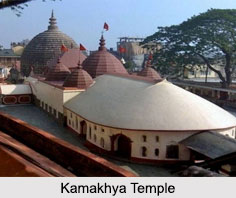 With numerous temples and monuments, the state of Assam is famous for its great historical and cultural past dating back to the medieval period. Guwahati, the largest city in this north eastern state has been aptly called the "city of temples". There are many Hindu temples in Guwahati and discussed elaborately below are few of them:
Kamakhya Temple: One of the oldest of the 51 Shakti Peethas, the Kamakhya Temple was built in the 10th century by the Koch king, Naranarayan. Being the centre for Tantric worship, this temple attracts thousands of tantric devotees in an annual festival known as the Ambubachi Mela. Another annual celebration is the Manasa Puja and the Durga Puja is celebrated during Navaratri in the autumn. This 5 day festival attracts several thousands of visitors from all over.
Basistha Temple: Dedicated to Lord Shiva, the Basistha Temple was constructed in 1764 by the Ahom king, Rajeswar Singha. Located in the south east corner of the city, it is said that the history surrounding the temple dates back to the Vedic period. The temple also houses an ashram on the 835 bighas land which was a gift from the Ahom king himself.
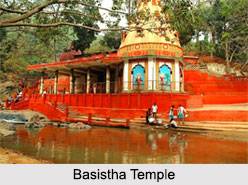 As per legends, it is said that the ashram was founded by the great Indian sage Vasishtha, after whom the temple and ashram are named. The temple stands on the bank of the mountain streams originating from the hills of Meghalaya which becomes the rivers Basistha and Bahini or Bharalu flowing through the city.
Dirgheswari Temple: Situated on the northern banks of the Brahmaputra River, the Dirgheswari Temple is considered to be one of the Shakti Peethas that was built by the 18th century Ahom king, Sutanphaa. Other than being a Shakti Peetha, legend states that this is also the place where the Indian sage, Markandeya visited and started a huge penance for Goddess Durga. Pleased with his relentless devotion, the goddess blessed him and thus Dirgheswari became an important place of worship of Goddess Durga.
The sanctum sanctorum of the temple, where the idol of Goddess Durga is present is located underground, in a small cave. The Goddess Durga is revered by the people and the annual festivities of Durga Puja draws in a large crowd of tourists and devotees alike from all around. The natives residing in the place consider the Dirgheswari Temple to be the second holiest place after Kamakhya Temple.
Doul Govinda Temple: Primarily devoted to Lord Krishna, the Doul Govinda Temple is one of the important temples of Kamrup that is located on the foothills of the Chandra Bharati hill at Rajadaur. The first structure of the temple was erected more than 150 years ago but it was again renovated in 1966. The temple is famous for observing the popular Hindu festival of Holi, which is held for around 5 days and has about 5,000 pilgrims at the temple premises during this time.
 Lankeshwar Temple: An ancient Shiva temple, it is said that Lankeshwar is one of the many avatars of Lord Shiva. The devotees of Lord Shiva consider the Lankeshwar Temple as one of the most sacred Shiva temples in Guwahati. Devotees visit this temple all year round to seek divine blessings.
Rudreswar Temple: Dedicated to Lord Shiva, the Rudreswar Temple is a fine example of a mixed style of Ahom- Mughal architecture. It was built in 1749 CE by the Ahom king Pramatta Singha, in memory of his father Rudra Singha. Over the years, the temple has suffered greatly especially in the 1897 and 1950 Assam earthquakes. The temple`s upper structure had tremendous damages. In a bid to preserve the temple, the local people constructed the Manikut or the chamber roughly by woods and tins, to continue their religious functions.
Sukreswar Temple:
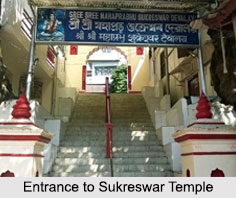 Dedicated to Lord Shiva, the Sukreswar Temple is one of the most important Shiva temples in the state of Assam. Located in the Kamrup district of Guwahati city, the Sukreswar Temple is on the hillock of Itakhuli, which is also known as Sukreswar, on the southern banks of the Brahmaputra River. There is an embankment adjacent to the temple, which is used for holy dips by the devotees.
As per the Kalika Purana, the history of Sukreswar Temple is associated with the Indian sage Sukra, who had once retreated to the hills of Sukreswar for meditation and worshipping Lord Shiva. The place where he meditated resembled the shape of the hump of an elephant and was thus called Hastagiri.
The Sukreswar Temple was constructed many decades later in 1744 by the Ahom king Pramatta Singha. In the later years, the king"s brother, Rajeswar Singha took the reins and promoted the Shiva cult. He made some special financial provisions to the Sukreswar Temple and was crowned king after the death of Pramatta in 1751.
The Shiva Lingam inside the temple is said to be the largest Lingam built in the 18th century and the Sukreswar Temple itself is one of the greatest contribution of the Ahom rulers of Assam. During the various religious Hindu festivals particularly Mahashivaratri, the temple is decorated with lights and thronged by devotees from all over.
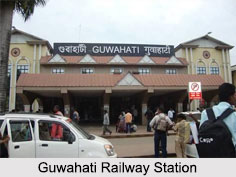
The Guwahati railway station is the closest at a distance of 1.7 km from the temple and the Lokpriya Gopinath Bordoloi International Airport is the nearest at about 22 km away from the Sukreswar Temple.
Ugro Tara Temple: An important Shakti shrine dedicated to Goddess Tara, the Ugro Tara Temple is located in the heart of the city of Guwahati. As per legends, it is said that the navel of Goddess Sati fell on the spot where the temple is currently constructed. Built in 1725 AD by the Ahom king, Shiva Singha, the sanctum sanctorum of the Ugro Tara Temple has no image or idol of the goddess, instead there is only a small pit filled with water that is considered to be the goddess.
Umananda Temple: Located at the Peacock Island in the middle of the Brahmaputra River, the Umananda Temple was built in 1694 AD by Gadadhar Singha. The presiding deity of the temple is Lord Shiva and it believed that worshipping here on the days of Amavasya and Shiva Chaturdashi brings in good luck and fortune.
Shree Shyam Mandir: One of the more recent temples in Guwahati, the Shree Shyam Mandir was built by Acharya Mahant Shri Pandit in April 2016. The temple is located in Chatribari, one of the main trade hubs in Guwahati. The presiding deity of Shree Shyam Mandir is Khatushyamji or Shyam baba.
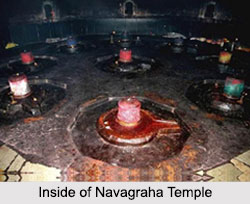
Navagraha Temple: Representing the 9 celestial bodies of Hindu astronomy, the Navagraha Temple enshrines 9 Shiva Lingams. Each of these Lingams is covered with a coloured garment symbolic of each of the celestial bodies, with a Shiva Lingam in the centre symbolising the Sun. It was built in the late 18th century by Rajeswar Singha and has been renovated during the late 1923 to 1945.
Bhuvaneshwari Temple :
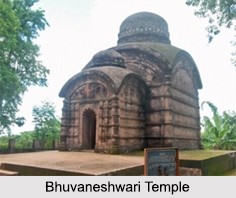 Situated on a picturesque location atop the Nilachal Hills in Guwahati in the state of Assam, the Bhuvaneshwari Temple is a prominent Hindu pilgrimage site. It is one of the popular temples in Guwahati that is dedicated to the Hindu Goddess Bhuvaneshwari.
Built sometime between the 7th to 9th centuries AD, the stone structure of the Bhuvaneshwari Temple has some semblance with the Kamkhya Temple. The temple was constructed in honour of Goddess Bhuvaneshwari, who as per Hinduism is the 4th amongst the 10 Mahavidya goddesses and is known to be one of the earliest forms of Shakti.
Due to the temple"s high vantage point, the surrounding view is panoramic. During the festivals of Ambubachi and Manasha Puja, the Bhuvaneshwari Temple attracts a large number of devotees and tourists alike from all around.
The Guwahati railway station is the closest at a distance of almost 8 km from the temple and the Lokpriya Gopinath Bordoloi International Airport is the nearest at about 21 km away from the Bhuvaneshwari Temple.
Tourism in Guwahati
 The city of Guwahati, the gateway to the north east and one of the largest cosmopolitans in the state of Assam is a true reflection of the diversity of the state and region. Commercially vibrant, the tourism in Guwahati is still flourishing with its various temples, museum and zoological garden. Discussed elaborately below are some of the famous tourist places in Guwahati.
Digholi Phukuri: Once a naval yard used by the Ahoms in the ancient time, the Digholi Phukuri is a rectangular man made pond that was built by Bhagadatta. Currently, it is one of the most prominent tourist spots in the city, where the tourists can enjoy boat rides and other recreational activity.
 Jor Phukuri: Along the Digholi Phukuri is a pair of ponds called the Jor Phukuri, which was built by Shiva Singha to fulfil the water requirements of the Ugro Tara Temple. Historically important, the Jor Phukuri was built during the Ahom period and the main purpose for its construction was to connect the Brahmaputra River via the Naojan Channel for the naval ships and boats to operate. Presently, the twin ponds of Jor Phukuri is an excellent nesting ground for bird species like cranes, herons, egrets, etc.
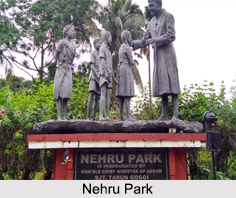
Nehru Park: Located in the heart of the city of Guwahati, the Nehru Park is one of the oldest parks in Assam. The park is named after the first Prime Minister of India, Jawaharlal Nehru and was initially a part of an old church that was later developed by the Assam Government. Inside the Nehru Park, there are numerous trees and 45 statues that depict the various folk dance forms of Assam. These statues portray the culture and diversity of the people of Assam. The park is one of the major tourist attractions in the city.
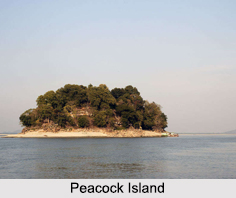
Peacock Island: One of the smallest river islands in the world, the Peacock Island also known as the Umananda Island is situated in the middle of the Brahmaputra River. Resembling a peacock feather, the island was thus known as the Peacock Island by the British. The island is famous for the Umananda Temple, which attracts pilgrims from all over during the time of Maha Shivaratri. Another interesting aspect of the island is the presence of the Golden Langur, which are known to be one of the most endangered species of monkey in India. These two are the prime attractions of the island that facilitates tourism.
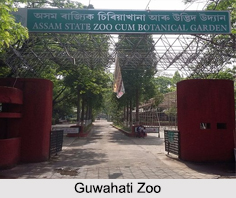 Guwahati Zoo: Also known as the Assam State Zoo cum Botanical Garden, the Guwahati Zoo was established in 1957 and spreads across an area of 432 acres. It is one of the largest zoological gardens in the north eastern region that preserves a unique diversity of varied flora and fauna. The zoo is home to about 895 animals, birds and reptiles representing almost 113 species of animals and birds from around the world. It is a popular tourist attraction in the city.
Kamakhya Temple: One of the oldest of the 51 Shakti Peethas, the Kamakhya Temple was built in the 10th century by the Koch king, Naranarayan. Being the centre for Tantric worship, this temple attracts thousands of tantric devotees in an annual festival known as the Ambubachi Mela. Another annual celebration is the Manasa Puja and the Durga Puja is celebrated during Navaratri in the autumn. This five day festival attracts several thousands of visitors from all over. Other than the Kamakhya Temple, there are several other Hindu temples in Guwahati that attract devotees.
Anthropological Museum :
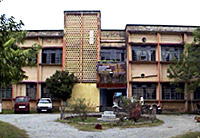 Anthropological Museum is located in the Indian state of Assam. More specifically, this museum is situated inside the campus of Guwahati University. This museum is associated with the Department of Anthropology in the Guwahati University. It was established in the year 1948.The museum is under the supervision of Department of Anthropology of that University.
Exhibits of Anthropological Museum : The Anthropological Museum is a home to a variety of objects of great antiquity. The authentic ancient items preserved in this museum can broadly be classified as archeological objects, anthropological objects, ethnographic and prehistoric objects. More specifically, this museum is a storehouse of weapons, bamboo crafts, combs, flint box, smoking pipe, headgear, agricultural implements, hunting implements, pottery, photographs, musical instruments, metal objects, basketry, textiles, jewellery, masks etc.
Regional Science Centre :
 Regional Science Center , Guwahati was established in 1994 with a view to provide basic knowledge of science to the children. Regional Science Centre, Guwahati is located at Khanapara in the Assam district. The Museum showcases scientific models, fun mirror, the cliff lift, the dummy coalmine etc. The museum is open on all days from 10:00 am to 5:30 pm leaving Holi and Diwali.
Recently updated articles in Cities of India
Places of Interest in Deogarh Uttar Pradesh
A place of historical and archaeological significance, Deogarh is a site with few popular places of interest.
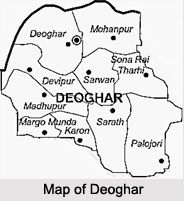
Deoghar in Jharkhand
Deoghar is the divisional headquarters of Santhal Parganas located in Jharkhand and is popular for the famous Baidyanath temple and Shiva Temples.
The Asiatic Society of Mumbai
Asiatic Society in Mumbai is the temple of Asian Studies from the time of British rule in India.
Vasco da Gama / Vasco City
Vasco da Gama / Vasco is the biggest city of Goa and is one of the most visited for its perfect amalgamation of business as well as leisure options.

Agriculture of Ladakh
Agriculture in Ladakh is primarily practiced in the short summer season due to its cold desert climate. Farmers grow hardy crops like barley, wheat, p...
Related articles in Cities of India
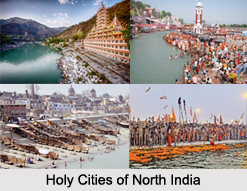
Holy Cities of North India
Holy Cities of North India are having the rich history of Hinduism and the entire civilization was grown up with the hands of beliefs, rituals and the...
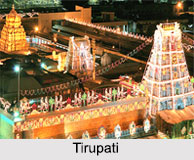
Holy Cities of South India
Holy Cities of South India gives the detailed cultural formation of Dravidians from the early era, which later developed to the world by the Pallavas...
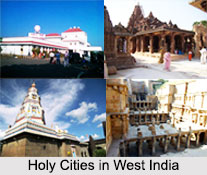
Holy Cities of West India
Holy Cities in West India were established by the rulers of Rajputs and the Satvahana Dynasty and the medieval rulers of Junagadh.
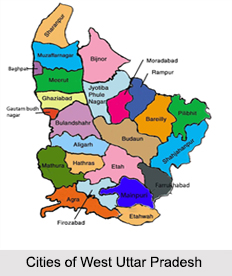
Cities of West Uttar Pradesh
Cities of West Uttar Pradesh include Meerut, Bulandshahr, Ghaziabad, Saharanpur, Muzaffarnagar, Bijnor, Bareilly, Rampur, Agra, Aligarh, Mathura and m...
Port Cities of South India
Port Cities of South India are developed from the early phase of colonial era when the Portuguese and the French traders came to India