
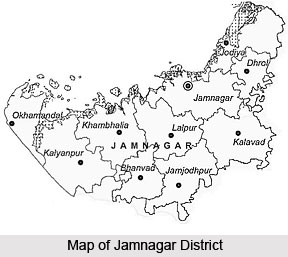
 Jamnagar district of Gujarat is situated on the southern coast of the Gulf of Kutch and its official headquarters are located in Jamnagar city. The district is a portion of Saurashtra, in western Gujarat and boasts of housing the largest grass root refinery of Reliance Petrochemicals in the entire world. Essar and Tata are some of the renowned industrial companies which conduct their operations in this Indian district. Travellers will come across numerous tourist locales in Jamnagar district which consist of Khijadia Bird Sanctuary, Marine National Park, Lakhota Fort and several others.
Jamnagar District
Jamnagar District, Gujarat dates back to ancient times and the local economy of this region is mainly dependent on brass products as it is the largest producer of brass parts in the country.
Introduction
Jamnagar district of Gujarat is situated on the southern coast of the Gulf of Kutch and its official headquarters are located in Jamnagar city. The district is a portion of Saurashtra, in western Gujarat and boasts of housing the largest grass root refinery of Reliance Petrochemicals in the entire world. Essar and Tata are some of the renowned industrial companies which conduct their operations in this Indian district. Travellers will come across numerous tourist locales in Jamnagar district which consist of Khijadia Bird Sanctuary, Marine National Park, Lakhota Fort and several others.History of Jamnagar District
Historical records claim that Dwarkadhish Temple, an ancient temple dedicated to Lord Krishna is present in Jamnagar District. This famous temple is believed to have been built by Vajarnabh, the great grandson of Krishna. The area of this district is said to have been conquered by Sultan Mohammed Beghdo, during 1480 A.D. Following Humayun`s conquest of Gujarat, the `Halar` kingdom was established in Jamnagar. The founder of this district is Jam Raval, a descendant of Jam Hala, due to which this region was called `Halar` in olden days. After Indian independence, Jam Shree Digvijaysinghji was the first Raj Pramukh of Saurashtra who played a significant role in assisting Sardar Vallabhbhai Patel in the integration of Indian princely states. Finally in 1949, Jamnagar District came into existence, from the states of Thana, Navanagar, Dhrafa, Dhrol and portions of Jalia Devani.
Geography of Jamnagar District
The geographical coordinates of Jamnagar District are 22 ° 13 minutes North and 69 ° 42 minutes east. The maximum temperature of this district is 42 ° centigrade and the minimum temperature is 10 ° centigrade. Average rainfall in this area is 554 mm.
Demography of Jamnagar District
Jamnagar District possesses a population of 21, 59,130, as per the records of the 2011 census and a literacy rate measuring 74.4%. The regional sex ratio is about 938 females for every 1000 males.
Education in Jamnagar District
Jamnagar district possesses 1316 primary schools, 156 secondary schools and 45 higher secondary schools. Jamnagar is home to the country`s only Ayurvedic University, named Gujarat Ayurved University, offering post graduate and diploma courses in Ayurvedic medicines and pharmaceutical science, yoga and Indian naturopathy. The Industrial Training Institutes (ITI) in Jamnagar impart training in various disciplines such as, cutting and sewing, welding, repairing, fabrication, armature and motor rewinding, hair and skin care, electronic system maintenance among various others.
Administration of Jamnagar District
Jamnagar`s different administrative divisions, known as `talukas` include Kalavad, Dhrol, Lalpur, Jam Jodhpur and Jodiya.
Economy of Jamnagar District
 Economy of Jamnagar District in Gujarat is chiefly dependent on brass parts supply. Jamnagar district caters to over 70 percent of the country`s prerequisite for brass parts supply. There are over 4,500 units involved in production of brass parts and Jamnagar district is the most important supplier to the electric and electronics factories situated in Delhi, Bengaluru and Mumbai. Jamnagar is one of the most important inventers for production of tie-dyed fabric (Bandhani) in the State. Other chief industry sectors of the district comprise engineering and machinery, plastics and oil mills. Petroleum refineries of industry leaders such as Reliance Industries and Essar oil, chemical fertiliser complex Gujarat State Fertilisers Corporation (GSFC), and a chemical plant of Tata Chemicals is based in the district. Huge reserves of bauxite are found in the district. Hence, mineral based calcite, bauxite, and abrasives industries are well developed in Jamnagar district.
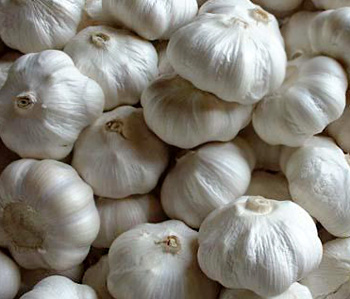
Most important fruits produced in the district are papaya, mango, chiku and coconut. Papaya contributes over 72 percent to total fruit production in the district. Onion, potatoes, tomatoes, cauliflower and cluster beans are the major vegetables grown in the district. Jamnagar is the third largest producer of garlic in Gujarat state. The district is the third largest producer of groundnut in the State contributing 15 percent to total production. The major minerals found in the district are calcite, bauxite, limestone, and chalk. Other minerals obtainable in the district include sand, gypsum, black trap, and bentonite. Jamnagar is the largest producer of bauxite in the State contributing 96 percent to the total production.
Jamnagar district has around 34 medium and large scale industrial units concerned in production of cement, yarn, agriculture equipments, solvents, edible oils, soda ash, salt, and fertilisers. Medium and large scale industries generate over 7,000 employment opportunities in the district. Out of total Middle and Large scale units, 17 are concentrated in Jamnagar city while rest are spread across Sikka, Okha, Jodiya, Lalpur, and Kalyanpur talukas of the district. There are over 12,700 small scale industries which operate in Jamnagar. Some of the main industries under SSI in Jamnagar are metal industries, food products, rubber, and plastic products. Maximum number of SSI units located in the district is related to metal products followed by repairing and services industry.
Jamnagar district enjoys domination in manufacturing of Brass parts and its products in the State. The industry is one of the most important revenue and employment generating industries in the district. Bedi port in Jamnagar is an idyllic location for handling agriculture produce. The propinquity to giant refineries and petrochemical complexes of major players can offer significant business volumes to the district. Proposed SEZs of Industrial giants such as, Reliance and Essar and presence of large number of industrial estates are accelerating the industrial growth of the district in terms of investment and employment. Salt industry in the district is well developed with around 17 salt work units operational in the district. The proximity to Sikka and Bedi ports along with proposed upgradation of Bedi-Rozi port shall boost the exports of salt from the district.
Temples in Jamnagar District
 Jamnagar district is located in Gujarat, with Jamnagar city serving as its administrative headquarters. The famous city of Dwarka is situated in this district. Jamnagar has a population of 1,904,278, out of which 43.91% are urban (2001 census) (wikipedia encyclopedia). Jamnagar city is also the municipal corporation of Jamnagar, the district. The city was build up substantially by Maharaja Kumar Shri Ranjitsinghji in the 1920s, when the district was known as Nawanagar. The district lies south to the Gulf of Kutch. Jamnagar has shot to prominence as Reliance Industries, India`s largest private company, established the world`s largest oil refinery near Moti Khavdi village. It is also home to Essar Oil, another leading oil refinery of India.
Dwarka Group of Temples, Jamnagar, Gujarat: Dwarka, according to Hindu mythology, was the holy abode of Lord Krishna, thereby, housing numerous temples dedicated to Him.
Dwarkanath Temple: Saturated with legends, Dwarkanath Temple, rich in architectural splendor, has artifacts of Lord Krishna scattered everywhere.
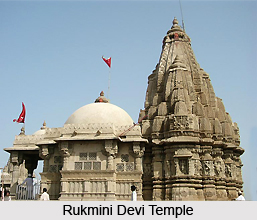
Rukmini Devi Temple: Built in the 12th century, Rukmini Devi Temple is dedicated to the most significant woman in Krishna`s life.
Nageshwar Temple: One of the 12 Jyotirlingams in India, Nageshwar Temple emanates every disciple from his/her material karma.
Dwaraka Pitha: One of the four fundamental mathas, Dwaraka Pitha is ruled in the guidelines of the Sama Veda.
Bet Dwarka: Considered the palace where Lord Krishna resided, Bet Dwarka has temples devoted to Hindu gods, in plenty.
Bala Hanuman Temple, Jamnagar, Gujarat: Dedicated to Lord Ram, Bala Hanuman Temple has a bizarre feature to attract visitors.
Jain Group of Temples, Jamnagar, Gujarat: Built around the 16th -17th century, the Jain Temples are brilliant in their architectural glory.
Kileshwar Temple, Jamnagar, Gujarat: Kileshwar Temple is prided to be a structure dating back to the times of Mahabharata.
Jain Temples in Jamnagar
 Jain Temples are in a lot of numbers in Gujarat. These magnificent buildings of wood and stone are decorated with pastel coloured shutters and wooden balconies. There are two significant Jain temples in the area of Jamnagar and these are Shantinath temple and Adinath temple.
Different Jain Temples
The Shantinath temple and Adinath temples were built between 1574 and 1622 and hold spiritual with historical significance. Following are the different Jain Temples:
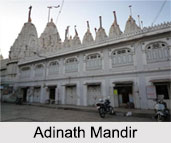
Adinath Mandir: Adinath Mandir is also known as Jamnagar Tirth. Shri Anand Sheith laid the foundation of this temple around 1633 AD. Adinath, earlier called Rishabhanatha, is said to be the first Jain Tirthanker. Chronicle of Adinath is presented inside the temple in the form of multi-coloured and beautiful paintings. Lively colours such as pink, orange, yellow and green have been used to brighten up people, flowers, Gods and substances displayed in all frames of story. There are 52 small temples built around the primary structure.
Shantinath Jain Derasar: It was built to attract a large number of Jains. This famous caved temple is situated near Bedi Gate in Jamnagar. The mandap is decorated with golden inlay and various chambers, visitors get a glimpse of elaborately patterned marble flooring and mirror ceilings. It is a place of pilgrimage of 16th Jain Tirthankhara.
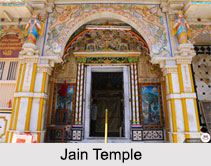
Vardhman Shah Jain Derasar: It was constructed during the rule of Jam Jasaji in 1612 and it was completed in 1620. This derasar is dedicated to Tirthankhar Adinath. There are multi – coloured murals inside the temple. The temple has a main shrine with 52 small shrines.
Raisi Shah Jain Temple: It is made of carved marble columns with a supporting mandap. There are a number of other Jain Temples such as Shankheswar Parshwanath Jain Derasar in Patel Colony, Mahavir Swami Jain Derasar in Park Colony and the Digamber Jain Derasar near Khambhalia Naka on Arya Samaj Road.
Visiting Information of Jain Temples
There are many state and private buses from many Gujarati cities like Rajkot, Ahmedabad, Surat, Dwarka, Bhuj which will take people to Jamnagar. There are daily trains through Western Railways directly connecting Ahmedabad with Jamnagar. There are also weekly trains to Jamnagar from main cities of India. Jamnagar Airport is about 8 kilometres from the city and has regular flights to connect to the other parts of India.
Tourism in Jamnagar District
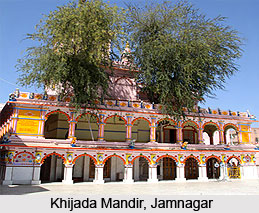 Tourism in Jamnagar District in Gujarat presents a series of exotic tourist destinations to enthusiastic tourists in the form of spectacular beaches, ancient and new temples, historical buildings like palaces and forts, national parks and bird sanctuaries and so on. Lakhota Fort, Pratap Vilas Palace, Willingdon Crescent, Mota Ashapura Maa Temple, Khijadia Bird Sanctuary, Marine National Park, Bala Hanuman Temple and Balachadi Beach are only a few of the innumerable beautiful places located in Jamnagar District.
Pilgrimage Tourism in Jamnagar District
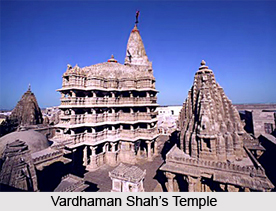 Pilgrimage tourism in Jamnagar District is a unique blend of Hindu temples, Jain temples and mosques, some of which belong to the ancient ages. Tourists will also come across some religious structures which date to the modern times and are significant pilgrimage centres located in the western Indian state of Gujarat. Khijadia Mandir, Mota Ashapura Maa Temple, Vardhman Shah`s Temple and Ratan Bai Mosque are some of the renowned spots of pilgrimage tourism here.
Mota Ashapura Maa Temple
This famous temple is dedicated to the Goddess or `Kuldevi` of the Jadeja clan of Rajput communities and is situated in the eastern portion of this region, near Darbargadh. It is based near the Gate of this city.
Shantinath Temple
Shantinath Temple is a beautiful Jain temple which is located on the south-western portion of Bedi Gate in this district. Attractive wall paintings and murals on its walls portray the lifestyles of various Jain saints. Visitors would notice elaborate Jain patterns consisting of red, white and yellow patterns on the floor of Shantinath Mandir.
Khijada Mandir
Khijada Mandir is one of the most ancient temples of Jamnagar, dating back to over 400 years and its wall portrays different scenes from the life of Lord Krishna. Though it is a Hindu temple, the Khijada Mandir depicts the unity of the various religions of the nation. It belongs to the Pranami sect.
Vardhman Shah`s Temple
One of the four Jain temples of Jamnagar, Vardhman Shah`s Temple is believed to have been created during the rule of Jam Jasaji 1. The initial construction of this temple commenced during 1612 while it was completed in 1620. During 1622, 52 tiny temples were erected near this temple.
 Bala Hanuman Temple
Located on the south-eastern part of Ranmal Lake, the Bala Hanuman Temple is renowned for its constant chanting of the divine mantra named `Sri Ram, Jai Ram, Jai Jai Ram` which continues for an entire day spanning 24 hours ever since the year 1964. The divine ambience instilled in this temple, due to the chanting of this mantra, has earned it a special recognition in the Guinness Book of Records. Several devotees throng this temple to offer their prayers.
Ratan Bai Mosque
Ratan Bai Mosque is present in the central portion of the district and is equipped with tall white and green minarets. It is reputed for possessing its very own rainwater harvesting system, which enables it to provide water to devotees prior to the `namaz`.
Bholeshwar Mahadev Temple
Bholeshwar Mahadev Temple is notable for its grand fair which is organised during the occasion of `Shravani Amavasya`. This temple is located in the village of Gajna in Lalpur tehsil, on the banks of Dhandhar River.
Dwarkadhish Temple
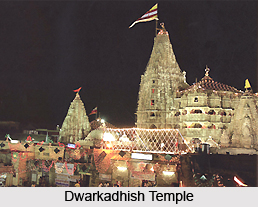
This ancient temple is believed to have been created during the 16th century and contains five storeys. Located at the central part of Jamnagar District, the Dwarkadhish Temple is dedicated to Lord Krishna. It was built on as many as 72 pillars.
Jamnagar District is also home to a few other marvellous temples like some Shiva temples as well as ancient Jain temples. The Nilkanth Mahadev Temple, Kashi Vishwanath Temple, Siddhnath Mahadev Temple and Badri Kedarnath Temple are the temples dedicated to Lord Shiva. Other Jain temples situated here include Sheth`s Temple, Vasupujya Swami`s Temple and Raisi Shah`s Temple.
Nature Tourism in Jamnagar District
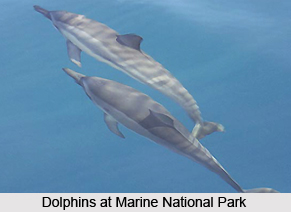 Nature tourism in Jamnagar District, Gujarat thrills its visitors through its numerous tourist locales displaying extraordinary natural splendour in the form of lush green forests, spectacular beaches and several national parks and wildlife sanctuaries. Beach of Pirotan Island, Lakhota Lake, Marine National Park, Khijadia Bird Sanctuary, Cremation Park and Jogger`s Park are amongst the innumerable tourist destinations which make this district a paradise for nature lovers.
Lakhota Lake
Lakhota Lake is situated in the central portion of Jamnagar District and is surrounded by gardens and parks. A small zoo is also present near this beautiful lake and the Lakhota Tower stands at the middle of the lake.
Beach of Pirotan Island
Tourists would love paying a visit to the Beach of Pirotan Island, which is crowded by a large flock of birds and is present at a distance of about 12 miles from Bedi Port. This beach is dependant on tides and is very clean.
Khijadia Bird Sanctuary
This sanctuary is an abode of a variety of exotic species of birds like Pheasant-Tailed Jacana, Great Crested Grebe, Coot, Black-Winged Stilt, Purple Moorhen, Falcons, Hawks, Eagles and many others. Khijadia Bird Sanctuary is located at a distance of nearly 10 km from the eastern part of Jamnagar. Waterfowls, Swallows, Martins, Wagtails, etc. are some migratory birds who visit this sanctuary. It is a significant research centre.
Marine National Park
Marine National Park is the very first marine national park of the country and had been established in the year 1982. One can find sea turtles, dolphins, soft corals, prawns, crabs, fin-less porpoises, sponges, red and green algae and numerable other species of aquatic animals in the Marine National Park. An archipelago of as many as 42 islands involving coral reefs and mangroves are present here.
Jogger`s Park
Jogger`s Park is a spacious botanical garden located near the Palace Ground and it is also referred to as Gulab Kunvarbaa Udhyan. Morning walkers and joggers utilize this new park regularly.
Cremation Park
Based at a distance of nearly 10 minutes from the northern portion of the city, Cremation Park comprises statues of Hindu deities and also certain scenes from the Hindu epic of Ramayana. Tourists might also admire the `circle of life` present here, which depicts the various stages of a man`s life.
Rozi and Bedi Ports
Rozi and Bedi Ports are two of the important ports which are situated in Jamnagar District and are ideal spots for activities like angling and fishing. Bedi Port is existent about 4 km inland, along Rangamati River while Rozi Port is present on the shores of the region of Gulf of Kutch.
Leisure Tourism in Jamnagar District
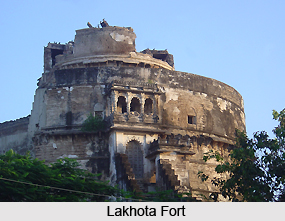 Leisure tourism in Jamnagar District, Gujarat permits its visitors to admire the many thrilling tourism centers based here, which include the wonderful palaces, forts and several other ancient historical monuments which are found in this region.
Darbargadh Palace
Also referred to as `Maharaja`s Palace`, Darbargadh Palace used to be the old dwelling place of Jam Sahebs and its interiors boast of a fascinating fusion of European and Rajput style of architectural patterns. It is said to be one of the most important historical structure in this district and contains jewelled mirrors, fretwork `jali screens`, wall paintings, carved pillars and beautiful sculpture. Venetian-Gothic arches and a carved gate are the other attractions of this palace.
Pratap Vilas Palace
Pratap Vilas Palace was constructed during the reign of King Ranjit Singh and reflects a unique blend of European and Indian architecture. Equipped with Indian carvings, this palace was created as a resemblance of Victoria Memorial, Kolkata, though its domes follow the pattern of Indian architecture. Three of the domes are made of glass.
Lakhota Fort
This fort-like palace is present in the middle of Lakhota Lake and is believed to have belonged to the Maharaja of Nawanagar. Musket loops, turrets, powder flasks, various kinds of swords, semi-circular bastions and a beautifully arched balustrade which joins the palace with the district. An abundant quantity of sculptures belonging to the 9th and 18th century, as well as pottery works existent in demolished ancient villages are present in the fort museum.
 Willingdon Crescent
Maharaja Ranjit Singh had built the Willingdon Crescent, which consists of cusped arches, particularly on the ground floor and upper storey. Pilasters on its curved walls and parapates adorned with balusters are the special attractions of this building. At the central part of the crescent, a statue of Jam Saheb is existent.
Dhanvantri Mandir Gujarat Ayurved University
The Dhanvantri Mandir was created under the supervision of the Chief Medical Officer of Guru Govindsingh Hospital named Dr. Pranjivan Manekchand Mehta. This structure received the prestigious status of a university, known as Ayurveda University following the independence of India. It is a significant centre of research which also houses a workshop and library.
Bhujio Kotho
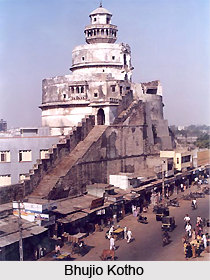
This historical monument is located near Khambhaliya Gate, on the banks of Lakhota Tank and is immensely popular amongst travellers, mainly due to its height. It possesses five storeys and had been built for the purpose of safeguarding against foreign invasions. The first floor of Bhujio Kotho contains guns and holes have been made in the walls to store the rifles. A tank is present on the upper floor to preserve water and a dancing peacock was kept on top of it.
Bohra Hajira
The Bohra Hajira is present on the banks of Nagmati and Rangmati Rivers and falls on the route which leads to the Rajkot Highway. However, one must obtain prior permission from the office in its premises in order to pay a visit to Bohra Hajira. Previously, boats used to sail on the rivers Nagmati and Rangmati but since the waters of these rivers have dried up now, fairs during the month of `Shravan` are arranged here.
There are certain other leisure tourism centres in the district of Jamnagar which involve Kotha Bastion and the Solarium. Copper plates, coins, several masterpieces of sculpture, the skeleton of a whale, inscriptions and coins are part of the several artefacts displayed in Kotha Bastion. The Solarium was constructed by Jam Shri Ranjitsinhji and is also termed as the Ranjit Institute of Poly-Radio Therapy. This tower is a slowly revolving one which was earlier utilized for the treatment of skin diseases. It is exposed to sunlight for the entire day. Currently, however, it is not used anymore as it has become obsolete.
Visiting Information
Jamnagar District can be approached via an airport which has direct flights to the city of Mumbai as well as a railway station. Visitors can also avail buses which operate between Ahmedabad and Jamnagar. The State Transport has introduced a brand new bus service which has buses plying between Ahmedabad Airport and Jamnagar.
Recently updated articles in States of India
Bandare Waterfalls, Meghalaya
Bandare Waterfalls in South Garo Hills, Meghalaya, is a secluded natural attraction surrounded by dense subtropical forests and rugged mountain terrai...
History of Thissur District
Early History of Thissur District explains flourishing of the port cities. Now these port cities are transformed into archaeological sites.
Tippi Orchid Research Centre, Arunachal Pradesh
Tippi Orchid Research Centre in Arunachal Pradesh is renowned for its rich collection of exotic and endangered orchids. Surrounded by lush rainforest...
Tourism in Nashik District
Pilgrimage tourism in Nashik district involves visiting the various places of Hindu and Jain worship located here. Some of the holiest sites for Hind...
Mangadu, Kerala
Mangadu in Kerala’s Kollam district is a significant megalithic site known for its urn burials, cist burials, menhirs, and stone circles. Excavations...
Related articles in States of India
East Indian States
East Indian States comprises of Bihar, Jharkhand, West Bengal, Odisha and also the Union Territory of Andaman and Nicobar Islands. It defines the cult...
Purnia District in Bihar
Purnia District is located in Bihar and extends from River Ganga to Nepal. The district has a rich Hindu history and glorious past.
Hooghly district
Hooghly District along the bank of the river Hooghly is one of the principal trading ports of West Bengal.
Geography Of Chittoor District
Geography of Chittoor district is spread along the topography of the land which is divided into two natural divisions; Chittoor has a dry and healthy...
Districts of West Bihar
Districts of West Bihar is comprised of medieval monuments that were built by the different governors of Mughal era.