 Types of Soil in India are diverse. The formation of soil in India is primarily influenced by major factors such as climate, altitude, composition of bedrock, etc. Disproportion in the annual distribution of rainfall in the country and excessive heat contribute special characters to the types of soils in India. For example, the soils of the Sutlej-Ganga plain and the valleys of Narmada River and Tapti River are essentially the transported ones. In India, eight major types of soils exist. Alluvial soils, black soils, laterite soils, red and yellow soils, peat soils, desert soils, mountain soils and saline soils are the types of soils in India. And it is the extent and qualities of different types of soils in India, which play an important role in determining the agricultural output of this region. The various types of soils in India are discussed below.
Alluvial Soils in India
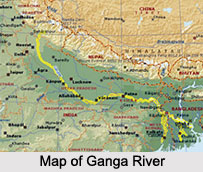
Alluvial Soils in India have low phosphorous and nitrogen content. These soils are sandier in their composition. Alluvial soils are mainly found in the plains of northern India. It is the Himalayan Rivers, Ganga River, Sutlej River, Brahmaputra River and their tributaries, which have deposited these soils in the plains of northern India. These soils are found even in the north-western regions of the country, which experience dry climatic conditions.
Black Soils in India
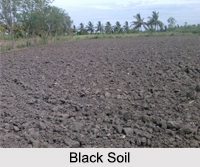
Black Soils is one of the types of soils in India, which are alternatively known as Regur soils. As suggested by the name, they are black in color because of the presence of certain salts. However in some places, presence of humus in the soil imparts black color to this type of soil in India. This soil becomes sticky when it is wet owing to high quantity of clay deposition. It does not contain adequate nitrogen but it contains sufficient phosphorous required for the growth of the plants. Black soils are generally thin and sandy in the hilly regions of the country. Black soils can be found on the Deccan Plateau and also on the plateaus of Madhya Pradesh, Saurashtra, Malwa and Maharashtra.
Laterite Soils in India
Laterite Soils in India are the types of soils that are red in color because of the presence of iron oxides. They are poor in lime content and hence they are more acidic. Moisture content is least in the soil. These soils can be found in tropical regions of India and those regions which receive heavy rainfall. Laterite soils are well developed in the southern region of Western Ghats and Eastern Ghats in Odisha. They are more popular in the coastal regions of Ratnagiri District and Malabar. Laterite soils are mostly found on the plateau of India in the east, which spreads partly over Odisha, Tamil Nadu, parts of Chhotanagpur and Meghalaya.
Red and Yellow Soils in India
Red and Yellow Soils are some other types of soils in India that contain huge concentration of iron oxides, which are responsible for giving them the reddish or yellow color. These soils generally develop on metamorphic rocks. They are less clayey and sandier and are poor in important minerals like lime, phosphorous and nitrogen. Red and yellow so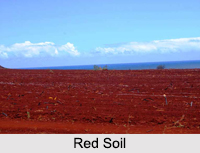 ils are found in areas which receive low rainfall. Red soil in India is acidic like lateritic soil. This soil is mainly cultivated during the monsoon season. Red soil develops in Manipur, Shillong Plateau and Mizoram.
Peat Soils in India
Peat Soils are the types of soils in India that are usually absolutely free ofr lime and so are very sour. This sourness is produced by the decaying of the vegetable matter. Peat soils contain more than 20 percent of humus. These soils contain more organic matter and are formed in wet climate. They have fewer nutrients and are dark brown in color. They have usually been derived from marshy land where there has been continuous growth and decay for over thousands of years. These soils are found in Kerala, Tamil Nadu, West Bengal and Odisha. Peat soils are usually found in low-lying areas and so it may need water logging and pipe draining. Peat soils are suitable for the growth of certain Indian crops like celery.
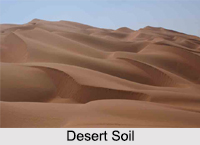
Desert Soils in India
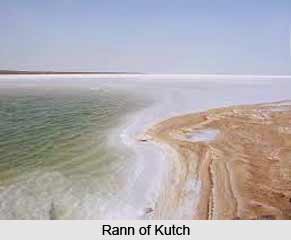
Desert Soils in India are basically sandy and are light brown and reddish in color. These soils contain an important mineral namely, nitrogen. They are of saline texture. With water content, these soils are favorable for vegetation. This type of soil in India is found in desert regions like the Thar Desert of Rajasthan.
 Mountain Soils in India
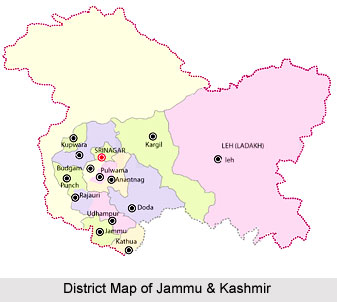
Mountain Soils in India are considered to be a significant variety of soil in the Indian Himalayan region. They are mainly found in the Indian states of Jammu and Kashmir, Uttar Pradesh and West Bengal.
Saline Soils in India
These types of soils in India are basically black in color and highly acidic. They develop in the coastal plains of Kerala and Odisha. In some regions of the country, salt content is in toxic doses in Saline soils.