
 Indian Tribes are abstract sections which hold in an astounding number of tribal populations in the country, meticulously assimilating each characteristic speciality. The distinction in the variety of the tribal people in India enriches the Indian culture and art. The tribes of India reflect a very unique and colourful picture of Indian culture.
Indian Tribes
Indian Tribes are the reverberation of an indigenous image with their characteristic lifestyle and unblemished tradition
Introduction
Indian Tribes are abstract sections which hold in an astounding number of tribal populations in the country, meticulously assimilating each characteristic speciality. The distinction in the variety of the tribal people in India enriches the Indian culture and art. The tribes of India reflect a very unique and colourful picture of Indian culture.Origin of Indian Tribes
First traces of tribes in India can be traced to the species known as "Ramapithecus", discovered in the Shivalik Hills of the north-western Himalaya Mountain. This species, held to be the first in line of hominids, lived approximately 14 million years ago. Researchers have established that a species corresponding to the Australopithecus romped about in India roughly 2 million years ago.
Demography of Indian Tribes
According to Article 342 of the Constitution of India, at present, there exist 697 tribes notified by the Central Government. Indian tribal people amount to an 8. 6 percent of the nation"s total population, over 104 million people according to the 2011 census. These tribal people reside in approximately 15 percent of the country`s area.
Habitation of Indian tribes
Indian tribes primarily reside in various ecological and geo-climatic conditions ranging from plains, forests, hills and inaccessible areas that perhaps lie dotted in the panoramic Indian terrain. These Indian tribal groups of people have been notified to reside in more than one State. More than half of the Indian tribal population is concentrated in the States of Madhya Pradesh, Chhattisgarh, Maharashtra, Odisha, Jharkhand and Gujarat.
Division of Indian Tribes
Research scientists opine that the population of India, including Indian tribes, is derived from six primary ethnic groups namely:

•Negritos,
•Pro-Australoids or Austrics
•Mongoloids
•Mediterranean or Dravidian
•Western Brachycephals
•Nordics
Negritos: The Negritos from Africa were the earliest tribesmen to populate India. They presently survive in their original home-ground in the Andaman and Nicobar Islands. The Jarawas, Onges, Sentinelese tribes and Andamanese Tribe are the perfect examples. Studies have indicated that the Onges tribes have been living in Andaman for the last 60,000 years.
Pro-Australoids or Austrics: Some hill tribes like Irulars, Kodars, Paniyan Tribe and Kurumba Tribe are found only in patches among the hills of south India. This group of Pro-Australoids or Austrics was the subsequent bunch to arrive in India after the Negritos. They symbolise a race of people with wavy hair, prominent eye ridges, low foreheads and long heads. The Austrics are proudly known to be the main founders of the Indus Valley Civilisation. These people were of agrarian culture and they lived on cultivating vegetables and rice.
Mongoloids: Mongoloids bear features that are common to people of Mongolia, China and Tibet. These tribal groups are located in the North-eastern portion of India in states like Assam, Nagaland and Meghalaya and also in Ladakh and Sikkim. Generally, these people are of yellow complexion, oblique eyes, high cheekbones, thinning hairline and medium height.
Mediterranean or Dravidian: This group of tribesmen arrived in India from South-west Asia and appears to be people of the same bloodline as the people of Asia Minor and Crete and the pre-Hellenic Aegeans of Greece. They are presumed to have constructed up the city civilisation of the Indus Valley, whose remains have been discovered at Mohenjo-Daro and Harappa and other Indus cities. The Dravidians are believed to have circulated in the entire part of India, replacing Negritos and Austrics equally. Dravidians incorporate the three sub-types namely the aloe-Mediterranean, the true Mediterranean and Oriental Mediterranean.
Western Brachycephals: The bunch of Western Brachycephals includes the Alpinoids, Dinaries and Armenois. The Coorgis and Parsis of Indian tribal origin fall into this category.
Nordics: Nordics or Indo-Aryans are the last immigrants into India. They were a division of Indo-Iranians, who had originally left their homes in Central Asia, approximately 5000 years ago and had settled in Mesopotamia for some centuries. The Aryans must have arrived into India within 2000 and 1500 B.C. Their first home in India was western and northern Punjab, from where they scattered to Ganges Delta and beyond. These tribes are now mainly witnessed in the Northwest and the Northwest Frontier Province (NWFP).
•Negritos,
•Pro-Australoids or Austrics
•Mongoloids
•Mediterranean or Dravidian
•Western Brachycephals
•Nordics
Negritos: The Negritos from Africa were the earliest tribesmen to populate India. They presently survive in their original home-ground in the Andaman and Nicobar Islands. The Jarawas, Onges, Sentinelese tribes and Andamanese Tribe are the perfect examples. Studies have indicated that the Onges tribes have been living in Andaman for the last 60,000 years.
Pro-Australoids or Austrics: Some hill tribes like Irulars, Kodars, Paniyan Tribe and Kurumba Tribe are found only in patches among the hills of south India. This group of Pro-Australoids or Austrics was the subsequent bunch to arrive in India after the Negritos. They symbolise a race of people with wavy hair, prominent eye ridges, low foreheads and long heads. The Austrics are proudly known to be the main founders of the Indus Valley Civilisation. These people were of agrarian culture and they lived on cultivating vegetables and rice.
Mongoloids: Mongoloids bear features that are common to people of Mongolia, China and Tibet. These tribal groups are located in the North-eastern portion of India in states like Assam, Nagaland and Meghalaya and also in Ladakh and Sikkim. Generally, these people are of yellow complexion, oblique eyes, high cheekbones, thinning hairline and medium height.
Mediterranean or Dravidian: This group of tribesmen arrived in India from South-west Asia and appears to be people of the same bloodline as the people of Asia Minor and Crete and the pre-Hellenic Aegeans of Greece. They are presumed to have constructed up the city civilisation of the Indus Valley, whose remains have been discovered at Mohenjo-Daro and Harappa and other Indus cities. The Dravidians are believed to have circulated in the entire part of India, replacing Negritos and Austrics equally. Dravidians incorporate the three sub-types namely the aloe-Mediterranean, the true Mediterranean and Oriental Mediterranean.
Western Brachycephals: The bunch of Western Brachycephals includes the Alpinoids, Dinaries and Armenois. The Coorgis and Parsis of Indian tribal origin fall into this category.
Nordics: Nordics or Indo-Aryans are the last immigrants into India. They were a division of Indo-Iranians, who had originally left their homes in Central Asia, approximately 5000 years ago and had settled in Mesopotamia for some centuries. The Aryans must have arrived into India within 2000 and 1500 B.C. Their first home in India was western and northern Punjab, from where they scattered to Ganges Delta and beyond. These tribes are now mainly witnessed in the Northwest and the Northwest Frontier Province (NWFP).
Religious Life of Indian Tribes
 Religious Life of Indian tribes portrays the indigenous religious rites and rituals which have been followed by the innumerable tribes residing in India, since ancient periods. The Indian tribal religious concepts, terminologies and practices are as wide-ranging as the number of tribes. However, the members of these groups possess one thing in common: they believe in remaining united under religious faiths and customs. The religious life amongst the Indian tribes is an exemplary situation, wherein everybody follows the essential norms. Religious life in this Indian tribe is quite quaint and secretive, compared to the others.
Religion of Indian Tribes
Many tribes in India demonstrate considerable syncretism with Hinduism. They are devoted to Lord Shiva, who dominates their festivals and religious observances. Religious life in Indian tribes first begins with the Santhal religion, according to which, the supreme deity is "Thakurji", who ultimately commands over the complete universe. The most important spirit residing amongst Santhals is "Maran Buru" (Great Mountain), who is conjured up whenever offerings are made. However, the primary reverence of belief falls on a court of spirits named "Bonga", who supervise various aspects of the world. These spirits must be appeased with prayers and oblations in order to ward-off evil influences. These spirits operate at the village, household, ancestor and sub-clan levels, along with evil spirits that induce disease.
The Naga tribes believe in a specific earthquake God who created the earth out of the waters by earthquakes. The Jhabua Bhil and others believe in `Bhagavan` or `Bholo Iswor`, who is a personal supreme God. They also believe in minor deities who have shrines on hills or underneath the trees. The Toda religion is based primarily upon the buffaloes and their milk. The temples are the dairies.
Religious Beliefs of Indian Tribes
 Going by religious beliefs in Indian tribal life, such evil spirits have possibilities to inhabit village boundaries, mountains, waters and the forest. The religious ideals of Indian tribes deal with Mother Nature and ecological systems and a series of annual festivals go on. Other deities without name or form reside in the mountains, forests, rivers and lakes, which need mollifying, for their hostile attitude to men. Omens and dreams are also generally believed in. Witchcraft is widely practised and some men are also believed to possess the capability to turn into tigers.
Religious Customs of Indian Tribes
Certain rituals are observed every year, which are intrinsically associated with the agricultural cycle, including rites related to birth, marriage, funeral rites, petitions to spirits, etc. Religious life of the Indian tribe is dictated by the religious leaders, who are male, specialists in medical cures. They like to practice soothsaying and witchcraft. "Oraon", "Munda" and "Kharia" tribes are believed to observe similar religious customs.
Animal sacrifices are common, especially birds. The smaller tribal communities exhibit a comparatively less clarified version of spiritual hierarchy, manifested through animism or rather a unique collection of spiritual energies which are followed by some social groups. Some tribal groups sacrifice dogs or pigs when making a wood carving; otherwise the carver will soon fall ill or die.
Head-hunting was a significant practice, since fertile crops depended on a sprinkling of blood from a stranger over the fields. Reincarnation is believed by many Naga tribes and the dead are buried in the direction from which their ancestors have arrived. The doctrine of "Genna" involves the entire tribal villages, clans, households, age groups, sex groups, in a series of rituals that are regularly practised. This genna ritual is also the result of an emergency such as an earthquake.
North Indian Tribes
 North Indian Tribes have distinct cultural patterns. North India also encompasses many tribes. They occupy a major part in the history of India as they are considered as the true habitants of India. North India is also a region that has in the last couple of decades witnessed surging growth in every sphere of development. Comprising enormous states like Himachal Pradesh, Punjab, Haryana, Jammu and Kashmir, Uttar Pradesh and Uttarakhand, north India redefines and redraws lines of heavenly beauty and the Himalayan panorama.
The indigenous North Indian Tribes that reside in the steep terrains of the lofty Himalayas are described below:
Tribes of Himachal Pradesh: These tribes can be singled out for their looks, good conduct and religious behaviour towards every kind of situations and places. Revelry and merry-making makes the order of day for these north Indian tribes, with their occupations and daily earning bread being cattle rearing and spinning of wool.
 Tribes of Jammu and Kashmir: With a number of tribes residing in the mountainous regions of the Himalayas, Jammu and Kashmir tribesmen are remarkable for their dressings and ornate ornamentation. They have strictly descended from the Indo-Aryan group of people, who believe in both Hinduism and Islam.
Tribes of Punjab: Punjab with its unique culture, tribesmen in Punjab completes a massive calculation under the north Indian tribes. The tribes of Punjab can be identified by their striking dresses, colourful attire and mellifluous songs.
Tribes of Uttar Pradesh: They comprise a colossal portion under the north Indian tribal section, with variety speaking out from every section and every sphere of daily life. They constitute the strong section of the society and form distinct ethnic groups which have maintained their own separate cultural identities in their original environment, despite the ravages of time.
Tribes of Uttarakhand: The tribal population of Uttarakhand is concentrated in the remote and forest areas of the state. Every district of Uttarakhand has a moderate percentage of tribal people. Some are of Mongoloid origin and have a nomadic or semi-nomadic way of life.
Tribes of Haryana: They are basically consisted of nomadic and semi-nomadic individuals, with a somewhat dilapidated condition of their social and economic condition. There are approximately 25 identified nomadic tribes, with their total count exceeding 15 lakh.
Hence, the North Indian tribes have to offer every new thing from every new sphere of living, regarding food, culture, dress or customs of ceremonies.
North East Indian Tribes
 North East Indian Tribes constitute a major part of Indian tribal community and largely scattered over all the states of North East that includes Arunachal Pradesh, Nagaland, Manipur Tripura, Mizoram, Meghalaya, Assam and Sikkim. North East India is considered as one of the culturally distinguishable part of India which is inhabited by more than 200 fascinated tribes. North East Indian Tribes include Adis, Apatanis, Angami, Ao, Rengma, Nyishi, Garo, Khasi, Jaintias, Lushais, Kukis, Bodo, Mishing, Karbi, Bhutias, Lepchas, Nepalese, Riang, Tippera and Tripuri. A careful study of the North eastern Indian tribes shall include an overview of their lifestyle, origin, customs, traditions and the festivals.
Origin of North East Indian Tribes
North East Indian Tribes can be largely associated with the ethnic groups of Indo Mongoloids, Tibeto-Burmese and proto Austroloids which represent the Asio-Austric culture on Indian hilly regions. The trends of these ethnic groups are visible in the looks as well as the traditions which are followed by these communities. They provide a cultural bridge between India on one side and South-East Asia, China and Inner Asia and Burma on the other by ethnic and linguistic angles. Their existence can be traced back to the pre-historic times.
Different Types of North East Indian Tribes
 Starting from the tribal community found in Arunachal Pradesh which recognises at least 25 types of tribes, it includes 16 major tribes in Nagaland and even more in other states of North east India. Among the major tribes which are often found in India, some are prominent like the tribal groups of Garo tribe, Khasi tribe, Jaintia tribe, Adi tribe, Apatani tribe, in Arunachal Pradesh, Kuki tribe, Bodo tribe and Deori tribe in Assam who are scattered in the entire North Eastern region of India.
The people of Bodo tribe comprise 5.3 percent of the total population of Assam. They are the largest ethnic and linguistic group of Brahmaputra Valley. The Garo people are tagged as the second largest tribal community of Meghalaya. Adis are one of the major tribal communities of Arunachal Pradesh. They are very democratic in nature. The tribal region of north east often witnesses some tribal groups who have migrated in all the states of North east notwithstanding manmade political boundaries. One such Tribal group is the Kuki tribes who are available in all the parts of North eastern states. Along with the Garos and Khasis these are the next popular group of north east Indian Tribes.
Society of North East Indian Tribes
Socially, these tribal communities follow three types of lineage system which include the matriarchal, patrilineal as well as patri-matrilineal societies. Along with separate festivals these tribes vary on language, as each tribe has its own language.
Culture of North East Indian Tribes
 North East Indian tribes can be separately marked for their cultural trends which are marked by their festivals, customs, dances, art and other social occasions that are observed by these tribal groups. Each tribe can be categorised separately by the dress they wear, jewellery and the dances they perform. The North East Indian tribes enjoy dance, music and drama which are a part of their rich tribal culture. Some of the major dance forms are Ponung, Rekham Pada, Ajima roa, Mi Su`a and Chambil mpa.
Religion of North East Indian Tribes
Regarding religion these tribes are usually followers of Christianity while religions like Buddhism and Hinduism are also followed in parts of North East India. The tribes of North East had no conventional religion and they believed in their tribal Gods mainly "Donyi-Polo". The tribal people had a traditional religion which was a belief in the existence of spirits. Before the advent of Christianity, the hill tribes of North East practiced Animism.
Occupation of North East Indian Tribes
These tribes are primarily engaged in agriculture and farming is their biggest occupation. Jhum and shifting cultivation is largely practised in this region. Along with agriculture, the tribal community of North east depends largely on weaving and rearing of woolly animals. The women community mostly engage themselves in the job of weaving and handicrafts which are nation-wide famous.
Festivals of North East Indian Tribes
Some of the festivals celebrated by the tribes of North-East are Nyokum, Sekrenyl, Ngada, Ka Shad Suk Mynsiem, Ka Pom-Blang, Nongkrem, Ka-Shad Shyngwiang-Thangiap, Ka-Shad-Kynjoh Khaskain, Wangala, etc.
Thus, North East Indian tribes represent the most colourful culture of India. The tribal life of India represents a completely separate string of Indian community.
West Indian Tribes
 West Indian Tribes, inhabiting the far-off regions within the grim Western mountains, amalgamate brilliance and aboriginal customs altogether; yet, each tribe distinguishes themselves in concentrating matters. Western India comprises the states of Rajasthan, Gujarat, Maharashtra and Goa that houses a sufficient section of Indian tribes, enough to assign the states with tribal beauty. The tribal life in these West Indian states varies in their lifestyle. These tribal people are still dependent on hunting, agriculture and fishing for their livelihood. All these tribal people have their own culture, tradition, language and lifestyle. Among the tribes of western India, the craft of tattooing is revered, with tattoos having a close relation to secular and religious subjects of devotion.
Tribes of Rajasthan
The tribes of Rajasthan have been involved with rest of the Rajasthani population since ancient times, with their unique customs and culture spreading each other day. Redefining the definition of unity in diversity, tribes of Rajasthan have paved out a way to jot down each other`s exclusivity and apply it in everyday life. The end product that comes out is simply brilliant, be it matters of cuisine, costumes, cultural life or mode of agriculture. The touch of modernisation has wholly caught up with the tribes of this West Indian bunch, paving way for novel ways of occupation and popularity.

Tribes of Gujarat
The tribes of Gujarat have been traced in their ancient lineage with the times of Mahabharata and Ramayana. Going great guns since those ancient times, tribes of Gujarat today have divided themselves into several places of dwelling by the sea, amidst the Western Ghats and the plains. Known to be staunch believers in animism, they too have faith in animalistic structures and occult practices. Agriculture and harvesting seem to be Gujarat tribes` basic occupations since olden times.
Tribes of Maharashtra
The tribes of Maharashtra are primarily classified in the groups of nomadic tribes and scheduled tribes. West Indian tribes are truly elevated to escalading heights when Maharashtrian aboriginal men and women are concerned. Sharing the common tribal interests in religious customs, they primarily reside in the interiors of the Aravalli. Believing ardently in the institution of marriage tribes of Maharashtra divide their daily living by roaming from place to place.
Tribes of Goa
The tribes of Goa have wholly descended from the Dravidians, as differing from the Aryans. They primarily reside in the Konkan coast, with customary tribal customs like religious beliefs, cultural modes of entertainment, or day-to-day governing. Christianity being the primary faith, in the present times Goan tribes have been heavily impressed upon by commercialisation.
East Indian Tribes
 East Indian Tribes come to a significant numbering count under the vast section of Indian tribes. This fact has received national as well as vast international recognition in the past several decades. East India is a portion comprising the states of West Bengal, Odisha, Bihar and Jharkhand. East India comprises many tribes with diverse cultures mingling into the mainstream of India"s national life.
Tribes of West Bengal: The incredible talents and improvisations have elevated Bengali tribes into a prestigious hold. Maverick in each attempt they strive to endeavour, tribes in Bengal are legendary in the artwork of handicrafts and culinary excellence. Conversing basically in Bengali, there exist several tribes under this header, under sublime unity. Just like customary Bengal tradition, festivals and ceremonies are an integral part of this East Indian tribe.
 Tribes of Bihar: Though overlapping in some cases, tribes of Bihar are known to have successfully kept their individuality alive starting from religious beliefs to everyday chores. This section of East Indian tribe heavily relies on occult and supernatural belief, beginning from birth and ending in death. However, intellectual and sophisticated past times can also be witnessed in Bihar tribes, when culture and food is concerned. Depending wholly upon on harvesting, tribes in Bihar count to a huge portion in the rural areas of the state.
Tribes of Odisha: Carrying a magnificent tribal population perhaps in the whole of India, with an astounding count of more than seven million, tribes of Odisha reflect an unusualness right from the infantry stage. Known to have deep-rooted faith in their aboriginal God and animism, tribal people of Odisha have their own set of faiths when it comes to marriage and holy union. This section of East Indian tribe basically speaks in four primary linguistic versions.
Tribes of Jharkhand: Classified into four primary groups of hunter gatherers, shifting agriculture, basic artisans and settled agriculturists, tribes of Jharkhand are diversified through their handiwork and religious customs. Known to celebrate each festival with elan, Jharkhand tribes are wholly devoted to their respective patron Gods, with proofs for several religions and artistry in weapons.
East Indian Tribes mostly make themselves noticeable in every sphere of day-to-day life, commencing from level-headed past times in culture and entertainment, coupled with rugged outlook in cultivation.
Central Indian Tribes
 Central Indian Tribes can bravely be designated with their exquisite stretch of flora and fauna. The tribes of central India have interesting and colourful socio-cultural life which is reflected in their daily life.
Central India is wholly centred on the fabulous Chhattisgarh and of course Madhya Pradesh. The latter being an enormous landlocked state with a varied kind of atmosphere and way of living, Chhattisgarh was carved out of the central state of Madhya Pradesh. Owing to a significant similarity between the two existing states in almost every sphere of living and non-living domains, tribal life in Central India is an excellent instance of the blending of rural and urbanity.
Central India possesses the largest concentration of Scheduled Tribes. The tribal population of central India can be distinguished from one to another on the basis of their size of population, like, the Gonds, the Bhils, the Santhals, the Oraons, the Mundas, etc. Each of the tribes of Central India has its own identity and tribal culture which varies greatly from each other.

Tribes of Madhya Pradesh: Tribes of Madhya Pradesh are basically classified under the group of scheduled tribes, with other sub-groups of tribes also making their presence felt. They firmly believe in animism, together with other prevalent religions. It is a general belief among all the tribes of Madhya Pradesh that whatever is happening to them are either by the blessing or curse of the evil spirits. Cultivation and farming are the basic occupation of the tribes of Madhya Pradesh. The origin of the tribes in Madhya Pradesh is attributed to several of the ancestral clans like the Dravidians and the Kauravas.
Tribes of Chhattisgarh: The tribes of Chhattisgarh primarily consist of a significant number that even surpasses the urban population. The renowned Bastar region in the state, densely thicketed with forests, is the area where they can be seen residing the most. Successful in retaining the essential cultural heritage from primeval times, tribal folk from Chhattisgarh saturate themselves up with dance, music, festivities, each standing out in their own matured way. The tribes from Chhattisgarh are much acknowledged for their custom of marriage.
Central Indian Tribes amount to an overwhelming number, with prestigious lineage and trying to govern them in a strict aboriginal manner.
South Indian Tribes
 South Indian Tribes excel in population count, with uniqueness emoting from domains of cuisine, costumes and ritualistic ceremonies. South India occupies an enormous portion in India, with the states of Kerala, Karnataka, Andhra Pradesh and Tamil Nadu comprising the four primary states. The ethnic consciousness and awareness that still prevails amongst the tribes, is mirrored through the activities and celebrations that they perform. South Indian tribes, a subject of interesting study, have essentially built a closed-up community, far away from the bustling cities.
Tribes of Tamil Nadu: It comprises a significant number of population ranging from dwindling to massive. A striking fact about these Tamil tribes is the hugely contrasting and complementing relationship that they share. On one hand, a specific tribe is engaged in intellectual activity like tea or coffee cultivation, or mass milk producing and on the other hand some other tribe is engaged in yet-primordial activities like witchcraft or occult. The Todas occupy central position amongst Tamil Nadu tribes, with the most happening activities being performed by them. They are also legendary for their too artistic houses with ornate motifs. Kannada and Tamil are the dominant languages with the south-Indian tribes of Tamil Nadu. The Kotas and the Irulars are also noteworthy within the tribes section in Tamil Nadu, excelling in handicrafts work and agriculture.
Tribes in Karnataka: They are astoundingly enormous in number, with the count exceeding a bare minimum. Karnataka being itself a state much under the presence of literacy, its tribes are also not lagging far behind. With Hinduism being the most prevalent religion, other religions are also seen to have their existence. Kannada being the most spoken language, Malayalam and Hindi also find place in this south-Indian tribe. Cultural performances in the form of theatrical representations, dances, dance-dramas are hugely popular among tribes of Karnataka.
Tribes of Andhra Pradesh: Simplicity and leading a peaceful way redefines tribes of Andhra Pradesh. Essentially divided into two categories of physical appearances, Andhra tribes also count to a huge number, mainly residing in the coastal areas of Bay of Bengal and mountainous regions of laid-back regions. Hinduism being the basic religion of the numberless Andhra Pradesh tribes, rituals and ceremonies are strictly maintained. Contrary to such an ordered act, it is believed to bring down the wrath of the aboriginal God or clan-head.
Tribes of Kerala: They are perhaps the most unique among all the south Indian tribes discussed. Residing basically in the mountainous terrains of the state, they have been striving to uphold their indigenous traditions and customs from any foreign influence. That might be a solid reason for the tribes in Kerala to have remained exactly the way they were, for example 100 years back. Descending from the Dravidian clan, these south-Indian tribes have proven their every point every time they have embarked on to something. Wholly relying in rituals and tribal customs, they are heavily dependent on their own Almighty.
The tribes of South India are bound to be several in counts, building up a separate life of their own. The numbers of South India tribes are perhaps unlimited with their motleyed existence, which has now gained popularity throughout the country.
Recently updated articles in Tribes of India
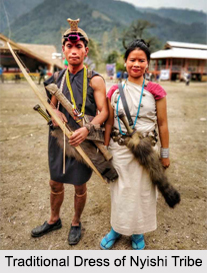
Traditional Dress of Nyishi Tribe
Traditional Dress of Nyishi Tribe is worn during festivals and social gathering. Men wear a cane helmet surmounted with the beak of the great Indian H...
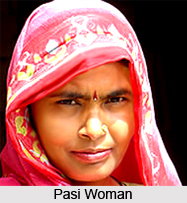
Pasi Community
Pasi is an aboriginal race of India and are mainly distributed over the northern region of the country. The traditional occupation of Pasi is the extr...

Bhojas
Bhojas have been described as a very important tribe in the Aitareya Brahmana. Historical records have said that the Bhojas were settled towards the s...
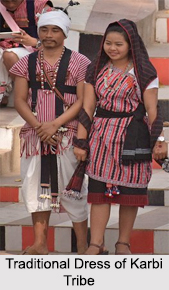
Traditional Dress of Karbi Tribe
Traditional Dress of Karbi Tribe can be easily recognized by the artistic designs inherited from their forefathers. Karbis have their own traditional...
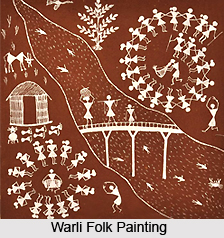
Indian Folk and Tribal Arts
Indian folk and tribal art are the exclusive handiwork of the section of people who belong to different social groups and it is richly enriched with a...
Related articles in Tribes of India
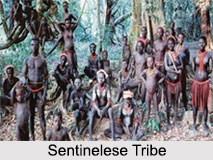
Sentinelese Tribe
Sentinelese tribal community is one of the most isolated and secluded tribes that are found in the whole world.
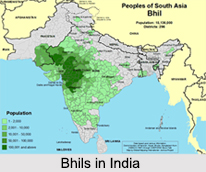
Bhil Tribe
The people of the Bhil tribe are the most widely distributed tribal groups in India.
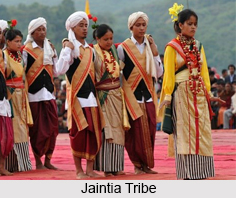
Jaintia Tribe
Jaintia Tribes are located in the Jaintia Hills of Meghalaya. They are also called the Pnars. They are famous for weaving of carpet, making of musical...
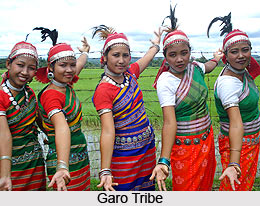
Garo Tribes
Garo Tribes are one of the matrilineal tribes of North-East India who reside in the Garo hills of Meghalaya. Historically, the tribe originated in Tib...
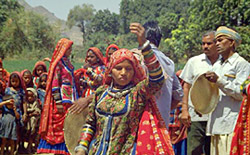
Garasia Tribe
The Garasia tribal community holds a significant position within Indian culture, renowned for their distinctive way of life and rich cultural heritage...